

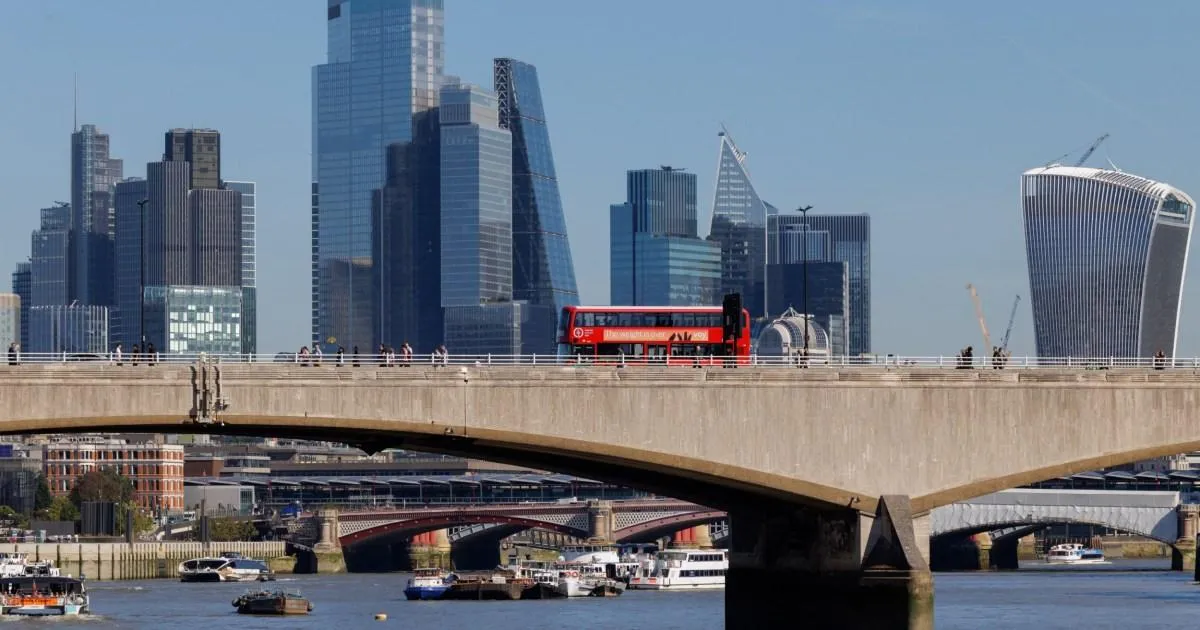
London’s iconic bridges, the arteries of the capital’s daily commute and a beloved part of its historic skyline, are facing an unprecedented crisis. A growing sense of alarm is settling over the city as reports emerge detailing the deteriorating condition of these vital river crossings. The latest structure to raise serious concerns is the world-famous Waterloo Bridge, a sweeping art deco masterpiece that has stood as a testament to London’s resilience since its completion during the dark days of the Second World War. Built in 1942 to replace its Georgian predecessor, the bridge has served millions of Londoners faithfully for over eight decades. However, the relentless increase in traffic volume and the ever-growing weight of modern vehicles have taken a heavy toll. Inspections have revealed significant water damage and structural cracks, some measuring up to 2mm wide, hidden within the concrete and steel that form the bridge’s backbone. This new information paints a stark picture of a city grappling with the immense challenge of maintaining its ageing infrastructure, with officials warning that without urgent and substantial investment, we could see the complete closure of one of London’s most celebrated landmarks.
The severity of the situation was laid bare in documents provided to Bloomberg by Westminster Council, which manages the bridge. The report issued a stark warning: if essential repairs are not carried out by the end of the 2029-30 financial year, or if interim measures such as weight restrictions are not introduced, a ‘full closure of Waterloo Bridge’ becomes a very real possibility. The implications of such a closure are almost too vast to comprehend. The bridge, which carries both the A301 road and the northern line of the Bakerloo tube, is a crucial artery for thousands of commuters, pedestrians, and cyclists every single day. It links the South Bank’s cultural centres like the National Theatre and the London Eye to the bustling streets of the West End. A closure would not only cause gridlock across central London but would also sever a key pedestrian and cyclist route, forcing detours and adding significant time to countless journeys. While a Westminster Council spokesperson was quick to reassure the public that the bridge “remains safe” and that there are “no immediate concerns about its structural integrity,” the proactive language of their statement—mentioning a search for funding for “further investigative works” to provide “greater certainty about the condition of some hidden structural elements”—belies the underlying tension. The council is walking a tightrope, trying to manage a proactive maintenance schedule against a backdrop of financial constraints, fully aware that “addressing deterioration before it becomes more significant” is the only way to avoid catastrophic and far more expensive emergency closures in the future.
Waterloo Bridge, however, is not an isolated case. It is the most prominent and visible symptom of a systemic failure across London’s entire bridge network. Transport for London (TfL) has placed Westminster, Vauxhall, and Lambeth Bridges on a ‘critical’ watchlist after they all scored under 40 on a condition benchmark, a threshold that prompts immediate investigation or action. This designation places them in the same worrying category as other structures in desperate need of intervention. The situation has already escalated to the point of action for Vauxhall Bridge, which saw a weight restriction imposed in July. This means that large commercial vehicles, including fully loaded lorries exceeding 18 tonnes, are now banned from crossing. While this affects only a small fraction of the daily traffic—around 200 of the 39,500 vehicles—it is a significant and symbolic step. It signals a shift from preventative maintenance to reactive management, where the primary goal is to prolong the life of a structure by limiting the very forces that are causing its decline. This weight limit not only disrupts logistics and haulage routes but also serves as a daily, visible reminder to the capital’s residents that the ground beneath their wheels is not as solid as it once seemed.
The most tragic and complex case in this unfolding saga is that of Hammersmith Bridge, a stunning Victorian suspension bridge that has become a symbol of bureaucratic and financial paralysis. Closed to cars since 2019 after serious cracks were discovered in its pedestals, it is now accessible only to pedestrians and cyclists. The hope for a full restoration, and a return to its role as a vital road link, was cruelly dashed in June when the Hammersmith and Fulham Borough shelved plans for a full restoration. The reason was stark: a lack of financial options to cover the estimated £300 million repair bill. This astronomical cost has left the borough and TfL in a state of limbo, unable to move forward but unwilling to concede defeat. The human cost of this indecision is immense. The bridge’s closure has been blamed for worsening congestion on both sides of the river, with Wandsworth particularly hard hit by diverted traffic. Buses have been rerouted, making simple journeys for residents significantly longer and more complicated. The diverted traffic has been forced onto Chiswick and Putney Bridges, placing an additional strain on these already busy crossings and creating a domino effect of congestion that ripples across west London, proving that the neglect of one structure has profound consequences for the entire network.
In the midst of this bleak landscape, there is one glimmer of hope: Albert Bridge in Kensington and Chelsea. Affectionately nicknamed ‘The Trembling Lady’ due to its tendency to vibrate, this beautiful Victorian bridge followed in Hammersmith’s footsteps earlier this year when it was suddenly closed to cars after movement was detected in its structure. Like Hammersmith, it is now solely for pedestrian and cyclist use. However, the critical difference lies in the approach. The Kensington and Chelsea Borough Council has stated unequivocally that it is “committed to reopening Albert Bridge to traffic as soon as it is safe to do so in 2027.” The estimated cost for the full repairs is around £8.5 million, a fraction of the sum needed for Hammersmith but still a significant financial outlay. The council has acknowledged the complexity of the work, noting that specialist sub-contractors will be required and that a definitive reopening date is not yet possible. Yet this commitment, this stated intention to see the project through, is a powerful counterpoint to the inertia that has gripped the Hammersmith project. It demonstrates that while the challenges are immense, they are not insurmountable, provided there is the political will and a viable financial plan.
Ultimately, the question of what to do with London’s bridges is a profound reflection of the city’s relationship with its own history and its ability to plan for the future. These are not simply utilitarian structures of steel and stone; they are living monuments, woven into the fabric of London’s identity. Waterloo Bridge, immortalised in film and art, and the Victorian engineering marvels of Hammersmith and Albert, represent a legacy that previous generations bequeathed to the city. The choice is not merely between paying for repairs or accepting their closure. It is a choice about what kind of city London wants to be. Do we value the heritage that gives the city its unique character, or do we allow it to crumble through neglect and underinvestment? The costs of restoration are undeniably enormous, but the cost of failure is far greater. A closed bridge is not just a logistical inconvenience; it is a severed artery, a blow to the local economy, and a loss to the public realm. The upcoming decisions on how to fund these repairs, whether through government grants, TfL investment, or innovative public-private partnerships, will determine the future of the city’s transport network and its aesthetic character. As the deadlines for action on Waterloo approach and the stalemate over Hammersmith continues, London stands at a crossroads, forced to confront the reality that its grand past requires a bold and expensive vision for the future.