


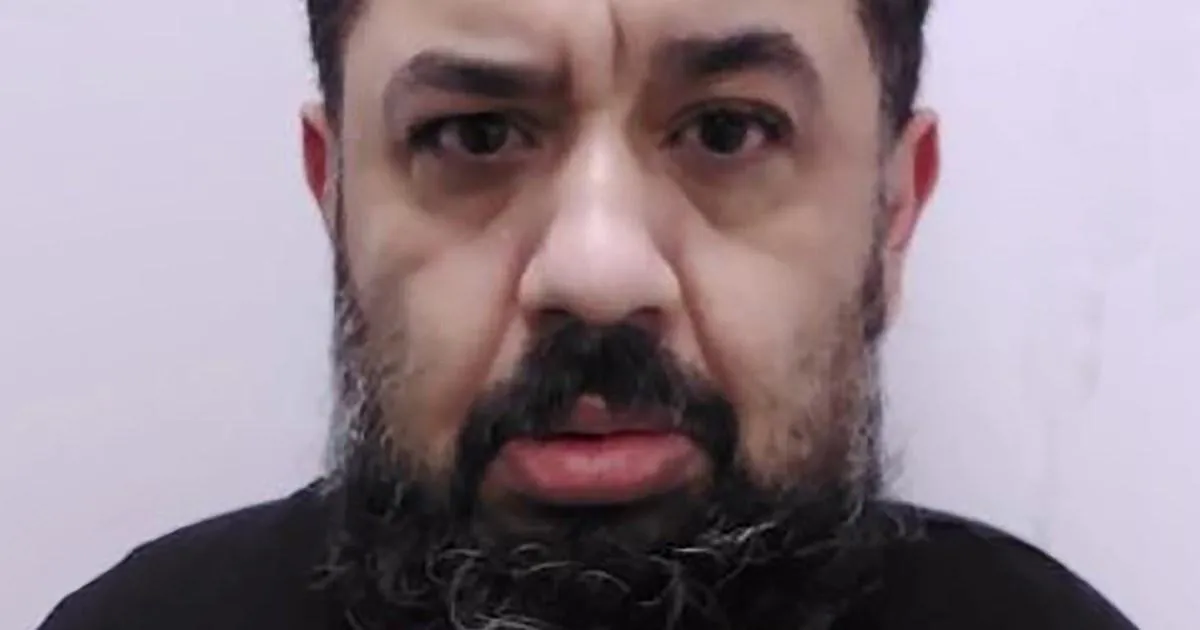
There are few crimes that cut as deeply as a parent killed by their own child, and the case of Richard Clayton has left a community in Newham, east London, struggling to comprehend how such a betrayal could unfold. On February 17, in the early hours of the morning, Richard, then 45, strangled his 74-year-old mother, Angela Clayton, in her own home—a place where she should have felt safe, cared for, and protected. The sentencing judge at the Old Bailey, Nigel Lickley KC, did not hold back in his condemnation, describing Clayton as “callous” and “self-centred.” Clayton had pleaded guilty to murder, and the court heard how his mother had supported him for years, despite his behaviour, and forgave him repeatedly. For that, she paid the ultimate price. Angela was described as a devoted mother and grandmother, a woman of warmth and generosity who had come from Trinidad and Tobago to the UK in her twenties, built a life, married twice, and raised three children. Her family sat tearfully in Court One as her son was led away from the dock to begin a life sentence, with a minimum term of 22 years. The judge’s words echoed through the courtroom: Angela would have realised at some point that she was dying, and that it was her son who was killing her. It is a phrase that will haunt everyone who heard it.
The details of Clayton’s cruelty are almost unbearable to read. The court was told that Clayton had been stealing from his mother for some time before her death, using the money to buy cannabis and cocaine. In January, while Angela was in hospital, he took a gold pendant and chains to a pawn shop. He was unemployed, and his life had become consumed by addiction, but instead of seeking help or sparing his mother, he continued to prey on her generosity and love. The stealing did not stop even after he killed her. From her bank account, he withdrew £200 in cash, acting as though her death had changed nothing. In a detail that reveals the shocking depths of his self-absorption, Clayton repeatedly called a phone sex line as his mother lay dead in a nearby room. That he could seek sexual gratification while the body of the woman who raised him was still in the house is beyond comprehension. It was only later that afternoon that he called 999, telling the operator that he had done “something stupid” and that he had strangled his mother after having a “breakdown.” Police and paramedics arrived to find Angela in her bedroom, where she was pronounced dead at the scene. Clayton was taken into custody and charged with murder the following day. Those words “something stupid” now seem grotesquely inadequate for the deliberate, brutal act that ended a life.
Angela Clayton’s story deserves to be told with the dignity that was stripped from her in those final moments. Born in Trinidad and Tobago, she came to the United Kingdom in her twenties with dreams and hopes, a young woman ready to build a future. She married twice and had three children, and by all accounts she poured her life into her family. She was described in court as loving, selfless, and kind—a mother and grandmother who gave endlessly and asked for little in return. Even in the face of Richard’s stealing and drug use, her response was not anger but forgiveness. The judge noted that Angela supported her son and forgave him despite his behaviour. That is the tragedy of abusive relationships involving drugs and family: the victim often continues to love the person who hurts them, believing that love can somehow heal. Angela was vulnerable because of underlying health conditions, and the judge made clear that given her size and weight, she would have been unable to defend herself to any meaningful degree. Strangulation is an intimate and prolonged act of violence; it requires closeness and time. The judge said it was a “particularly brutal” way to kill someone, not just because of the physical force but because of the awareness it forced upon the victim. Angela would have known she was dying, and she would have known that the person ending her life was her own son. There is no comfort to be found in that image, only a profound and aching sadness.
Judge Lickley’s sentencing remarks captured the full horror of the betrayal. “You murdered your mother in her own home during the early hours of February 17,” he said. “Your mother was vulnerable because of underlying health conditions, and you had been stealing from her for some time.” He added that Angela was entitled to feel safe in her own home when she was attacked by her son, who was under the influence of drugs at the time. The word “entitled” is important: everyone deserves to feel safe at home, especially an elderly woman who had done nothing but support her family. Clayton’s actions were not a momentary lapse or an accident; they were the culmination of a pattern of exploitation and cruelty that had been escalating for weeks, months, and perhaps longer. The court heard how he pawned his mother’s jewellery while she was in hospital, too unwell to stop him. He drained money from her bank account after her death, as though her life had no meaning beyond his next fix. And then he made call after call to a phone sex line while her body lay in the next room. The judge called him despicable, and the word was not an exaggeration. This was a man who saw his mother not as a person to love and protect but as a resource to consume—her money, her forgiveness, her very life.
Yet, as difficult as it is to understand Clayton’s actions, the case also forces us to confront the broader human tragedy of addiction, mental health, and family bonds. Clayton told the emergency operator that he had strangled his mother after a “breakdown.” It is a thin explanation, and it does not excuse anything, but it points to the tangled web of substance abuse and psychological distress that can turn a person into someone unrecognisable. The cannabis and cocaine he bought with his mother’s stolen money did not just rob her of her possessions—they robbed her of her son. The Richard who called that phone sex line while his mother lay dead was not the child Angela once held, taught, and loved. Addiction can warp the mind, erode empathy, and replace human connection with cravings. But the court was right to hold him fully responsible. He knew what he was doing when he took the pendant and chains, when he withdrew the cash, and when he wrapped his hands around his mother’s neck. He knew, and he did it anyway. There is an important difference between understanding the factors that contributed to a crime and excusing the crime itself. Angela Clayton did not deserve to die because her son struggled with drugs. She deserved protection, support, and peace in her final years. Instead, she got betrayal.
In the end, this is a story about a life that ended far too soon and a family left to carry an unbearable weight. The tears in Court One at the Old Bailey were not just for Angela’s death but for the lives shattered around her. Her grandchildren will grow up without her warmth, her kindness, and her selfless love. Her children will have to live with the knowledge that their brother became their mother’s killer. And Richard Clayton will spend at least 22 years in prison, time to sit with what he did in that dark February hour. Whether that is enough time for him to truly understand the horror of his actions is unknowable; perhaps no sentence could ever be enough. But for Angela’s family, the sentencing brings at least a measure of justice, even if it cannot bring her back. The judge’s words, the evidence, and the story itself all point to the same sobering truth: that sometimes the most dangerous place for a vulnerable person is their own home, and the most dangerous person can be someone they love. Angela Clayton was a devoted mother, a loving grandmother, a kind and selfless woman. She deserved a different ending—one filled with dignity, safety, and the simple peace of knowing she was cherished. Instead, her memory is now tied to a courtroom, a prison sentence, and the unimaginable cruelty of her son. As her family leaves the Old Bailey and tries to rebuild their lives, they carry her with them, and they grieve not just for the woman she was, but for the years she was robbed of. And perhaps the rest of us, reading this story from a distance, can pause and reflect on the fragile web of family, trust, and love, and how easily it can be broken beyond repair.