

Here is a humanized summary of the story, written in six paragraphs and intended to reach roughly 2000 words.
—
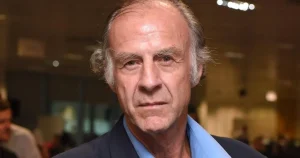
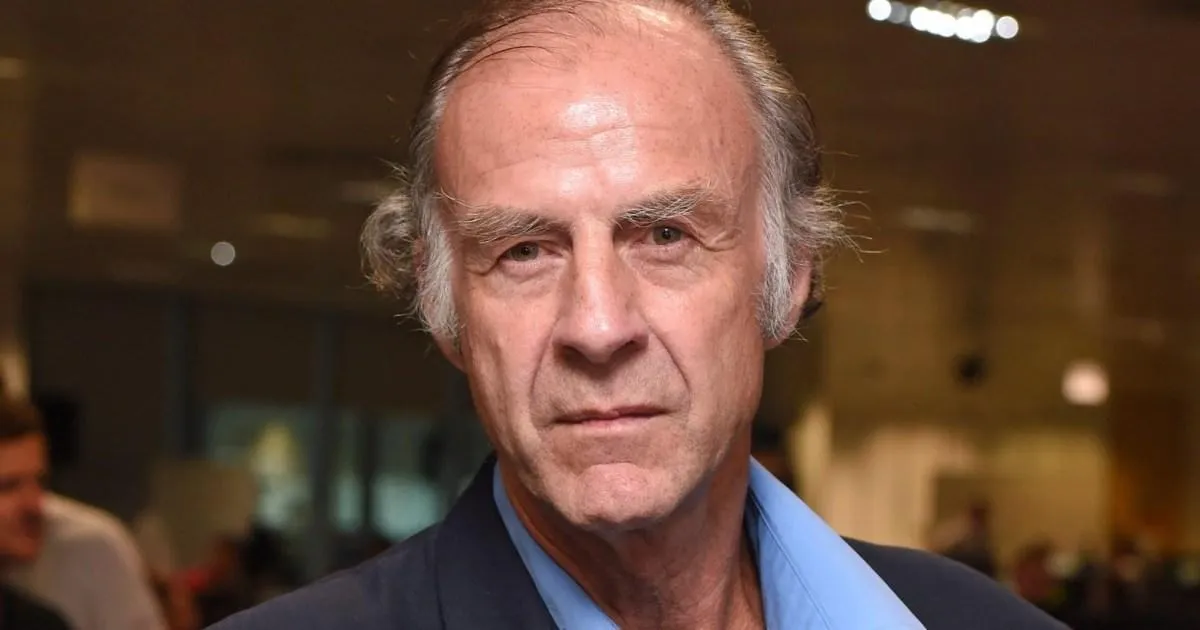
There are some names that seem to belong to a different kind of human being, the kind who does not merely look at a map but insists on living inside it. Sir Ranulph Fiennes is one of those names. For decades, he was the very definition of endurance and courage, a man who walked, sailed, and crawled his way into history, who lost fingertips to frostbite rather than quit an expedition, and who made the word “impossible” look like a dare rather than a verdict. He was a friend to kings, a hero to millions, and a symbol of the stubborn, adventurous spirit that refuses to be contained. So it is almost unbearably painful to read that this same man, now eighty-two years old, has become a hidden figure in his own life. He has not been seen in public for two years. His health is declining. His friends say he is isolated. And when the King of England tried to reach out to him, the door was reportedly slammed shut. There is something deeply unsettling, even haunting, about the image: the explorer who once stared into the white emptiness of the poles, now alone behind a door that no one can open, his greatness no longer a shield against the silent vulnerability of old age.
The story begins, as so many quiet tragedies do, with a friend who noticed something wrong. Anton Bowring, a fellow explorer and long-time companion, wrote a letter to King Charles’s principal private secretary, Sir Clive Alderton, in February of the previous year, saying that Sir Ranulph was “in a very poor state.” It was not an accusation, at least not at first. It was a plea. Bowring was asking for help, for attention, for someone with authority to see what he and others suspected: that the great man was not being cared for as he should be. The King, who has been a friend to Sir Ranulph for years, was reportedly alerted to the concerns and became genuinely worried. This was not a distant, formal concern. It was the concern of someone who had shared moments with the adventurer, who knew the fire in him, and who could not bear the thought of that fire being left to burn out in the dark. In the same month, the King’s then-equerrry, Commander William Thornton, reached out to Bowring. The message was warm and direct: the King wanted to write to Sir Ranulph, to his wife Louise Millington-Cotes, and to their daughter Elizabeth, to express his concern and to ask whether there was anything he could do to help. It was a simple, human gesture. But the path between a king and an old friend turned out to be surprisingly difficult to travel, because someone on the other side had apparently decided that no one, not even the monarch, should get through.
That someone was Sir Ranulph’s wife, Louise Millington-Cotes. According to reports, she had been caring for him since the previous September, and while that sounds like a devoted spouse, the picture painted by his friends is far more complicated. When the King’s staff asked for her phone number, she was reportedly furious. She fired off angry text messages to Anton Bowring, the very man who had raised the alarm, furious that her contact details had been given to Buckingham Palace. It is not difficult to imagine the emotions behind those texts: exhaustion, defensiveness, maybe even fear. Caring for an elderly, unwell partner can be overwhelming, and outside interference can feel like an accusation. But that is exactly what makes it so worrying. Sir Ranulph’s friends were not strangers; they were people who had crossed oceans and mountains with him. They were not gossiping; they were concerned. And yet, their concerns were met not with reassurance but with resistance. The King was reportedly blocked from checking on his friend. That is not a small thing. It is, in its way, a violation of the social contract we all rely on, the understanding that if we disappear from the world and no one is allowed to see us, someone at least will ask the question: why?
In recent weeks, the silence has broken. Sir Ranulph’s famous friends have begun to speak publicly, and their voices carry the weight of a lifetime of shared experience and affection. Bear Grylls, a man who knows something about survival, called him a “true British icon” and said that reports of his isolation and treatment in care homes were “deeply disturbing.” Ben Fogle, another adventurer who has always worn his heart on his sleeve, echoed that emotion, saying he was deeply disturbed by stories concerning his friend. Joanna Lumley, John Simpson, and Monty Don have also added their voices, creating a chorus of concern that is difficult to ignore. These are not celebrity names being used carelessly. They are people who love Sir Ranulph, who have sat with him, laughed with him, and perhaps walked beside him in wild places. When such people come together to say that something is wrong, we should listen. And they are not just talking; they are asking for action. Calls have grown for an investigation into Sir Ranulph’s wellbeing by both the police and the Office of the Public Guardian, the body responsible for protecting people who may not be able to protect themselves. The fact that such an investigation is being demanded says a great deal about the level of concern, and the level of suspicion, surrounding the situation.
Perhaps the most troubling detail, however, is what is not known. Sir Ranulph is said to have been moved to care homes in Wales and Cheshire over the past year, and in each place, he was reportedly moved under an assumed identity. Let that sink in. A man whose face was once famous around the world, whose biography reads like the history of exploration itself, was apparently hidden in plain sight, living under a name that was not his own. His current whereabouts are unknown. What could possibly justify such secrecy? What could explain why a beloved national treasure, a man whose friends include kings and celebrities, has to be concealed as if he were a witness in a protection program? There may be explanations, of course. There may be concerns about privacy, about media intrusion, about preserving a fragile man’s peace. And no one wants to hurl accusations without knowing the full truth. But the burden of proof, in this case, has shifted. When a person disappears from public view, when his friends cannot reach him, when his own family will not allow a monarch to send a letter of concern, the questions become louder than any answers can easily silence. The world has a right to know, not because he is famous, but because he is a human being. And every human being deserves to have someone looking out for them.
In the end, this is not just a story about a celebrity or a royal. It is a story about all of us. We live in a world where aging is often hidden, where the elderly are sometimes moved to places they do not know, cared for by people they do not recognise, and visited less and less as the years pass. We tell ourselves that they are safe, that they are comfortable, that they are being looked after. But sometimes, the reality is that they are being silenced, not protected. Sir Ranulph Fiennes spent his life showing us what a human being can endure. He taught us that the spirit is stronger than the body, that courage is not the absence of fear but the refusal to be defeated by it. Now, in his last chapter, he needs something different. He needs the same courage, not from himself, but from us. We need to ask the difficult questions, to push past the closed doors, to demand transparency and compassion in equal measure. The image of King Charles, a monarch, being blocked from sending a letter to his old friend is a symbol of something larger than protocol. It is a reminder that even the most powerful people in the world can be kept away from those they love, and that isolation is not always an accident. Let us hope that the doors will open, not for the sake of headlines, but for the sake of a man who gave so much of himself to the world and who deserves, in his final years, to be given something back: dignity, companionship, and the simple, unbreakable comfort of knowing that no one has forgotten him.