


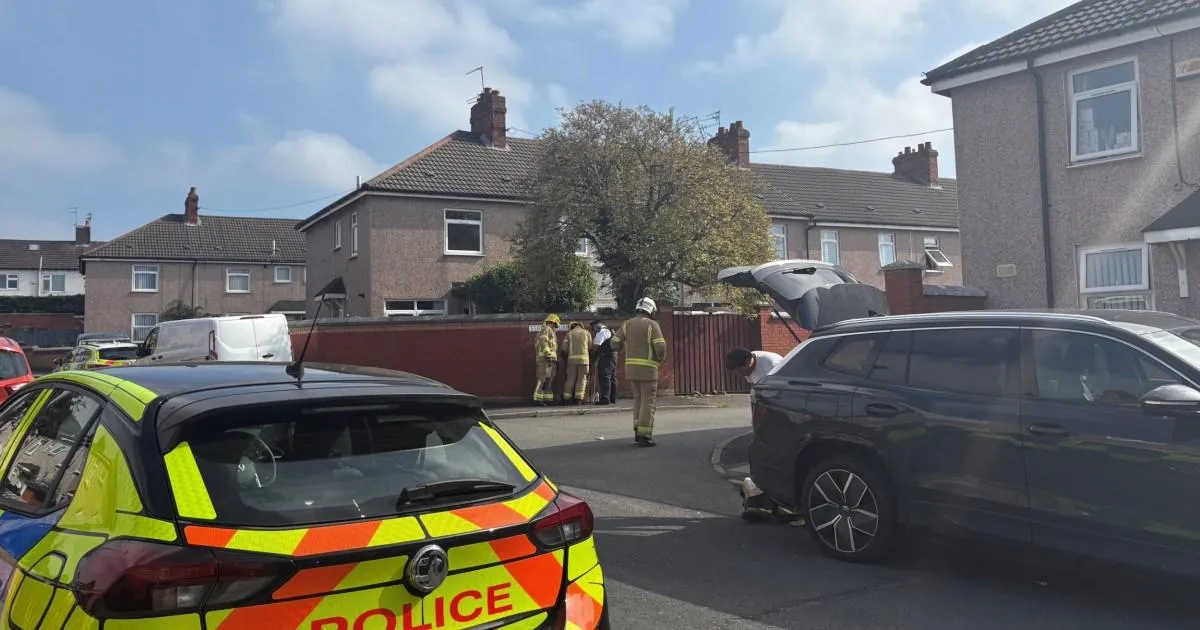
In the quiet, pre-dawn hours of a late September morning, the ordinary silence of a residential street in Bootle, Merseyside, was violently shattered. At 3:45 am, the stillness was broken by the piercing wail of emergency sirens as fire crews raced toward a semi-detached home on Stone Square. Neighbors, jolted from their sleep, would later describe the terrifying sight of flames and thick, acrid smoke billowing from the property. Inside that house, a family was fighting for their lives against a fire that was not born of a discarded cigarette or a faulty wire, but from a seemingly innocuous piece of modern technology—a lithium-ion battery. The fire had taken hold with such ferocity and speed that when firefighters, equipped with breathing apparatus, forced their way through the inferno, they found a scene of absolute devastation. The lives of a 36-year-old mother and her three young children had been extinguished in a matter of minutes, leaving a community in shock and a family utterly destroyed by an unimaginable tragedy.
The victims were Elisha Brabin, a woman described by those who knew her as a devoted and loving mother who lived entirely for her children, and her three beloved children: Leo, 16, a teenager on the cusp of adulthood; Ellis, just eight years old, still in the full bloom of childhood; and little Prudence, only seven, whose life was just beginning to unfold. They were all found unconscious in an upstairs bedroom, their bodies bearing no signs of life. Despite the frantic, desperate efforts of the fire crews and the North West Ambulance Service paramedics who worked alongside them, there was nothing that could be done. The mother and all three children were tragically pronounced dead at the scene. The sheer violence of the fire, which had completely engulfed the upper floor, had overcome them before they could even wake or escape. In addition to the four fatalities, a man was pulled from the wreckage suffering from burns and was rushed to a nearby hospital for urgent medical treatment, a survivor who will now have to carry the weight of this immense loss for the rest of his life. The scene that morning was one of profound sorrow, as police cordoned off the area, and the community began to gather in a daze, laying flowers and struggling to comprehend how a normal night could end in such horror.
In the days that followed, a painstaking police investigation sought to uncover the exact cause of the blaze. Their findings confirmed a chilling reality: the fire was sparked by a lithium-ion battery that had undergone a phenomenon known as “thermal runaway.” This is a terrifying chain reaction where a battery generates heat faster than it can dissipate it. Once initiated, the process is self-sustaining and almost impossible to stop. The internal temperature of the battery skyrockets, causing the electrolyte to vaporize and the internal pressure to build until the cell ruptures, spraying hot, flammable gases that ignite, leading to intense fires that can spread in seconds. This is not a slow burn; it is a violent, explosive release of energy. The fire brigade confirmed that the battery was the definitive source of the fire, though they did not specify exactly which device it was housed in. However, the public knows these batteries are ubiquitous in modern life, powering everything from smartphones and laptops to electric bikes and scooters—items that millions of people charge in their homes overnight, often while they sleep, unaware of the potential danger lurking in their midst.
Kev Johnson, the head of prevention at Merseyside Fire and Rescue Service, stood before the media with a heavy heart, his words serving as both a eulogy and a stark warning to the public. “This is a devastating incident, and our thoughts are very much with the family and friends of the mother and children who lost their lives and those who were injured,” he said, his voice laden with grief. He then took the opportunity to commend the extraordinary efforts of the fire control staff and the crews on the ground, noting that they worked tirelessly, side-by-side with their medical colleagues, “who made every effort to provide a different outcome, but sadly this was not the case due to the speed and intensity of the fire.” Mr. Johnson emphasized that this tragedy highlights the “very real risks posed by lithium-ion batteries,” which they had confirmed as the source. He urged the public to strictly adhere to manufacturers’ instructions, to only use the chargers and batteries supplied with their products, and to never use cheap, unbranded alternatives that might not have the necessary safety mechanisms. He stressed the critical importance of recognizing the warning signs of a failing battery—swelling, unusual sounds, a strong chemical smell, failure to hold a charge, or visible smoking—and to immediately cease using any device exhibiting these symptoms.
The sheer scale of this danger is staggering. The Merseyside Fire and Rescue Service revealed that since August 2023 alone, there have been 150 separate fires across the region linked to lithium-ion batteries. Disturbingly, 45% of these fires occurred in private homes, turning the very spaces where families should feel safest into potential death traps. These batteries are most commonly associated with e-bikes and e-scooters, which have surged in popularity as a means of eco-friendly and cost-effective transport. Yet, the convenience they offer comes with a hidden, volatile price. Charging such a device overnight, plugging it into a socket under a pillow or next to a sofa, or leaving it unattended for hours, creates a high-risk scenario. The failure can happen at any time, often without any prior warning, transforming a bedroom into an inferno within moments. This incident is a grim reminder that the technology we have come to rely on for our daily lives, from our commuting tools to our children’s toys, requires respect and vigilant maintenance. The fire service’s statistics are not just numbers; they represent homes destroyed, families displaced, and, in the most tragic of cases, lives lost in the blink of an eye.
In the wake of the fire, the community of Bootle has been left to mourn, with a growing pile of flowers, cards, and soft toys placed outside the charred remains of the home on Stone Square. The tributes serve as a silent testament to the family who lived there, a family that was taken far too soon. Elisha’s family, shattered by their loss, released a heart-wrenching statement that captured the depths of their grief. “The tragic loss of Elisha and our three precious children has left us heartbroken,” they said. “They have all been taken from us far too soon. The loss we are experiencing is unimaginable, and the impact on our family will be felt forever.” Their words resonate with a painful clarity, highlighting the fragility of life and the sudden, cruel way it can be ripped away. This is not just a statistic or a news headline; it is the story of a mother who lived for her children, a teenager with dreams of the future, and two young children whose laughter filled a home that now stands silent and blackened. As the investigation concludes and the grief settles, the only thing that can emerge from this tragedy is a determined effort to educate the public. The fire that claimed Elisha, Leo, Ellis, and Prudence is a profound, heartbreaking lesson—a stark reminder that the batteries that power our modern world must be treated with the caution they demand, so that no other family has to experience a loss so devastating and so entirely preventable.