


Here is the content summarized and humanized into a 6-paragraph feature story, expanding on the original article to add depth, color, and context.
—
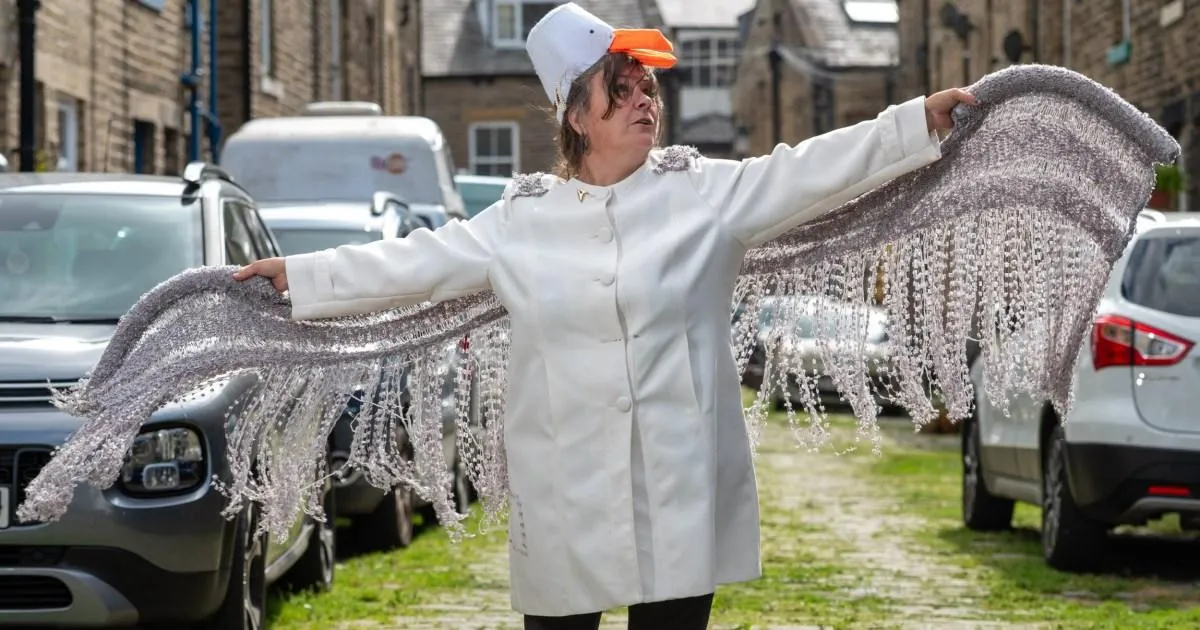
The seaside air in Weston-super-Mare was thick with salt, the distant crash of the Bristol Channel, and an unusual chorus of avian cries. It wasn’t the work of the local gull population, however, but of 22 human competitors, each vying for the coveted title of the 2026 Seagull Championships. The atmosphere was one of joyful absurdity, a celebration of one of Britain’s most misunderstood coastal residents. But when the final, piercing squawk faded into the wind, it was Trish, a 59-year-old full-time carer from the landlocked town of Hebden Bridge, who stood triumphant. Her winning call, a masterpiece of vocal control, was the result of over half a century of dedicated practice, and it had just earned her the national crown.
For Trish, this victory was the culmination of a lifelong, quirky passion that began, unexpectedly, during a childhood holiday to Butlins. She was just eight years old when she was first captivated by the raucous, bold, and undeniably charismatic birds that patrolled the British coastline. “I’ve been doing the impression for a long time now,” she explains, her face still beaming with the joy of her win. “I finally got the recognition.” It’s a far cry from her daily life in West Yorkshire, where the call of the gulls is a distant memory. Yet, her connection to these birds runs deep, rooted not in the annoyance they often cause, but in a profound appreciation for their character. “I think they’re really cheeky,” Trish confesses, revealing the affection at the heart of her unusual talent.
To the untrained ear, a seagull’s cry might sound like mere squawking, but to a champion like Trish, it is a complex language of nuance and tone. Her winning performance was not simply a shout; it was a carefully crafted piece of vocal athletics. “It’s quite physical,” she says, describing the demands of her art. “I have to contort my face. Sometimes it even gives me a bit of a headache – that’s how dedicated I am to my art.” Her technique is deceptively simple in concept but fiendishly difficult to master. While many imitators go for a uniform, high-pitched shriek, Trish’s approach is more dynamic. “A lot of seagull impersonators go for a low pitch, but I try to go from a low pitch to a high pitch with a bit of a warble,” she reveals, sharing the secret to her success as if discussing a classic piece of music.
The competition itself was a true spectacle of dedication and eccentricity, a testament to the enduring appeal of this peculiar pastime. Held at the Weston Museum, the event was more than just a battle of vocal cords; it was a vibrant community gathering. The organizers had divided the competitors into two leagues—under-12s and the over-12s—ensuring that the next generation of gull-callers is being nurtured. Adding to the festivities were gull-themed games and a performance of seagull-inspired Morris dancing, a fusion of traditional English folk culture with the spirit of the coast. Presiding over the chaos was a familiar face: Cooper, a young man who rose to internet fame as the viral ‘Seagull Boy.’ His return as a judge added a layer of prestige and authenticity, proving that the art form is being passed down through the ranks.
The atmosphere was a mix of high-stakes tension and pure, unadulterated fun. For Trish, who had never done anything quite like this before, the experience was a whirlwind. “It was quite surreal, really,” she admits, recalling the moment she stepped onto the stage. “I was quite nervous, but it was really exciting and it felt like a real competition. It was a lot more serious than I thought.” The initial lightheartedness gave way to a genuine competitive edge, as each contestant tried to out-squawk the other, their cries echoing around the museum walls. The sheer passion on display was a reminder that the British love for the eccentric is alive and well, transforming a simple bird call into a serious, and seriously enjoyable, sporting event.
As the new champion, Trish has no plans to rest on her laurels. With her 60th birthday on the horizon, she is setting her sights on international glory. “I’m going to go to Belgium to mark my 60th,” she declares, ready to take her unique talent to the continental stage. Her story is one of finding extraordinary joy in the ordinary, of transforming a childhood memory into a celebrated skill. It challenges our perception of the seagull, urging us to see past the bin-raiding stereotype and appreciate the bird’s bold, intelligent, and “cheeky” spirit. For Trish, the gulls may not have ever nicked anything precious from her, but they have certainly given her a priceless gift: a unique identity, a community, and a national title. She embodies the idea that true passion, no matter how unusual, is always worth celebrating.