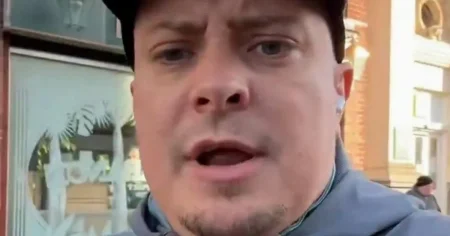


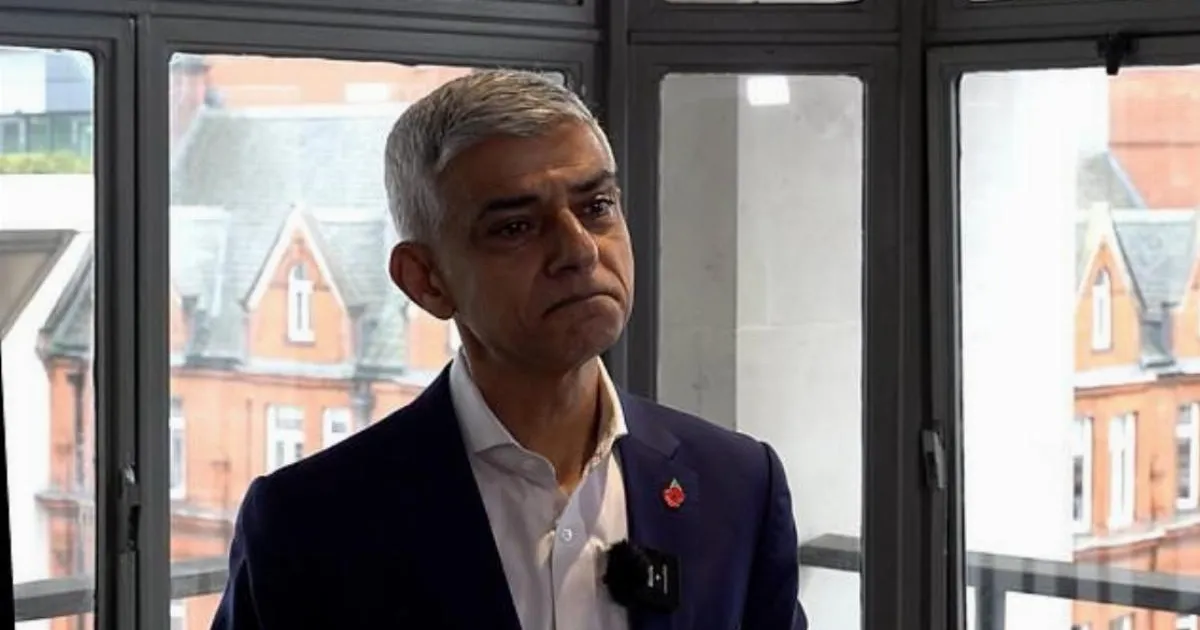
Sadiq Khan has never been shy about his feelings on Brexit, but his latest intervention goes further than before. The London Mayor stood on London’s newly pedestrianised Oxford Street and told reporters that rejoining the European Union is “inevitable” — and that the United Kingdom shouldn’t waste any more time getting there. He was responding to a suggestion from Prime Minister Andy Burnham that the door to the EU is still open, and he used the opportunity to paint a stark picture of a world in flux. With instability inside the White House, conflict in Ukraine, and tensions with Iran, Khan argued that Britain can’t afford to isolate itself from its nearest neighbours. Europe, he reminded everyone, isn’t just a political project; it’s the UK’s largest trading partner and its closest geopolitical ally. In his view, the Brexit experiment has already failed the economy, and the longer the country clings to it, the more ordinary people will pay the price. He warned that remaining outside the union would mean “fewer jobs and less prosperity,” and he called for a serious conversation about reversing the decision. This isn’t the language of a cautious politician. It’s the language of someone who believes the argument is already over and that the only question left is timing. For Khan, the debate isn’t about whether Britain should return to the EU, but how quickly it can be done without further damage. And by linking Brexit to the wider global climate, he’s trying to make the case that staying away from Europe isn’t just economically foolish — it’s dangerously outdated in a world where alliances matter more than ever. The choice of Oxford Street as a backdrop was also telling. This is a place that depends on shoppers, tourists and international visitors, and it has been transformed by pedestrianisation in a way that echoes European cities. For Khan, it was a small symbol of the future he wants: open, connected and outward-looking. It’s also a reminder that London, the city he leads, voted strongly against Brexit and has had to live with the consequences ever since. The symbolism was hard to miss: a European-style public space in the heart of a global city, surrounded by shops that rely on free movement of people and goods. For him, the choice isn’t between left and right, but between openness and isolation.
Khan’s argument isn’t new, but it has become more pointed. He has long described Brexit as “catastrophic” for London, and he has repeatedly pointed to the damage done to food and drink exporters who now face mountains of paperwork, border checks and costs that didn’t exist before. In his mind, leaving the EU was never the clean break that Leave campaigners promised. It was a self-inflicted wound that has made it harder for British businesses to sell their goods, harder for young people to study and work abroad, and harder for the country to attract the talent it needs. He wants to see trade barriers removed, and he has even suggested that some form of freedom of movement should return. That’s a bold position for any mainstream politician, because freedom of movement was at the heart of the Leave campaign’s anger. But Khan believes the public has changed its mind, or at least that the circumstances have changed so dramatically that the old arguments no longer make sense. He told reporters: “Rejoining the EU must be our destination.” Those words are carefully chosen. A destination isn’t the same as a journey; it suggests a clear end point, not a vague hope. It also suggests that every step the country takes from now on should be measured against whether it moves closer to that goal. Khan isn’t asking for a referendum tomorrow, and he isn’t pretending that the EU is perfect. He’s saying that the long-term direction of travel is obvious, and that delaying it only makes the pain worse. For him, the cost of Brexit isn’t an abstract economic statistic. It’s the bakery in London that can’t sell its cakes in Paris without hours of customs forms. It’s the nurse from Manchester who can’t take a job in Madrid without a visa. It’s the university student who no longer has the right to study in Berlin. These are the everyday realities that get lost in political arguments about sovereignty and control, and Khan wants to bring them back into the conversation. He also knows that his words will be attacked, but he seems willing to take that risk because he genuinely believes the future of the country depends on it. He’s not alone in that belief, and his willingness to say it out loud is exactly why his comments matter so much.
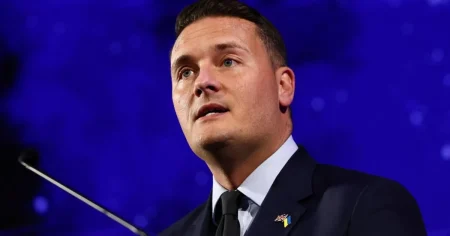
Khan’s intervention comes at a delicate moment for the Prime Minister, Andy Burnham. Since taking office, Burnham has repeatedly suggested that he would consider “going all the way” and taking the UK back into the EU. That phrase — “going all the way” — is significant, because it implies a complete reversal of Brexit, not just a closer relationship. But Burnham is also aware of the political risks. On Monday morning, he was asked directly whether he would allow the UK to join the EU’s freedom of movement scheme without a referendum. His answer was clear: no. He said he would “never move ahead of the British public” when it comes to Brexit, and he stressed that any major change would have to be approved by voters. This is a careful balancing act. On one hand, Burnham wants to keep alive the possibility of rejoining the EU, which appeals to the many voters who regret the 2016 decision. On the other hand, he knows that a large chunk of the electorate still supports Brexit, or at least doesn’t want to go through another divisive national debate. By ruling out freedom of movement without a referendum, he’s trying to reassure those voters that he isn’t going to sneak the UK back into the EU through the back door. But he’s also leaving the front door open. His comments suggest that if the public did support rejoining, he would be willing to take the next step. This is classic political hedging, but it also reflects a genuine dilemma. The EU isn’t going to sit around forever waiting for Britain to make up its mind. Other countries have moved on. The bloc has its own problems and its own priorities, and any future application would have to be negotiated on terms that are far less favourable than the ones Britain had before. Burnham knows this, which is why his language is so carefully measured. He isn’t promising anything, but he isn’t closing any doors either. And by making a referendum the gatekeeper, he’s handing the decision back to the people — which is exactly where it should be in a democracy. At the same time, he’s making it clear that nothing will happen unless the public is ready for it, and that’s a message designed to calm nerves rather than inflame them.
The Prime Minister’s refusal to reinstate freedom of movement without a referendum is rooted in his concerns about immigration. Asked about the issue, he spoke about the “small boats crisis” and argued that the UK had lost control over immigration in the ten years since Brexit. He claimed that the country had lost a returns agreement that once made it possible to work with other countries to send people back. He also drew a distinction between the old system, which he described as “revolving door migration” within the EU, and the current situation, where more people are coming to settle permanently. This is a sensitive argument, and Burnham is clearly trying to navigate it carefully. He wants to show that he understands the public’s anxieties about border control, while also leaving the door open to a closer relationship with Europe. But his comments are likely to frustrate those who want a swift return to the EU. If freedom of movement is off the table without a referendum, and if any referendum is unlikely to happen soon, then rejoining the EU is at best a long-term aspiration. Burnham’s position is essentially: I won’t take the British people for granted, and I won’t pretend that immigration isn’t a concern. That may be politically wise, but it also means that the UK is likely to remain in a kind of limbo for years. The EU’s leaders have said many times that they won’t offer Britain the same terms as before. They have their own elections, their own economic problems and their own public opinion to worry about. A country that left the EU can’t simply walk back in and expect a warm embrace. It would have to accept the euro eventually, probably, and the Schengen open-border area, and the jurisdiction of the European Court of Justice. Those are huge sacrifices, and no British government is going to propose them without a very clear mandate. Burnham’s insistence on a referendum is therefore not just a way of managing public opinion. It’s also a way of making sure that if the UK does rejoin, it will be because the people genuinely chose it — not because a political elite decided to overturn the last referendum on its own. For ordinary voters, this means the question isn’t going away, but neither is it going to be decided in a hurry. It also means that immigration will remain at the centre of the conversation, because any future debate about Europe will inevitably be a debate about who gets to come and go.
The reaction from the political opposition was immediate and predictable. Both the Conservatives and Reform UK have heavily criticised the Prime Minister for even suggesting that the UK could return to the EU. For them, Brexit isn’t just a policy; it’s an identity. They see any talk of rejoining as a betrayal of the 2016 referendum, in which the country narrowly voted to leave. They also see it as an electoral opportunity. By tying Burnham to the idea of rejoining the EU, they hope to mobilise Leave voters who feel that their concerns have been ignored by the political establishment. The debate has raged ever since the referendum, and it shows no sign of cooling down. In fact, the passage of time has made it more complex. The generation that voted to leave is slowly being replaced by a younger generation that is far more pro-European. The economic costs of Brexit have become clearer, and the promises made by Leave campaigners haven’t all come true. But the emotional attachment to Brexit remains strong for many people, and the memory of the referendum is still raw. Khan’s comments are unlikely to change that overnight. They might, however, change the terms of the debate. Instead of asking whether Brexit was a good idea, he’s asking what kind of country Britain wants to be in the future. He’s also reminding people that the EU isn’t a foreign power; it’s a collection of neighbouring countries that share the same continent, the same challenges and, in many cases, the same values. The political reaction to his remarks shows how difficult it is to have a calm conversation about Europe in Britain today. Every comment is immediately weaponised, every suggestion is taken to its extreme, and every politician is forced to choose sides. That’s exhausting, but it’s also the reality of a country that is still divided by the biggest decision it has made in decades. For now, the official position is that the UK will not rejoin the EU without a referendum. But as Khan says, why delay the inevitable? The answer, for many people, is fear — fear of the unknown, fear of change, and fear of admitting that a mistake was made. That fear is real, and it can’t simply be dismissed as ignorance. It has to be understood and answered with honesty, not slogans.
What does all of this mean for ordinary people? It means that the Brexit argument isn’t over, and it won’t be over until the country finds a way to move forward. Khan’s message is aimed at those who feel that politics has ignored them. He wants to reassure them that it’s okay to change your mind, that the world has changed, and that the future doesn’t have to be shaped by the decisions of the past. He’s also trying to reframe the debate around practical concerns. When he talks about food and drink exporters, he’s talking about jobs. When he talks about trade barriers, he’s talking about the cost of living. When he talks about freedom of movement, he’s talking about the freedom of ordinary people to live, work and love wherever they choose. These aren’t abstract ideas. They affect whether a family can afford to put food on the table, whether a young person can take a job in another country, and whether a small business can survive. The human reality of Brexit is complex. Some people have benefited from it, or believe they have. Others have lost contracts, customers and opportunities. Many people simply want the country to stop arguing and get on with the business of governing. But the argument won’t go away, because the relationship with Europe isn’t a side issue. It shapes the laws we follow, the goods we buy, the people we meet and the way we see ourselves. Khan’s intervention is important because it gives voice to a growing sense that the UK’s future lies with its European neighbours. It may not lead to a referendum tomorrow, or even in the next decade. But it changes the conversation. It makes rejoining the EU a legitimate part of the political debate again, rather than a taboo. And it forces everyone to ask themselves the same question: if the destination is inevitable, why not start the journey now? The answer to that question will define British politics for a generation. For now, the only thing that is certain is that the debate is far from over — and that ordinary people, not just politicians, will have to decide where the country goes next. In the meantime, the best thing anyone can do is keep listening, keep asking questions, and remember that behind every argument about borders and treaties there are real lives being lived, real families trying to get by, and real hopes for a better future.