

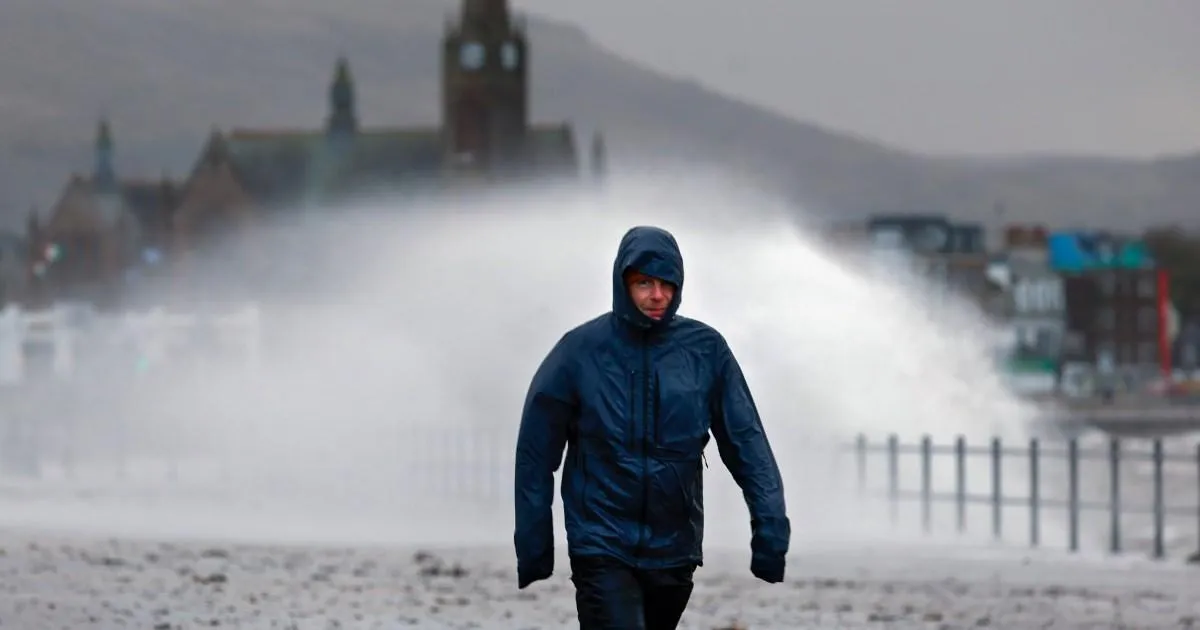
Storm Boelo has swept across the UK with a ferocity that has turned ordinary life upside down, leaving a trail of disruption and danger in its wake. The west coast of Scotland, in particular, has borne the heaviest burden of this second named storm of the season. In the picturesque coastal town of Largs, the sea has surged far beyond its usual boundaries, and high tide has transformed familiar streets into shallow, swirling rivers. Water laps at doorsteps, seeps into ground floors, and turns car parks into temporary lakes, while the wind howls with a persistent, unnerving roar. For residents who have lived through storms before, there is a familiar mix of defiance and weariness: sandbags stacked, gutters checked, phones charged, and yet still the weather finds ways to unsettle. The spectacle of waves crashing over sea walls is both dramatic and frightening, a raw reminder of nature’s power. Further inland, the storm’s reach extends far beyond the coast. Gusts have stripped trees of branches, sent loose objects flying, and turned ordinary commutes into treacherous journeys. The morning light reveals a landscape battered and bruised, with debris scattered across roads and gardens. In Largs, the floodwater is not just an inconvenience; it is a disruption of daily life, forcing people to wade through cold water, move belongings to higher ground, and wait anxiously for the tide to recede. Shops that would normally be opening their doors are instead assessing damage, while families huddle indoors, watching the weather updates with growing concern. This is the reality of Storm Boelo: a powerful, unrelenting system that has made clear that even the most beautiful coastal communities are not immune to its fury. For those caught in its path, the storm is not just a headline or a forecast; it is a lived experience of noise, water, and worry, and the full extent of the damage will only become clear as the waters finally retreat.
Across Scotland and beyond, the practical consequences of Storm Boelo are being felt in the most fundamental ways. Around 82,000 people have been left without power, their homes plunged into darkness and silence as the wind damages overhead lines and substations. The loss of electricity is more than an inconvenience: it means heating that cannot be switched on, food that cannot be cooked, and refrigerators that slowly warm. For vulnerable people—the elderly, the ill, or those with young children—the outage brings a sharp edge of anxiety, especially as temperatures drop and the storm shows no sign of easing. In the island of Ireland, thousands more have also lost supply, including more than 2,000 households in Northern Ireland alone. Engineers and repair crews are working against the clock, but high winds make their job difficult and dangerous. Every time they restore one line, another may snap elsewhere. The dark hours stretch on, and the sound of wind rattling windows becomes a constant reminder of how dependent modern life is on a steady flow of electricity. Candles, torches, and battery packs come out, and neighbours begin checking on one another in the way that communities have done for generations. Yet the human impact goes deeper than the inconvenience of a power cut. There is something unsettling about being cut off, even temporarily, from the grid that powers daily existence. The storm has stripped away the usual comforts and exposed the fragility beneath. Phone batteries dwindle, internet connections falter, and the world shrinks to the immediate surroundings. For many, the night is spent listening to the storm, unable to do much more than wait. The morning brings not just light but a slow assessment: which roads are blocked, which trains are running, and how long before normal life can resume. In the meantime, cups of tea are made on gas hobs, blankets are piled high, and people find small ways to stay warm and connected. The power of the storm is undeniable, but so is the resilience of those who endure it, finding patience and solidarity in the face of disruption.
Travel has been thrown into chaos across much of the country, with the rail network particularly badly affected. On the West Coast Main Line, passengers have been urged to avoid travelling north of Preston, and Avanti West Coast is running a reduced timetable, leaving many would-be travellers stranded or uncertain. Scotland has imposed speed restrictions on all rail routes, and some services in the west and far north have been cancelled entirely, meaning that even the trains that do run are slower, less frequent, and more crowded. The knock-on effect is felt far beyond the tracks. Commuters who left home early to catch a train to work or a long-awaited visit to family find themselves staring at departure boards filled with delays and cancellations. In the Manchester and Liverpool area, a tree falling across the line has caused delays and cancellations on some services, a stark illustration of how quickly the natural world can disrupt carefully planned timetables. Network Rail Scotland has shared images of a large tree blocking a railway line near Dumfries, its roots torn from the earth, leaving the track impassable. The image captures the scale of the storm’s impact: a single tree, brought down by relentless wind, can halt thousands of journeys. The disruption is not limited to one operator. Northern, London Northwestern, West Midlands, Merseyrail, and Transport for Wales have all been affected, their services subject to delays, cancellations, and last-minute changes. For passengers, the uncertainty is exhausting. There is the constant need to check apps, listen for announcements, and make backup plans. Some operators, like Lumo, have told passengers on their west coast route that today’s tickets will be valid tomorrow, offering a small measure of flexibility in an otherwise rigid situation. But for many, the storm has simply made travel impossible, and the sensible choice is to stay home. The rail network, usually a symbol of connectivity and reliability, has been reduced to a fragile thread, vulnerable to the whims of the weather. Even when the winds ease, fallen trees, flooding, and debris will keep engineers busy for hours, and it will take time before the trains are running as they should. Until then, the journey is a test of patience, and the only certainty is uncertainty.
The sea routes that connect communities have also felt the storm’s force. P&O Ferries has cancelled its sailings between Cairnryan in Scotland and Larne in Northern Ireland at 8am and 12pm, leaving passengers and freight stranded at the ports. For those who depend on these crossings for work or family, the cancellation is more than a missed connection; it is a reminder of how exposed island and coastal communities are to the whims of the weather. The ferries sit in harbour, their decks empty, while the waves beyond the shelter of the port roll in with menace. On the roads, conditions are equally hazardous. Floodwater has covered stretches of the A8 in Port Glasgow, where a car is seen ploughing through a deep puddle, sending a bow wave across the carriageway. Driving in such conditions is not just unpleasant; it is dangerous. The Met Office has warned that strong winds can make vehicles difficult to control, and standing water can cause aquaplaning, suddenly robbing a driver of traction. For lorry drivers and those in high-sided vehicles, the risk is even greater, with gusts capable of pushing a vehicle across lanes or toppling it entirely. Many roads are blocked by fallen trees, branches, or debris, and drivers who ignore warnings may find themselves trapped or forced to turn back. The advice from authorities is blunt: stay indoors as much as possible, and if you must travel, be prepared for severe delays and hazardous conditions. Yet for some, travel is unavoidable. Emergency workers, medical staff, and carers still need to reach hospitals and homes, and their journeys in the teeth of the storm are a quiet act of heroism. Delivery drivers continue to make their rounds, and postal workers push on through the rain. The storm has a way of revealing the essential threads that hold society together, and the people who keep those threads intact are often the ones we take for granted. As the day wears on, the flood warnings and alerts multiply. Scotland currently has 11 flood alerts and 34 flood warnings, while Wales has four flood warnings and 18 flood alerts. These numbers represent real places and real worries: homes that may be inundated, roads that may become impassable, and businesses that may be damaged. The water keeps rising, and the wind keeps blowing, and all anyone can do is watch, wait, and hope that the damage is not too severe.
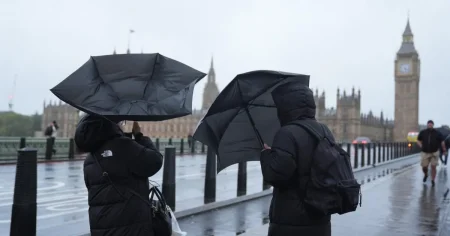
The Met Office’s warnings paint a stark picture of the storm’s reach and severity. An amber warning for wind is in force across all of Scotland, except Orkney and Shetland, and a large part of northern England, lasting until 9pm tonight. Within this zone, coastal areas could see gusts of up to 80mph, while winds of 60 to 70mph are expected more widely. These are not gentle breezes; they are winds capable of uprooting trees, damaging buildings, and turning everyday objects into dangerous projectiles. The amber warning is the Met Office’s way of saying that there is a real risk to life and property, and that people should take action to protect themselves. For those living in the affected areas, the warning is a constant presence, repeated on the radio, flashing on phone screens, and heard in the anxious conversations of neighbours. The wider yellow warnings for wind and rain cover an even larger area, including Northern Ireland, northern Wales, and northern England, with cities such as Manchester, Leeds, and Liverpool included. Even in these areas, where the storm is less intense, the weather is still capable of causing disruption, and people are advised to be cautious. The warnings are not abstract; they are grounded in real observations and forecasts, and they reflect the genuine danger that the storm poses. The Met Office has advised that driving in these conditions can be dangerous for both the driver and other road users, and has suggested that people stay indoors as much as possible and avoid walking close to buildings or trees, where falling debris or branches could cause injury. This is the kind of advice that is easy to ignore in good weather but vital in a storm like Boelo. The wind is not just a nuisance; it is a physical force that can knock a person off their feet, break a window, or send a tile crashing from a roof. The rain, too, is relentless, saturating the ground and increasing the risk of flooding. Rivers are swelling, drains are overwhelmed, and the landscape is slowly turning to mud and water. For those who have lived through storms before, the warning is a familiar ritual, but it never loses its power to unsettle. The hours stretch on, and the storm seems to have no end, but the forecast offers a glimmer of hope: the amber warning will expire at 9pm, and the winds will gradually ease. Until then, the best course of action is to stay safe, stay informed, and look out for one another.
As Storm Boelo rages on, the true character of communities is revealed. In the face of wind and water, there are small acts of kindness that make the difference: a neighbour offering a hot meal to those without power, a friend checking on an elderly relative, a local business opening its doors as a warm refuge. These moments of solidarity do not make the storm less dangerous, but they make it more bearable. The human spirit, it seems, is at its strongest when the weather is at its worst. The storm has also reminded us of our connection to the natural world. No matter how advanced our technology or how sophisticated our forecasts, the wind and the sea still have the power to stop us in our tracks. There is a humility in that, a recognition that we are not always in control. For the people of Largs, watching the tide swallow their streets, the experience is both frightening and humbling. For the thousands without power, huddled in the dark, it is a test of endurance. For the travellers stuck at stations, it is a lesson in patience. But storms, like all things, eventually pass. The winds will ease, the waters will recede, and the cleanup will begin. Trees will be removed from railway lines, power lines will be repaired, and the ferries will sail again. The damage will take time to repair, and the memories of Storm Boelo will linger, but life will slowly return to normal. What remains is a sense of resilience and a reminder of what matters most: safety, community, and the simple comfort of a warm, dry place to wait out the storm. In the days ahead, there will be time to clear up the debris, to assess the damage, and to help those who have been worst affected. There will be stories to tell and lessons to learn. But for now, the priority is simply to get through the night, to stay safe, and to hold on to the belief that the sun will shine again. Storm Boelo may have brought chaos and disruption, but it has also brought people together, reminding us that even in the wildest weather, we are never truly alone. And when the storm finally moves on, the communities it tested will emerge stronger, their bonds reinforced by the shared experience of having weathered the worst together.