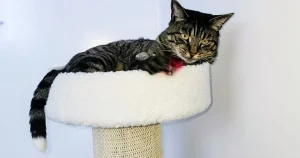


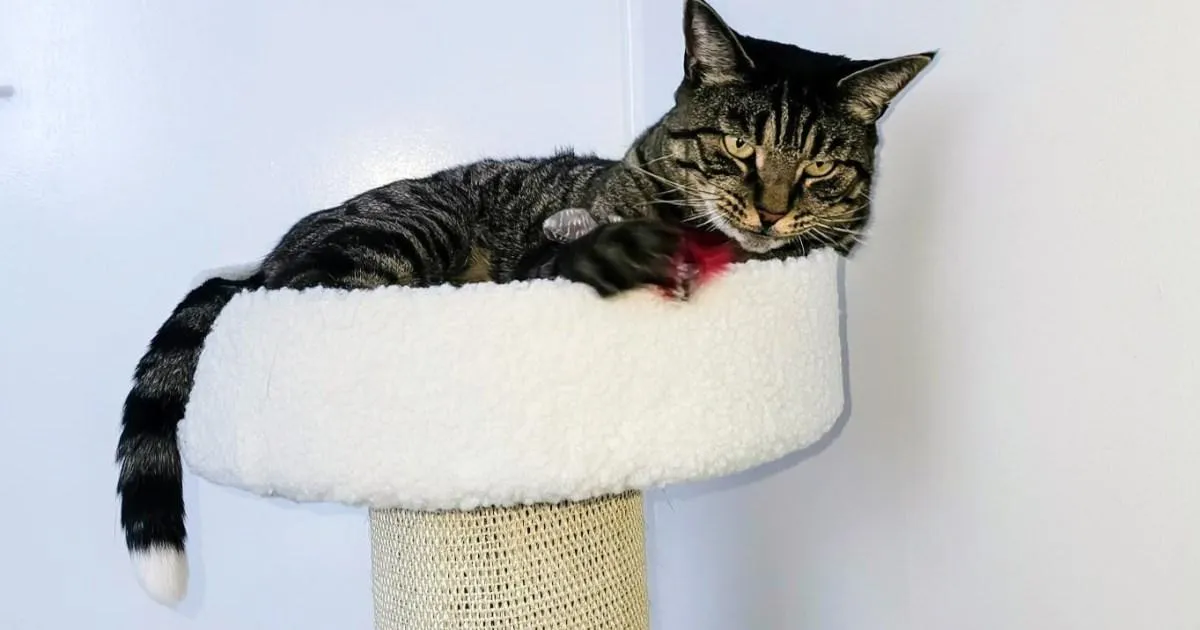
Max was an eight-year-old tabby with a quiet, contented world. He lived with Louise, 45, and Lisa, 47, in a flat in Hull, East Yorkshire, and his whole life revolved around small pleasures: a warm bed, a sunny patch in the front garden, and the reassuring rhythm of a home where he was loved. His most distinctive feature was his tail, tipped with white, which his owners described as looking like a paintbrush. To anyone passing by, he may have seemed like just another neighbourhood cat, but to Louise and Lisa he was family, a constant presence, a source of comfort and character. Then, suddenly, he disappeared. Last Monday, Louise let Max out into the front garden for a little while before leaving the flat. When she came back, he was gone. At first, they tried to reassure themselves that he might have wandered a little farther than usual, but deep down they knew something was terribly wrong. Max never did that. He was a homebody; he rarely went beyond the garden, and he was genuinely happy where he lived. The couple’s worry quickly turned into desperation. They made missing posters, shared appeals on social media, and searched the streets, hoping for a sighting or a message from a kind stranger. Instead, five days later, on Saturday morning, Lisa went to collect the post from the shared mail area in their block of flats and made a discovery that will haunt them forever. There, pushed through the letterbox, was Max’s severed tail. It had been deliberately chopped off and placed there. Louise heard Lisa screaming and crying and thought she had found Max collapsed on the floor. But when she reached the mail slot, she realized it was not his whole body. It was just his tail, unmistakably his, with its white-tipped end. “It looks like a paintbrush,” she said. They immediately called Humberside Police. The word “murder” is not one any pet owner ever wants to use, but Louise said it plainly: “He was murdered for no reason at all.”
The sequence of events makes the horror even more difficult to process. Max vanished on the Monday, and for five days the couple lived in a terrible state of not knowing. They did all the things people do when a loved animal goes missing: they called his name, walked the neighbourhood, posted photographs, begged for information, and tried to stay hopeful. Every hour they did not hear anything made the knot in their stomachs tighter. By Saturday morning, the worst fear was probably beginning to form: perhaps Max had been hit by a car and was lying somewhere, injured or dead, and no one had found him. That would have been painful enough, but it would have been a tragedy with an explanation. What they found instead was something far darker. The fact that Max’s tail was not simply found near a road or in a bush, but was deliberately pushed through the letterbox of the couple’s own home, suggests to Louise and Lisa that this was not an accident or a random animal attack. It was an act of cruelty aimed directly at them. They now believe Max was killed intentionally in a targeted attack, and the thought is unbearable. “We are devastated and heartbroken – who could do such a thing to an animal?” Louise said. “It’s not normal for him to go missing, so we knew something was wrong. He’d only go as far as the front or back garden; he was really happy at home.” The deliberate placement of the tail in the postal slot is what makes this case especially chilling. It was not a gruesome coincidence. Someone, for some reason, wanted the couple to find this object, to know that their cat had been killed, and to feel the terror and grief of that knowledge. It has turned their home into a place of anxiety and suspicion. They no longer feel safe in the flat where Max once slept peacefully, and they cannot understand why anyone would want to cause them such pain.
The investigation that followed offers a small measure of hope that whoever did this might be found. Humberside Police received a report at around 12:30pm on September 19, after the tail was discovered, and officers attended the address on Appleton Road. The tail has been sent to a specialist veterinary laboratory in Liverpool for DNA analysis, a process that could potentially identify traces of the person who handled it or otherwise connect a suspect to the crime. Forensics officers have also examined the letterbox for additional clues. For Louise and Lisa, the wait for answers is agonizing. They cannot stop their minds from returning to the most terrible possibilities, especially the thought that Max may still have been alive when his tail was cut off. Louise admitted that she is haunted by horrible images: “I’ve got horrible images in my head that the tail was taken off while he was alive.” This is the darkest part of the ordeal. Grief is hard enough when an animal dies of old age or illness; it is almost unbearable when the death is violent, mysterious, and deliberately inflicted. The absence of Max’s body makes it worse. They do not know where the rest of him is, whether he was buried, hidden, or perhaps still lying somewhere waiting to be discovered. “I go through phases of not feeling anything, like a zombie, and then all of a sudden I get waves of emotion,” Louise said. “It’s awful not knowing where the rest of his body is.” That uncertainty prevents closure. Instead of being able to grieve in a clear way, they are trapped in a loop of shock, fear, and unanswered questions. Every knock at the door, every envelope through the letterbox, every moment of quiet in the flat is now loaded with anxiety. They are not just mourning a cat; they are living in the aftermath of a violation that has taken something innocent and turned it into a weapon.
To understand why this loss is so devastating, it helps to know who Max was. Louise described him as full of character, a cat with presence and personality, who was a huge part of their family. He spent most of his days sleeping on his own bed, but he also loved sitting in the sunny front garden, watching the world pass by with a calm, contented patience. He was not just the couple’s pet; he was their companion, their source of warmth and routine, the living creature who greeted them and shared their quiet moments. He was also a patient big brother to Maple, the couple’s three-year-old cat. The relationship between the two cats was clearly a tender one, with Max in a steady, protective role. Maple now has to cope with the sudden absence of that reassuring presence. She has been sent to stay with a friend because Louise and Lisa no longer feel safe keeping her at the flat. This second loss is a painful irony: the couple have already lost Max, and now they cannot even have their other cat at home because they are afraid the same person might strike again. Their household, once full of furry life, is now empty and silent. The decision to send Maple away was not made lightly. It came from fear—the fear that whoever hurt Max could hurt another animal, or perhaps even a person, and that their home has become a target. They no longer feel safe keeping her at the flat, and those words capture how deeply this event has shaken them. It is not merely the loss of a pet; it is the destruction of the sense of safety that makes a home a home. The neighbourhood, too, has been affected, as the story of Max has spread and left other animal lovers watching their own cats with suspicion and fear.
The grief has also changed the shape of major life plans. Louise and Lisa have been together for nine years and were looking forward to their wedding, a milestone they had spent years dreaming about and planning. They had arranged to celebrate with family and friends at a pub in Hull, complete with a buffet, a chance to share their joy. Now that celebration has been cancelled. They will still go through with the ceremony—their commitment to each other remains strong—but the party after it will no longer happen. “It has put a massive shadow over it,” Louise said. “We’ve told all of our guests that we aren’t doing anything afterwards now; we’re just going to the registry office and then for one drink.” The decision makes heartbreaking sense. When you are in the midst of shock and mourning, the idea of feasting and smiling in front of a crowd is impossible. The couple cannot bear the thought of celebrating while Max’s fate is unknown and his remains are still missing. Their wedding day, which should have been one of the happiest moments of their lives, will now be accompanied by a deep ache. They will say their vows knowing that someone intentionally harmed their beloved cat, and that the person may still be out there. This is what cruelty does: it does not just kill one animal; it poisons everything around it. A milestone that should have been marked with laughter will now be remembered in part as a casualty of a senseless crime. The couple remains resilient enough to go ahead with the marriage, but the shadow Louise speaks of is real. It will follow them down the aisle, sit in the empty space where Max should have been, and be present when they raise a single glass.
Humberside Police have confirmed that officers were called at around 12:30pm on September 19 after a cat’s tail was pushed through the letterbox of an address on Appleton Road. The investigation is ongoing, and the couple are waiting to see whether DNA analysis or forensic evidence can identify the person responsible. They are also hoping that someone, somewhere, saw something. The appeal to the public is simple: if you know anything, no matter how small, please come forward. The larger truth is that Max’s story has touched something primal in everyone who hears it. Most people understand how deep the bond between humans and animals can run. A pet is not a possession; it is a family member, a source of unconditional love, a witness to our lives. To lose one in such a cruel and deliberate manner is a trauma that cannot be measured in words. For Louise and Lisa, the future is uncertain. They do not know if they will get justice, or if they will ever learn what happened to the rest of Max’s body. They cannot undo the horror of finding his tail in the mail slot, and they will have to carry that memory forever. But they have also shown remarkable strength in speaking out, in hoping that their pain might prevent another animal from suffering, and in continuing to love each other. Max was only a small cat, but his life mattered. He was loved, he was safe, and he was killed in a way that should outrage every community. The couple’s final plea is not for revenge but for answers. They want to know who did this and why. They want the person responsible to be held accountable. And they want the world to remember that Max, with his paintbrush tail and his sunny garden naps, was not just a statistic or a headline. He was their family, and he is gone because of cruelty. In the end, all they can do is hold onto each other, take things one day at a time, and hope that somewhere, somehow, there is a way to find peace.