

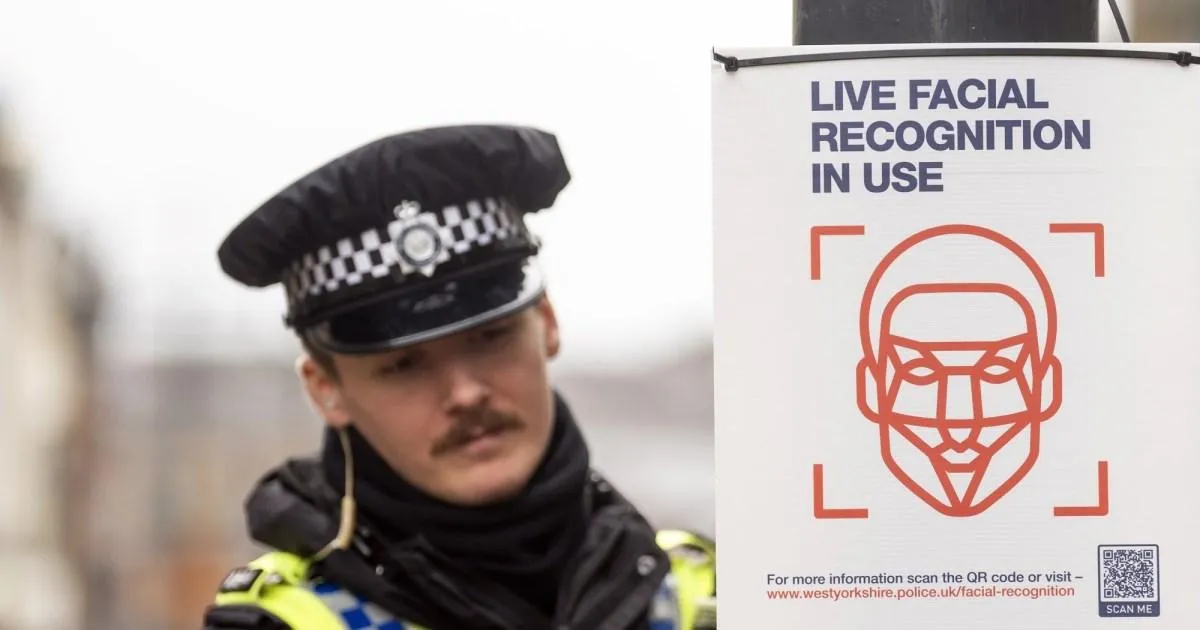
Imagine the electric hum of Oxford Street in December: the glow of shop windows, the press of coats and scarves, the smell of roasted chestnuts drifting from a stall, and thousands of people moving in every direction with their hands full of shopping bags. Now add something invisible to that familiar holiday chaos—a network of cameras that not only records the scene but actively scans every face that passes, checking each one against a database of people who are wanted for crimes or considered persons of interest. This is no longer a dystopian vision or a security experiment. It is happening now, permanently, on one of the busiest shopping streets in the world. The cameras are being installed on Oxford Street in London, and they will be running as the Christmas crowds arrive, capturing images of faces in real time and comparing them with watchlists compiled by authorities. For many people, this raises an uncomfortable feeling: the sense that while you are simply trying to find a gift or meet a friend, your face is being sorted, checked, and logged by a machine you cannot see and whose exact rules you do not know.
The decision to place live facial recognition technology on Oxford Street is not being made in a vacuum, and the authorities behind it have a clear argument. The West End and Soho, the neighborhoods around this iconic shopping corridor, have some of the highest crime rates in the capital. Shoplifting, phone theft, pickpocketing, and other street-level offenses are a persistent problem, and the pressure on police to reduce crime in such a densely visited area is enormous. Supporters of the cameras hope that they will act as a deterrent, making would-be offenders think twice before committing a crime because they know their faces might be instantly matched to a watchlist. They also hope the system will lead to more arrests, allowing police to spot a wanted person in a crowd before that person can disappear into the crowd again. The timing is also significant: a stretch of Oxford Street is due to be pedestrianised within the next week, freeing the road from traffic to create more space for walkers, cyclists, and outdoor events. With more people expected to gather and linger, the risk of crime could rise, and the authorities want to reassure the public that safety is being taken seriously. In that sense, the cameras are being presented as a protective layer—a digital safety net stretched over one of the city’s most beloved but vulnerable spaces.
But what exactly does live facial recognition technology do, and how does it work in practice? Unlike ordinary CCTV, which simply records footage for later review, LFR scans faces in real time as they appear in camera feeds. The system maps features such as the distance between the eyes, the shape of the cheekbones, and the curve of the jaw, then converts those measurements into a mathematical template. That template is instantly checked against a watchlist database—a collection of images of people whom the police believe they need to identify, perhaps because they are suspected of committing crimes, or because they are missing and need to be found. If the system finds a sufficiently strong match, it sends an alert to police officers nearby, who can then approach the person and verify their identity. This all happens in a matter of seconds, while the person may have no idea that their face has been analyzed. For an ordinary shopper, the experience is utterly passive: you walk, the camera watches, the software decides where you fit in a giant digital matrix. And because the cameras are being installed permanently, this is not a one-off security operation. It is a new fixture of urban life on Oxford Street, as permanent as the traffic lights and streetlamps that line the pavement.
The history of such technology, however, is not a simple story of success. British Transport Police, for example, previously rolled out live facial recognition cameras in some of London’s largest railway stations, hoping to catch wanted criminals among the millions of commuters. The results were underwhelming. Over an extended trial period, only one person was arrested as a direct result of the facial recognition alerts, and even that arrest turned out to be a false alarm—the system had flagged an innocent person, and the mistake was only resolved after officers intervened. This pattern is familiar to anyone who has studied facial recognition in policing: the technology promises precision but often delivers false positives, mismatches, and uncertain outcomes. Some of this is due to the limitations of the software, which struggles with different lighting conditions, angles, and movements, especially in crowded, chaotic environments like a busy train station or a packed shopping street. Some of it is due to the databases themselves, which may contain outdated or low-quality images that do not match a person’s current appearance. And some of it is due to the inherent difficulty of the task: recognizing a specific face in a sea of thousands is a monumental challenge, even for sophisticated algorithms, and the cost of a mistake can be serious for the person who is wrongly approached or detained.
Beyond the technical limitations, there are deeper concerns about privacy and civil liberties. When a camera scans your face without your consent, it is collecting biometric data—information that is uniquely tied to your body and cannot be changed like a password. A watchlist is meant to contain criminals and suspects, but there is always the risk that someone is added to such a list through error, outdated information, or an overly broad definition of suspicion. There is also the question of what happens to the data after the scan. Is it stored? For how long? Who has access to it? Can it be used for other purposes, such as building a profile of the people who visit Oxford Street? The current rollout does not come with a clear public conversation about these issues, and many people feel that the convenience of shopping should not come at the cost of being tracked by the state. Additionally, studies have shown that facial recognition systems can be less accurate for people with darker skin tones and for women, raising the risk that certain groups will be disproportionately flagged or watched. This matters deeply in a diverse city like London, where people from every corner of the world walk the same pavements. If the technology is deployed without safeguards, it may end up harming the very people it is supposed to serve, turning a tool of safety into a source of suspicion and discrimination.
As Oxford Street prepares for its pedestrianised future, the installation of these cameras marks a moment of decision for the city. It is possible to imagine a world in which such technology genuinely helps police protect the public, catching repeat offenders and deterring violent crime while tourists and locals go about their day in peace. It is equally possible to imagine a world in which facial recognition becomes a routine part of daily life, erasing the simple pleasure of anonymity in a crowd, and creating a chilling effect on expression and movement. The truth is that we do not yet know which world will emerge, because the technology is being introduced in a piecemeal and experimental way, with mixed results and limited accountability. What is certain is that the cameras will be watching thousands of Christmas shoppers this season, and that each person passing through the glow of Oxford Street’s lights will be a point in a vast digital pattern. The question for Londoners, and for all of us who care about the spaces we share, is whether we can find a way to embrace the benefits of security without sacrificing the freedoms that make a city feel truly open. That is not a technical problem, but a human one—and it demands more than a camera can ever capture.