

At half past one in the morning, in a quiet corner of Allington, Kent, the ordinary silence of a sleeping house was shattered by a sound that meant nothing good. Eni Luwoye, a 26-year-old Premier Inn manager who was still awake finishing university work, heard the smoke alarm crying from downstairs. He went to investigate, opened the utility room door, and found the air thick with clear grey smoke. Inside the tumble dryer, the drum was spinning round with flames inside. In that moment, a normal household appliance had become the beginning of a nightmare. Eni did not stop to think. He rushed upstairs and woke his mother, Bukola Akinpelu, and his younger brothers, Ayo and Bola. They had all been in bed, dreaming, wearing nothing but the clothes they slept in. Within seconds of everyone stepping outside, the kitchen was swallowed by fire. The flames moved with terrifying speed, turning their semi-detached house into a burning shell in what felt like half an hour. Six fire engines arrived, and around twenty firefighters began what would become a six-hour battle. But for the family, standing on the cold street in their nightclothes, the fight was already on another level. They were not watching a building burn; they were watching the place where they had lived for more than three years, where they had celebrated birthdays, eaten meals, kept photographs, and made memories, turn into smoke. Bukola, a mental health nurse who spends her professional life caring for people in Essex and on the Isle of Sheppey, felt the shock pull her under. She fainted in the street. Paramedics treated her, and she has since recovered physically, but the image of her home collapsing in front of her will not be easy to shake. The family were given blankets by the firefighters and stood together as the flames tore through their home until around 4.30am. It was, by any measure, a complete catastrophe.
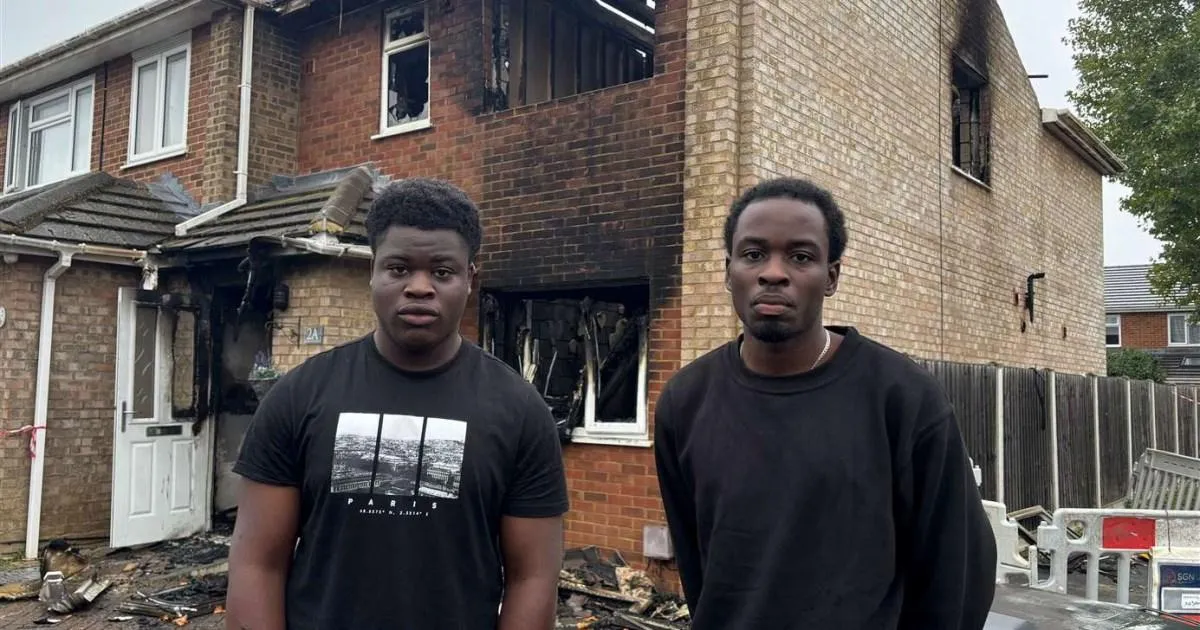
Firefighters stayed until around 8am. For six hours they fought the blaze, pouring water into a building that had become a roaring trap. By the time they were done, the roof had caved in, and the kitchen that had once been the heart of the house was a blackened skeleton. Fire service investigators later told the family that the cause was the tumble dryer. There is something almost cruel in that: a machine people trust to make life easier had brought them to their knees. Eni stood outside in his boxers and vest, no socks, no shoes. His mother and younger brothers were in nightclothes too, wrapped in blankets given to them by the crews. They watched the flames tear through the house long after the last hope of saving anything had gone. When morning came, the reality was brutal. They had lost everything, literally everything. Eni described it as starting again from square one. All his belongings, his photo albums, his documents, his memories, all gone. The family had home insurance but, like so many households, they did not have contents insurance. That means the ordinary treasures that fill a home, photographs, letters, certificates, small sentimental objects, are not covered. They are staying with relatives in Rainham at the moment, but those relatives are themselves about to move, so the temporary comfort has a timer on it. They are being asked to rebuild from nothing while also wondering where the next roof over their heads will come from. For Bukola, a woman who has spent her career trying to keep other people mentally and emotionally healthy, the irony is heavy. She now has to process a loss too large for words, while continuing to be a mother and a nurse. The family’s home in Kilndown Close had been their sanctuary for years; now it was nothing more than a burned-out frame with a collapsed roof.
This family was not unusual. They were just living their lives in the ordinary rhythm that most families know. Bukola went to work at a hospital in Essex and on the Isle of Sheppey, offering mental health support to people who needed it. Eni managed a Premier Inn and studied at university, trying to build a future for himself. Ayo, at sixteen, was navigating the intense world of school and teenage life. Bola, at seventeen, was on the edge of adulthood, beginning to understand who he wanted to become. They had moved into the house in Allington more than three years earlier, and in that time it had become more than a place on a map. It held the smell of Sunday dinners, the sound of arguments and laughter, the clutter of schoolbooks and chargers and coats on chairs. It held the archives of their lives. Photographs of relatives who had passed away, school portraits, certificates framed on walls, favourite T-shirts, old notebooks, the kind of things you never think to insure because you never think they can vanish. Then one night, in the space of half an hour, all of it was gone. Eni had rushed upstairs to wake his family with no time to grab anything. Ayo and Bola stood barefoot on the pavement, watching their childhood burn. For a long time, none of them said much. There is no script for watching your home become ashes. The blaze was so intense that firefighters had to work for six hours before it was under control, and the sound of cracking timbers and shattering glass stayed in the family’s ears long after the sirens faded. Their neighbours came out in the dark, wrapping arms around them, offering blankets and phone calls. But nothing could soften the blow of knowing that every object they owned, every memory made physical, had been consumed by a fire that started in a startled drum.
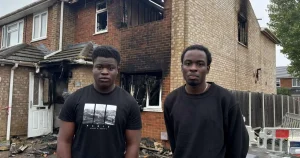
In the days that followed, the family discovered something remarkable amidst the ashes. Bukola started a GoFundMe page, not because any amount of money could replace what they had lost, but because they needed help to stand again. The response was immediate and overwhelming. Within a short time, the page had raised £10,637 of its £12,000 target. Complete strangers, neighbours, people from Allington and Rainham and far beyond, began to donate and share. Social media became a bridge between the family’s grief and the world’s compassion. Bola, still trying to process the magnitude of what had happened, spoke outside the wrecked home with a maturity beyond his years. He said it was a weird feeling after something of that magnitude, but that he felt hopeful because of the compassion and love from neighbours, the community, and people online. He admitted he had not been able to respond to everyone who had sent messages, because the outpouring had been so huge. His voice cracked with emotion when he spoke about the fact that strangers were not just scrolling past; they were actively trying to make a difference. He wanted to thank everyone who shared, everyone who sent lovely messages, everyone who prayed. “Everyone who shared, everyone who’s been sending lovely messages, prayers, and messages to God. It means everything to us because what is a world without people?” That question, asked by a seventeen-year-old standing in front of the charred remains of his home, captures the strange beauty of human connection. In the darkest hour, the family discovered that they were not alone. Neighbours who had never spoken much suddenly became lifelines. Old friends and strangers alike reached out with offers of clothes, food, temporary places to stay, and the kind of practical help that cannot be bought. The GoFundMe page became a symbol of hope, proof that even when everything is lost, community can still be found.
Eni, the big brother who had raced upstairs to save his family, stood outside the ruined house and tried to put the experience into words. “We are essentially having to start again from square one,” he said. He pointed out that he had literally come outside in just his boxers and vest. No socks, no shoes, no phone, nothing. All his belongings, memories, photo albums, documents, everything was gone. It was devastating. But the devastation had been met by something he never expected. The amount of people who had supported them was unbelievable, he said, and he wanted to thank them from the bottom of his heart. There is a particular kind of humbling that happens when you have nothing, and someone you have never met decides to help. It makes you believe in people again. Eni spoke about how special it was to see that people from all over the world, people who had never met the family, could come together and support them. That is the thing about tragedy: it can either shrink you into your own pain or open you up to the goodness around you. For this family, the pain is still very real. Eni still wakes up thinking he is in his own bed, then remembers that room no longer exists. Bukola still reaches for a photograph she has seen a thousand times, before remembering it is ash. Ayo and Bola still feel a hollow jolt whenever they see a tumble dryer in a shop window. But they are holding on to something else too. They are holding on to the kindness of others. Eni’s voice, raw and tired, carried a deep gratitude. He wanted to say thank you to everyone who had played a role, even those who had just shared the fundraiser, because every share is a small act of love. In a world that often feels indifferent, they had found the opposite. They had found a community that refused to look away.
Stories like this one have a way of making us think about our own homes, our own family photographs, our own favourite jumpers and handwritten letters. We all live with the illusion that the places we build for ourselves will stay standing. When a fire like this tears through that illusion, it leaves something more than rubble; it leaves the deepest kind of sorrow. But it also leaves room for something else. The Akinpelu family are not defined by the disaster that happened to them. They are defined by how they are responding to it. Bola’s hope, Eni’s gratitude, their mother’s strength, these are the threads that will help them weave a new life from the ashes. They are staying with relatives in Rainham while they try to figure out what comes next. They have no belongings to pack, no furniture to move, no decorations to hang. But they have each other, and they have a growing circle of people who care. The fire investigators said it began with the tumble dryer, a device so ordinary that no one ever expects it to become the spark of total loss in the middle of the night. The family has home insurance for the building, but contents insurance was not in place, which is why the GoFundMe page has become so important. It is not just about money; it is about giving them permission to grieve, to hope, and to know that their community is standing beside them. As the days go on, they will begin to rebuild. They will buy new clothes, find a new home, make new memories. The old photos will never come back, and that loss will stay with them. But perhaps, when they look back on this terrible night, they will also remember the kindness that appeared in its wake. They will remember the firefighters who wrapped them in blankets, the neighbours who stood with them, the strangers who donated, and the teenage boy who found hope in the middle of ruin. In the end, what is a world without people? It is a world without comfort, without warmth, without the possibility of rising again. Because of the people who reached out, this family is rising. And for that, they will be grateful for the rest of their lives.