


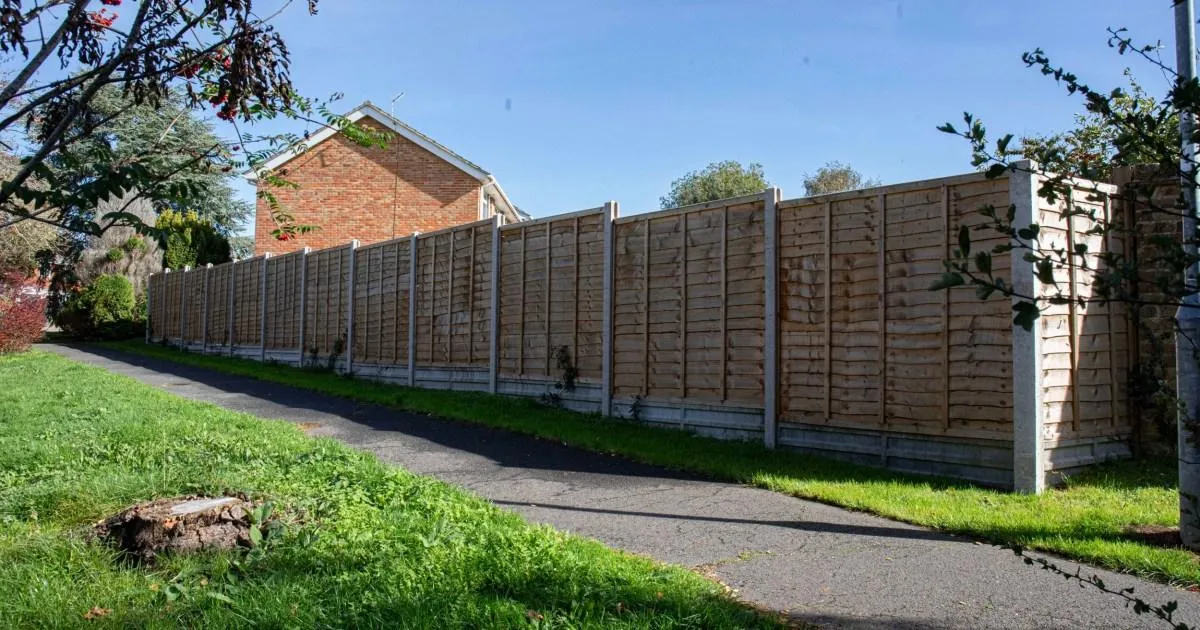
For Giles Savage, the fence was never meant to be a statement. It was supposed to be a quiet improvement—a way to turn a tired, derelict boundary into something safe, tidy, and useful for his young family. When he and his wife moved into their four-bedroom detached home on the East Broyle estate in Chichester, West Sussex, in April 2025, they saw potential: a garden that could be enjoyed, a space where their children and dog could play freely, and a border that could be softened with climbing wisteria and carefully planted flowers. The existing fence, however, was anything but inviting. It was old, full of holes, and in a state of serious disrepair. So, in August 2025, after seeking legal advice and carefully reviewing the title deeds, Mr Savage made a decision that seemed entirely reasonable: he moved the fence a little closer to the footpath outside his £635,000 home, extending his garden by up to eight metres. He owned the land, after all. The documents confirmed it. But what he didn’t anticipate was that owning the land and being allowed to enclose it were two very different things—and that his well-intentioned home improvement would soon become the centre of a bitter planning dispute, pitting him against the local council, a residents’ association, and ultimately the national Planning Inspectorate.
At first, there was no hint of trouble. The fence went up, and for a while, life continued as normal. Then came the neighbours’ comments. They weren’t angry, exactly, but they were curious—and a little wary. Mr Savage recalled that people said he was “brave” for building the fence, a comment that puzzled him at the time. It wasn’t until months later that a representative from Chichester District Council (CDC) contacted him with the news that his new fence might require planning permission. The reason lay in conditions attached to the estate when it was first built back in the 1960s. The East Broyle estate was designed with a particular ethos: open plan, spacious, with a sense of flow between the homes and the surrounding footpaths. The positioning of fences and boundaries was not simply a matter of property lines—it was part of the character of the neighbourhood. By moving his fence closer to the footpath, Mr Savage had, in the council’s view, altered that character. The land he had enclosed wasn’t just private land; it had functioned for decades as open amenity space, contributing to the feeling of openness that residents valued. Mr Savage, who works with offshore yachts and simply wanted a usable garden for his wife and children, was stunned. He had consulted solicitors before purchasing the home. He had double-checked the documents. He believed he was within his rights. Yet now he was being told that his fence could be unlawful, and that he might have to tear it down or move it back at his own expense.
Determined to resolve the situation, Mr Savage submitted a retrospective planning application in March of this year, hoping that the council would see the fence as he did: a reasonable, attractive improvement that enhanced the area rather than harmed it. For two months, he waited. Then came the rejection. Planning officers ruled that the fence would adversely affect the area, and the decision was made to refuse permission. But Mr Savage wasn’t ready to give up. He took his case to the Planning Inspectorate, the independent body that handles appeals against local authority decisions. The appeal, however, was also unsuccessful. In a ruling that must have felt deeply frustrating to a man who simply wanted to enjoy his own garden, the inspector stated that the fence, seen in situ, ran counter to the general ethos adopted across the estate in terms of means of enclosure and positioning. It reduced the sense of spaciousness, the inspector wrote, and was “a somewhat overbearing feature for pedestrians” walking along the footpath. The language was clinical, but the impact was profound. Mr Savage was not just being told his fence was wrong—he was being told that his vision for his family’s home was incompatible with the character of the place he had chosen to live.
What makes this case so poignant is the human story behind the planning jargon. Mr Savage, 36, moved into the home with his wife and young children in April 2025, full of hopes for the future. He spent thousands of pounds on the fence, believing he was investing in his property and creating a better environment for his family. His wife, an avid gardener, had already begun planting along the new boundary—climbing wisteria and other plants that would eventually soften the fence and create what he described as “a nice little border.” The garden, he said, was meant to be usable: a safe place for their two kids and their dog to run around, a neat and tidy space that would also look pleasant for anyone walking up and down the footpath. It wasn’t about shutting people out or grabbing extra land—it was about maintaining what was already theirs, but doing so in a way that felt modern and cared for. The old fence, with its holes and decay, was an eyesore. The new fence, in his eyes, was an improvement. Yet the council and the Planning Inspectorate saw it differently. For them, the issue wasn’t the fence itself, but the change of use of the land from open amenity space to private garden. The land had been open for decades. It had become part of the estate’s identity. Enclosing it, even by a lawful owner, threatened to unravel that identity and set a dangerous precedent for others to follow.
The East Broyle Residents Association made this point explicitly. Allowing the fence to remain, they argued, would “harm the character” of the estate and could open the floodgates to numerous similar applications, each one chipping away at the openness and ambience that residents had long enjoyed. One resident, Colin Molyneux, warned that permitting the fence would be detrimental to the character and atmosphere of the area—a sentiment that clearly resonated with the planning inspector. Mr Savage, however, found himself caught in the middle. He was not trying to be a renegade or a rule-breaker. He had checked his title deeds, consulted solicitors, and believed with every fibre of his being that he was acting within his rights. “It’s our land, we actually own the land,” he said, the frustration evident in his voice. “To me, it’s disappointing that in the title deeds it’s our land, but there’s maybe some document that says we can’t close the land.” It was a classic case of the fine print—a hidden layer of planning law that existed alongside the property ownership, restricting what he could do with his own garden. And now, after spending thousands of pounds and months of emotional energy, he faces the very real possibility of having to move the fence back or tear it down entirely, all while maintaining a sense of dignity and respect for the community he lives in.
In the end, this is a story about more than just a fence. It’s about the tension between individual property rights and collective neighbourhood character, between what we own and what we are allowed to do with it. Chichester District Council defended its decision by explaining that the matter concerned a change of use of land from open amenity space to garden, rather than simply the installation of a fence. The land in question, they said, had been open for many years and had added to the feeling of space and openness that residents highly valued. The Planning Inspector upheld this view, concluding that the proposal conflicted with the development plan taken as a whole and that there were no material considerations to indicate the decision should be made otherwise. For Mr Savage, though, the ruling feels less like a matter of planning law and more like a profound personal disappointment. He has accepted, with resignation, that he may have to comply. “If we have to move the fence back, we have to move the fence back,” he said, his words carrying the weight of someone who has fought hard and lost. But the sting remains. He and his wife simply wanted a garden for their children and their dog, a place to plant flowers and watch them grow, a small piece of the world to call their own. Instead, they learned a hard lesson about the hidden rules that govern even the most ordinary aspects of homeownership. And as they contemplate the cost of undoing their work, one can only hope that, somewhere among the wisteria and the footpaths, a compromise might still be found—or at least that the family can find peace in knowing they acted with good intentions, even if the world saw it differently.