
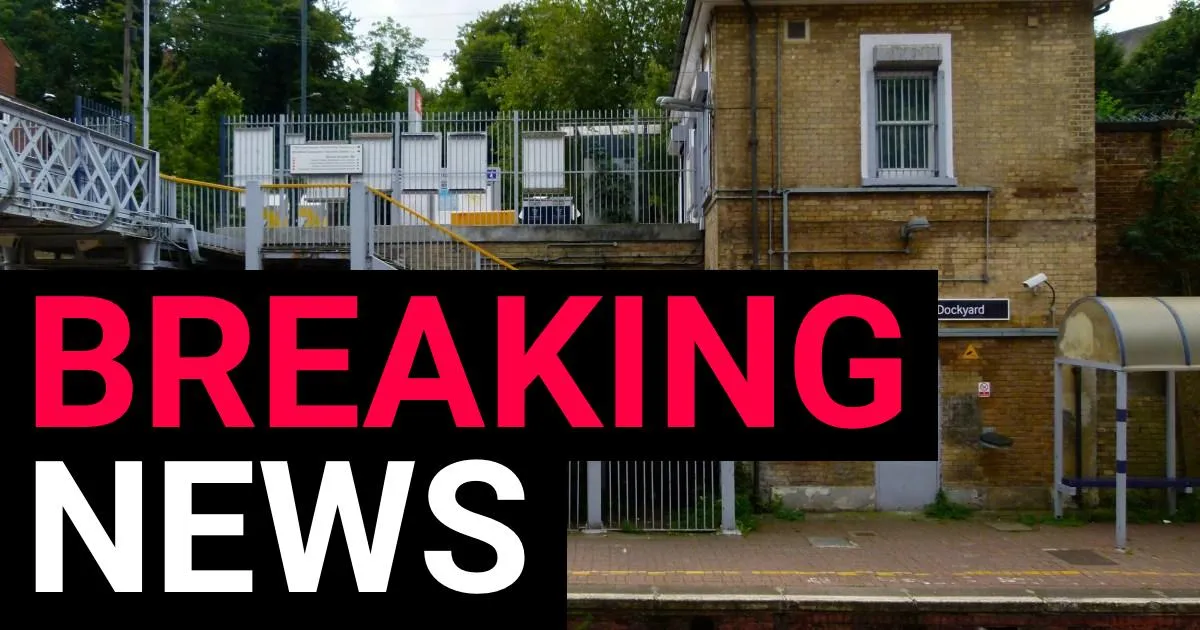
It began as an ordinary evening on Frances Street, a road in Woolwich, south east London, that usually hums with the quiet rhythm of commuters heading home, local residents running errands, and traffic crawling along a busy main road near Woolwich Dockyard station. But just after 8pm, that everyday scene was shattered by the sound of gunfire. A man in his 30s was shot, not once but multiple times, in full view of a public street that sits close to both a working railway station and the historic Royal Artillery Barracks. Within moments, the area transformed into a crime scene and an emergency rescue operation. The victim collapsed with catastrophic injuries, and as word began to spread through the neighbourhood, the first urgent calls were made to emergency services. It is impossible to know what was going through his mind in those terrifying seconds, but the image of a person bleeding on the asphalt, surrounded by strangers who may have heard the shots and rushed to help, is the kind of scene that leaves a permanent mark on a community. This was not a quiet alleyway or a hidden spot; it was a road alive with evening activity, which makes the violence feel all the more brazen and all the more chilling to those who live and work nearby.
The location itself carries layers of meaning and history, which makes the shooting feel particularly jarring. Frances Street is a stone’s throw from Woolwich Dockyard station, a stop on the National Rail network used by countless people every day. It also sits in the shadow of the Royal Artillery Barracks, a site with deep military heritage, where soldiers have trained and served for centuries. This is an area of London that has known both grandeur and hardship, and in recent years it has been through significant regeneration, with new housing and businesses springing up alongside old Victorian streets. Yet on this night, the barracks and the station became the backdrop for a very different kind of drama. The road, which can be packed with traffic at that hour, was suddenly blocked by police cars, ambulances and, eventually, the unmistakable presence of armed officers. The air ambulance was scrambled, a sight that always signals the gravest of emergencies. Paramedics fought with everything they had to stabilise the wounded man at the scene, working against time and the terrible reality of gunshot wounds. He was rushed to an east London hospital, where he remains under police guard, a detail that suggests the authorities are taking no chances even inside the walls of a hospital ward. For the victim, the fight for life is not over. For his family, the nightmare has only just begun.
The official response was swift and heavy. A Met police statement confirmed the grim facts: officers arrived to find a man in his 30s suffering from gunshot wounds. They immediately began performing first aid, not waiting for the ambulance crews to arrive, pressing their hands against wounds in a desperate attempt to keep him alive until more advanced help could get there. Then came the London Ambulance Service and London’s Air Ambulance, a team of highly skilled trauma specialists who are used to landing on roadsides and racing against the clock. Their work at the scene and in the air to the hospital was critical. Firearms officers and specialist crime detectives also attended, a reflection of both the seriousness of the incident and the ongoing danger that a gunman on the loose represents. There is something deeply human in the image of police officers, trained to deal with danger, kneeling beside a stranger and trying to stop bleeding with their own hands. It is easy to forget, in the cold language of a police statement, that these are people doing profoundly difficult work in the most stressful of circumstances. They are also carrying the weight of knowing that the victim’s life may hang in the balance, and that their actions in those first minutes could make all the difference.
Now the painstaking work of the investigation begins, and it is a process that requires patience, precision and the trust of the public. No arrests have been made, and the hunt is on for the gunman who fled the scene, leaving behind not just a wounded man but a neighbourhood in shock. Forensics officers and specialist search teams have descended on Frances Street, combing every inch of pavement and gutter for bullet casings, clothing fibres, blood samples and any other physical trace that might tell the story of what happened. Detectives are trawling through CCTV footage from the area, piecing together the moments leading up to the shooting and the chaotic seconds after it. They are looking at the victim’s life, his movements, his relationships, trying to understand why someone would want to hurt him so badly. It is slow, methodical work, and it is also deeply human. Behind every camera angle and every spent shell casing is a question about a life: where was he going? Who was he with? Did he see the danger coming, or was it a sudden, brutal ambush? The investigators are not just looking for evidence; they are looking for justice for a man who cannot yet speak for himself, and for a community that deserves to feel safe again. That is why the police are appealing to anyone with information, no matter how small it may seem, to come forward.
The shooting has inevitably stirred fear and unease among residents and regulars in Woolwich. This is not an area that has been untouched by violent crime in the past, and the very word Woolwich carries painful memories of tragedy for many Londoners. But there is also a powerful sense of resilience here, a determination not to let fear dictate daily life. When a shooting happens on a busy street at 8pm, it breaks an unwritten promise we all make to each other: that public spaces belong to good, ordinary people who are just trying to get home, meet friends, or walk to the shops. It is a violation that reverberates far beyond the immediate victim. Parents will worry more about their teenagers walking home in the dark. Elderly residents will hesitate before stepping outside. Commuters getting off at Woolwich Dockyard station will glance over their shoulders. And yet, amid the fear, there is also an outpouring of concern and anger. People want the gunman caught. They want to see justice. They want to feel that the streets they walk every day are not abandoned to violence. Neighbours who saw the emergency response will talk about the sirens, the air ambulance, the police tape and the forensic tents, but they will also talk about the man whose life was nearly taken, someone’s son, brother, partner or father, and the unbearable waiting that his loved ones are now enduring.
For the victim, the coming days will be a battle in every sense of the word. He is under police guard in hospital, which means he is both a patient fighting for his survival and a potential witness whose safety is a priority. Every breath could be a struggle; every improvement could be a step toward life, or a fragile pause in a long and uncertain recovery. The fact that he is being treated for more than one wound makes the severity of the attack all too clear. This was not a single tragic mistake; it was a deliberate, violent assault with the clear intention to cause serious harm. As he lies in a hospital bed, surrounded by beeping machines and the quiet voices of medical staff, somewhere out there is a person who knows what happened, and perhaps many people who have pieces of the puzzle. The police have asked anyone with information to call 101 or to remain anonymous by contacting Crimestoppers on 0800 555 111. These are just numbers, but behind them is an appeal to the basic human instinct for right and wrong. Somewhere in Woolwich, a friend, a neighbour, a witness, even the gunman himself, may know something that could change everything. The street may soon reopen, the forensic tents may come down, and life will try to return to normal. But the memory of a man bleeding on Frances Street will linger, a reminder of how suddenly life can be turned upside down. What matters now is that the victim does not become just another statistic, that he is seen as a human being, and that the search for the truth continues with the urgency it deserves. The sun will rise over Woolwich tomorrow, and the world will keep spinning, but for one man and the people who love him, the battle for a future is just beginning.