

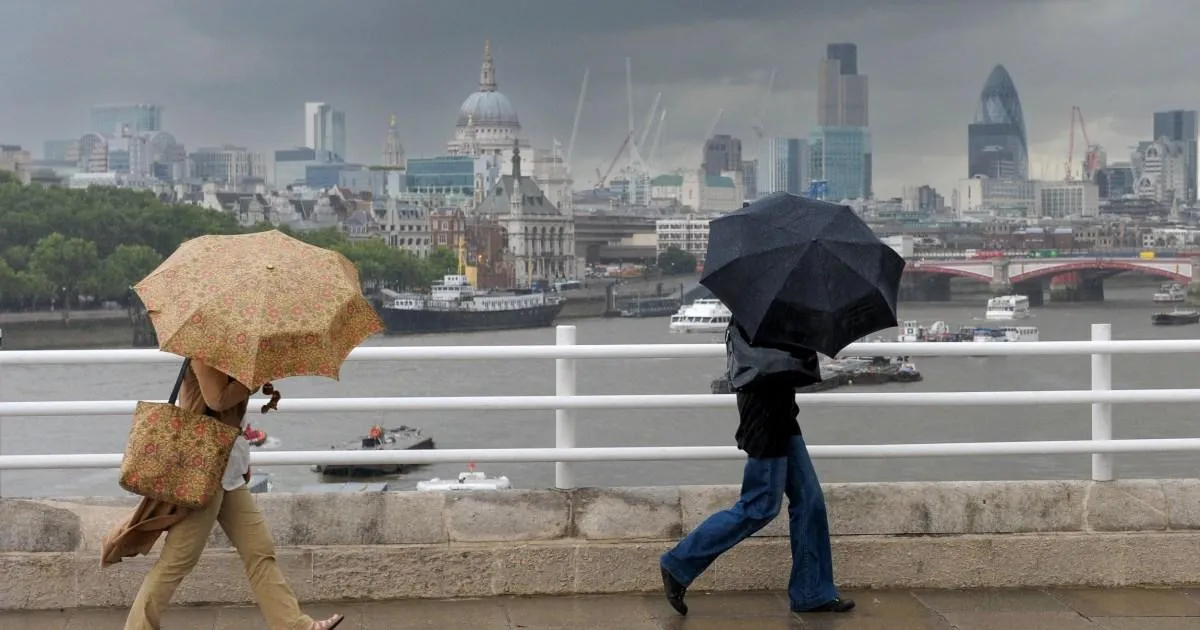
Picture this: a grey November afternoon in London, and instead of casually grabbing a takeaway or popping to the corner shop, you find yourself checking the cupboards. Tins of soup, pasta, rice, bottled water, batteries, a torch. It feels slightly dramatic, maybe even a little unnecessary. But this is exactly what Londoners have been advised to do as forecasters warn that winter could bring something far more disruptive than a few grey skies. Officials have told residents to gather enough food and supplies to last three days, because the capital—and the wider UK—could be hit by a “polar vortex” this year. This isn’t a made-up weather scare or a tabloid fantasy. Experts say an unusually powerful El Niño, one of the most severe on record, is developing in the Pacific Ocean, and its effects could be felt thousands of miles away. El Niño is most commonly known for warming ocean temperatures and bringing hot, dry conditions to some parts of the world. But this time, it may also weaken the Arctic polar vortex—the strong winds that circle the North Pole and keep the coldest air trapped up there. When that vortex wobbles or weakens, freezing air can spill southwards, towards Europe and North America. For London, that could mean bitter winds, heavy snow, and potentially blizzard conditions. And there’s more: the same phenomenon heightens the risk of wet, stormy weather and flooding. So, before you roll your eyes at the idea of stocking up on baked beans, it might be worth taking the warning seriously. The advice to keep three days’ worth of food is not about panic-buying or emptying supermarket shelves. It’s about being sensible, prepared, and ready for whatever winter throws at us. Because if the polar vortex does descend, the usual comforts of modern life—heating, transport, electricity—might not be quite so reliable.
To understand why an event in the tropical Pacific could cause snow chaos in London, it helps to think of the atmosphere as a giant, interconnected machine. El Niño begins with a warming of sea-surface temperatures in the central and eastern Pacific. That may sound distant and irrelevant, but it shifts weather patterns across the globe, like a stone dropped into a pond. One of the lesser-known consequences is what it does to the polar vortex. The polar vortex is a huge swirl of cold air and low pressure that normally sits over the Arctic, held in place by strong westerly winds. When El Niño disturbs the atmosphere, it can weaken those winds, causing the vortex to stretch or split. When that happens, the freezing air that usually stays near the North Pole can drift southwards, plunging into parts of Europe and North America. In the UK, the Met Office explains, this means cold north and north-easterly winds can dominate, overpowering the milder, wetter North Atlantic drift that usually keeps British winters relatively temperate. The result? A sudden plunge in temperatures, biting wind chill, and snow that can pile up quickly. Blizzard conditions are possible, especially if the cold air meets moisture from the Atlantic. But the cold isn’t the only concern. El Niño also increases the likelihood of wet, stormy weather, which can lead to flooding. So while one part of the country might be shivering under a blanket of snow, another could be dealing with swollen rivers and waterlogged streets. It’s a strange, almost contradictory picture: a weather system often associated with scorching heat waves and drought, now being linked to winter storms and freezing conditions. Yet that’s exactly what makes El Niño so fascinating and so dangerous. It doesn’t follow a simple script. It changes the rules of the game, and forecasters are watching closely to see how those changes play out in the weeks and months ahead.
Despite the alarming headlines, forecasters are careful not to promise a winter of non-stop snow. Dr Will Lang, chief forecaster at the Met Office, describes a “subtle shift in the odds” rather than a guaranteed freeze. In other words, the chances of windier, colder weather have increased, but it’s far from certain. This is the kind of language that meteorologists use when they want to be honest: the atmosphere is chaotic, and long-range forecasts are never set in stone. What they do know is that the current El Niño is still developing in the tropical Pacific and has already surpassed the strength of previous major events, including the one in 2015/16. Grahame Madge, the Met Office’s climate spokesperson, points out that El Niño has global impacts, including changing rainfall patterns and pushing up overall global temperatures. For the UK, this could mean a period of unsettled weather, with stronger winds and colder snaps interspersed with milder, wetter spells. The key message from the Met Office is not “the sky is falling,” but rather “be aware and be ready.” That’s why Londoners have been advised to keep enough food and supplies for three days. It’s the same kind of advice given for other emergencies, from heatwaves to floods. It doesn’t require building a bunker or hoarding years’ worth of tinned goods. It simply means having a few days’ worth of essentials in case transport is disrupted, power cuts occur, or you can’t get to the shops. It’s a small, sensible step that can make a big difference when the weather turns nasty. And with the possibility of snow, ice, and flooding all on the table, it’s not hard to see why officials would rather we were over-prepared than caught out.
While Londoners are being told to prepare for a cold, snowy winter, the same El Niño event is having a very different effect on other parts of the world. A concerning report has suggested that this El Niño could be linked to more than 450,000 heat-related deaths between June 2026 and February 2027. That number—451,000—is so vast that it can be hard to wrap your head around. It’s not just a statistic. It’s parents and children, grandparents and neighbours, people going to work, caring for families, and living their lives. Professor Michael Greenstone of the University of Chicago, co-founder of the Climate Impact Lab and co-author of the report, said exactly that in a statement. He warned that the estimate is “such a large number that it can be numbing,” but every single death represents a real person, a family, a community. The report highlights how El Niño can exacerbate extreme heat in already vulnerable regions, where access to cooling, healthcare, and clean water is limited. It’s a reminder that while we in the UK might be worrying about snow and frozen pipes, the same global weather system is imposing a far heavier toll elsewhere. This is the double-edged nature of El Niño: it doesn’t just make weather weird; it amplifies existing inequalities and stresses. Rich countries might see disruptive storms and cold snaps; poorer countries, especially those closer to the equator, can face deadly heatwaves and food shortages. The report’s authors hope that by putting a number on the human cost, governments and aid organizations will take action before disaster strikes. But for now, the warning stands as a stark reminder that the climate is changing, and extreme weather events are becoming more frequent and more severe. Whether it’s snow in London or scorching heat in South Asia, the thread connecting them is the same: a warming planet and an El Niño that is flexing its muscles.
All of this comes against a backdrop of record-breaking heat. This year has seen temperature records smashed, including the record for the hottest day in history—a milestone that was broken not once, but several times. In the UK, last month was the joint-fourth warmest September since records began, and it was also slightly wetter than average. That might sound like a strange prelude to a winter of snow and ice, but it’s actually part of the same pattern. El Niño tends to push global temperatures upward, even as it disrupts weather systems in complex ways. The heat stored in the oceans and atmosphere doesn’t just disappear; it gets redistributed, often in violent and unpredictable bursts. So you end up with a world where summers are hotter, winters are colder in some places, and storms are more intense everywhere. For ordinary people, this creates a sense of whiplash. One month you’re sweating through a heatwave, the next you’re scraping ice off your car. It’s easy to feel that the weather has become a bit unhinged. And in a way, it has. The old certainties—warm, wet winters and mild summers—are no longer so reliable. The climate is changing, and events like El Niño are riding on top of those changes, making them more extreme. That’s why forecasters are so interested in the polar vortex and its potential to disrupt our winter. It’s not just a one-off weather event; it’s a symptom of a larger shift. For Londoners, the advice to stock up on supplies is a practical response to that uncertainty. It’s a way of saying: we don’t know exactly what’s coming, but we can be ready for a range of possibilities. And that’s a far more sensible approach than pretending everything will be fine until the first blizzard hits.
So what should you actually do? First, don’t panic. The polar vortex is a possibility, not a certainty. But a little preparation goes a long way. The official advice is to have enough food and water to last three days. That doesn’t mean buying a year’s supply of canned goods or fighting over toilet roll. It means having a few basics in the cupboard, a torch with batteries, a portable phone charger, and maybe a blanket or two. If the weather does turn severe, you’ll be glad of them. If it doesn’t, you’ve simply used the tins and restocked. It’s a no-lose situation. It’s also worth checking on neighbours, especially older people or those with young children, who might find it harder to cope with power cuts or icy streets. A small act of kindness can make a huge difference in a cold snap. And stay informed. The Met Office and local news will have the latest forecasts, so keep an eye on the weather apps and heed any warnings. The idea of a “polar vortex” sounds dramatic, and it is, but it’s also just another weather pattern. Humans have always lived with extreme weather, and we’ve learned to adapt. The difference now is that the climate is changing, making these extremes more frequent and more intense. But by taking sensible precautions, looking out for each other, and staying flexible, we can get through whatever winter throws at us. After all, Londoners have weathered blizzards, floods, and heatwaves before. This winter might be tough, but we’re tougher—and a few tins of soup in the cupboard never hurt anyone.