


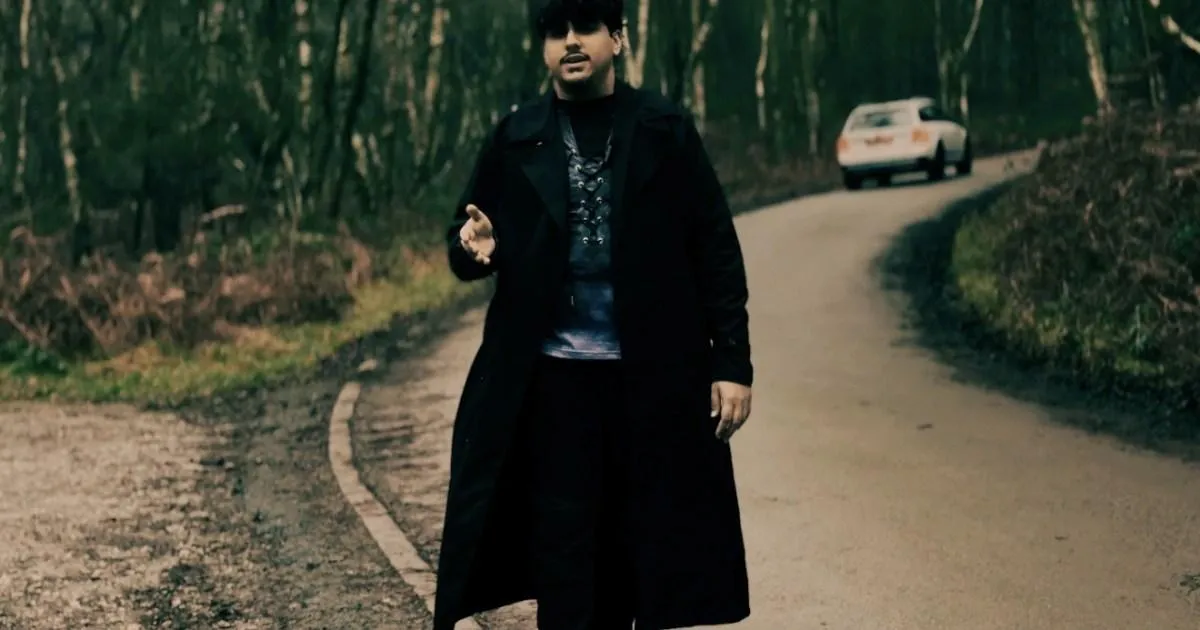
The journey of Harvey More from a pragmatic electrician to a dedicated paranormal investigator is a fascinating study of how curiosity can bridge the gap between the mundane and the metaphysical. For the 23-year-old from the West Midlands, this path didn’t begin with professional training or academic research, but with the quiet, unsettling experiences of his own childhood. Long before he ever picked up a recording device, he recalls seeing a mysterious figure dressed in black traversing the landing of his parents’ home. When he questioned his family about these phantom footsteps and spectral sightings, he learned that the property had once housed local vicars, an explanation that sparked a lifelong conviction in Harvey: that our reality is merely a thin veil stretched over a vast, unknown afterlife.
The transition from a skeptic to a believer accelerated during the forced isolation of the Covid-19 lockdowns. Like many during that era, Harvey found himself scrolling through social media, eventually falling into a deep rabbit hole of paranormal content on TikTok. What began as a pastime to cure boredom quickly morphed into an obsessive pursuit of knowledge. He delved into the intricacies of spiritualism, crystals, and the theoretical nature of alternative realities. What was once a casual interest transformed into a mission. Today, he operates as a content creator and host of the Unexplained Mysteries Paranormal podcast, dedicating his time to visiting sites that are rumored to be anchored to the past by lingering, restless energy.
Harvey’s investigative process is built on a mixture of patience and sensory alertness. He describes his experiences in the field not as Hollywood-style theatrics, but as fleeting, elusive encounters. He speaks of white mists dissipating as soon as he turns his head, and sudden, localized scents—like incense or musty air—that seem to manifest out of thin air. Perhaps most convincing to him are the auditory anomalies he discovers during post-investigation editing. Often, noises that were missed in the heat of the moment reveal themselves in the silence of his studio: the faint sound of humming, a girl’s laughter, or sharp, rhythmic taps that seem to defy physical explanation.
One of his most significant encounters took place at a local 17th-century burial ground that has since been repurposed as a public park. Armed with a paranormal voice box—a device enthusiasts believe allows spirits to manipulate radio frequencies to form words—Harvey began capturing fragments of information related to justice, water, and piping. Upon returning home, he conducted rigorous historical research, only to discover that the site was the resting place of Richard Jesson, a prominent attorney and one of the founders of a local water company. This synergy between the raw, unexplained audio and the tangible historical record serves as the backbone of Harvey’s belief, reinforcing his conviction that he isn’t just chasing ghosts, but uncovering long-forgotten histories.
However, the pursuit of these entities comes with a psychological and physical toll. Harvey is candid about the “pushback” he often receives from the spirit world. He describes instances where, as his team prepares to leave a site, objects like stones and twigs are thrown at them, as if the spirits are desperate to hold onto the energy of their visitors. These boundary-crossing moments require firm, protective measures to ensure the investigators’ own well-being. Perhaps the most chilling incident occurred at the infamous Cannock Chase, where Harvey witnessed his own vehicle unlock itself in the middle of a dark, isolated investigation. Such moments of physical interference represent a daunting intersection where the spiritual world directly impacts his personal property, serving as a visceral reminder of the risks involved.
Despite the fear that accompanies such encounters, Harvey maintains that his work is ultimately rooted in comfort rather than terror. Following the loss of someone close to him, the reality of the afterlife shifted from an abstract concept to a source of genuine solace. For Harvey, the investigation is not merely about finding “evidence” of a haunting; it is about honoring legacies, connecting with the roots of his community, and finding peace in the knowledge that death is not a final silence. By documenting these encounters, he seeks to provide others with that same sense of wonder, inviting us all to look at the world around us and consider that we might be living alongside far more than we can see.