



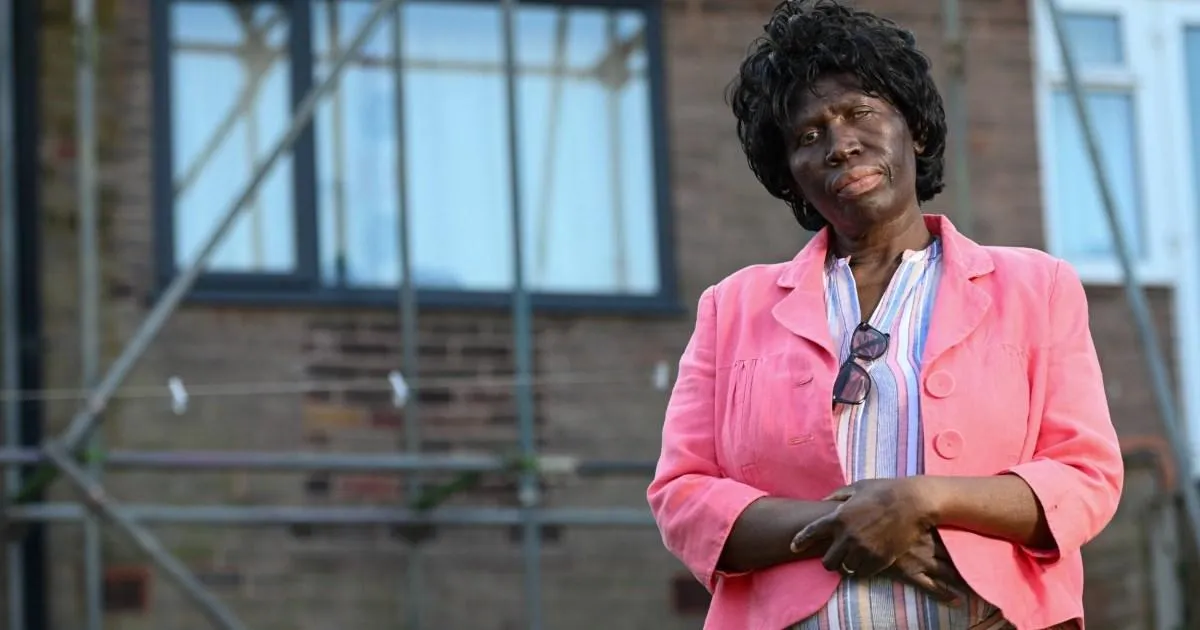
Sakhile Zimbwa, a 59-year-old nurse from Sheffield, endured a harrowing ordeal that turned her sanctuary into a source of deep distress. Having spent four years meticulously saving to repair a leaking roof that had plagued her son’s bedroom, she finally believed she had found a solution through a builder she contacted via a trade directory. What began as a hopeful home improvement project quickly spiraled into a nightmare when the contractor, initially friendly and seemingly professional, demanded the remaining balance of the £10,000 quote before the work was anywhere near completion.
The situation deteriorated rapidly when Sakhile, acting on sound financial caution, refused to release the final £6,000 until the job was finished and properly inspected. The builder responded not with professional negotiation, but with aggression and alarming threats. According to Sakhile, the man and his crew proceeded to dismantle the half-finished roof, smashing tiles and tearing away support beams while she was away at a medical appointment. By the time she returned, her home was left in a state of ruin, exposed to the elements and vulnerable to intruders, leaving her unable to sleep in her own house for fear of what might happen next.
The builder later attempted to justify his destructive actions by claiming he feared being “scammed” out of payment, alleging that the work was nearly finished and he was merely reclaiming his materials. However, Sakhile’s experience highlights the terrifying power imbalance that can exist between a homeowner and a rogue tradesperson. She was left not only without a roof but also £4,000 lighter, with the builder refusing to return the initial deposit. The emotional toll was immense; for a woman who works in the high-pressure environment of the healthcare system, her home—a place meant to be her refuge—had become a source of profound anxiety and helplessness.
The aftermath revealed the poor quality of the original workmanship, with subsequent experts noting that the builder had been cutting corners, such as laying new tiles over old felt, which never would have passed a formal inspection. The sheer audacity of the builder’s behavior—leaving a gaping, damaged hole in a family home—sparked a police investigation and caught the attention of advocacy-focused contractors who eventually helped Sakhile secure a proper, waterproof roof. While she has now spent an additional £13,000 to rectify the mess, the emotional scar of feeling unsafe in her own home remains a lingering consequence of this traumatic betrayal of trust.
This incident serves as a stark warning about the importance of vetting tradespeople, even when using well-known platforms. It later emerged that the individual in question had bypassed vetting protocols by using his partner’s identity, a deceptive act that Checkatrade has since cited in their decision to remove him from their platform. While the company offers a limited guarantee, the reality is that no amount of financial compensation can fully account for the days of terror Sakhile spent living in a compromised house, wondering if the ceiling would collapse or if her family’s security would be breached.
Ultimately, Sakhile’s story is one of resilience in the face of predatory behavior. She did the right thing by requesting a proper inspection and standing her ground against unreasonable demands, yet she was still punished by a builder who chose spiteful destruction over professional conduct. While her home is now stable and secure again, her experience remains a cautionary tale for any homeowner. It underscores the vital need for clear contracts, the insistence on formal building inspections, and the unfortunate reality that, in the world of home repairs, a friendly smile and a quick quote are no substitute for rigorous verification and caution.