



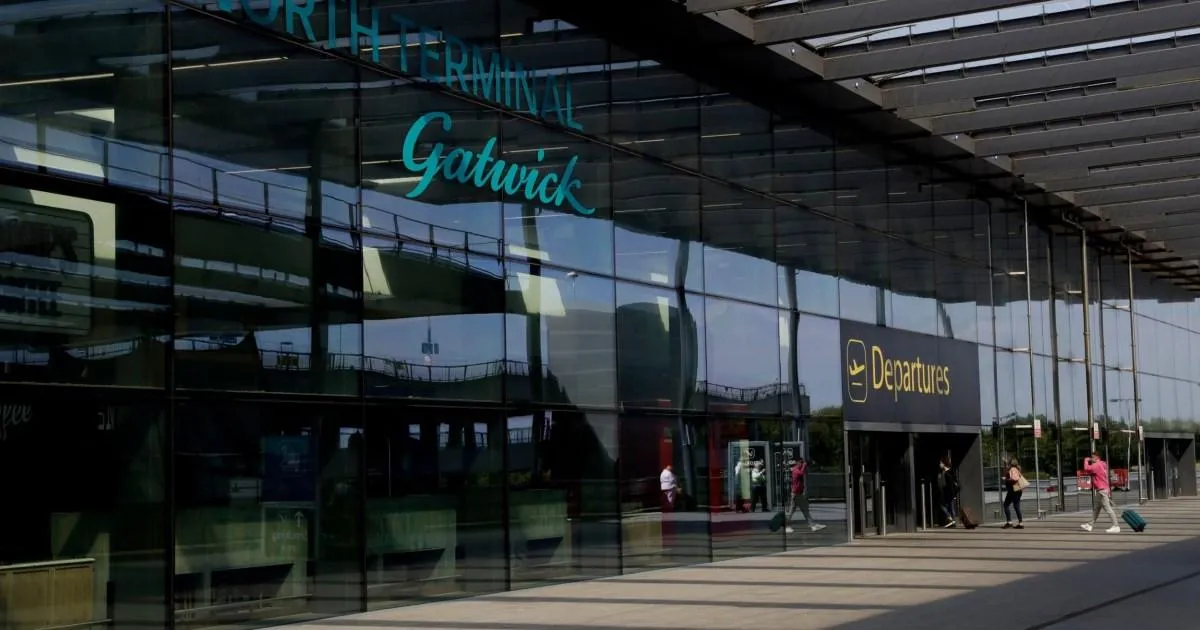
Summer travel plans for thousands of passengers are currently hanging in the balance as London Gatwick, the UK’s second-largest airport, grapples with an unexpected fuel shortage. While the airport typically handles about 43 million passengers annually, the current crisis—traced back to a “technical issue” at a local fuel farm—has sent a ripple of anxiety through the aviation industry. A spokesperson for the airport has confirmed that they are actively working with external suppliers to resolve the mechanical failure, emphasizing that while they are trying to minimize disruption, the situation remains fluid.
For the pilots currently navigating the skies, the directive from airport authorities is clear: treat fuel as a precious commodity. Pilots arriving at or departing from Gatwick have been informally urged to “uplift” as much fuel as possible from other, more stable airfields before heading to the hub. An internal memo obtained by the media suggests that this period of scarcity is expected to last for roughly two days, forcing airlines to carefully manage their reserves to ensure that essential flights can continue to operate without becoming stranded on the tarmac.
The logistical challenge is particularly acute for long-haul flights. Unlike short hops across Europe, these heavy aircraft require massive amounts of fuel, and the current shortages mean pilots are often caught in a difficult “catch-22.” If they load up on extra fuel at departure airports to avoid needing it at Gatwick, the added weight can impact their flight efficiency and safety parameters. Sources within the industry have expressed concerns that while the airport is maintaining a sense of “business as usual” for now, the strain on logistics could lead to delays or rerouted flights starting as early as Monday if the supply chain isn’t stabilized.
Interestingly, this localized technical glitch at Gatwick is happening against a backdrop of much broader, more ominous economic pressures. The global aviation sector has been under immense strain since February, largely due to escalating tensions in the Middle East. With the strategic closure of the Strait of Hormuz—a vital artery for one-fifth of the world’s oil supply—jet fuel prices have surged to nearly £290 a gallon. While the Gatwick issue is a separate, localized mechanical problem, it serves as a stark reminder of how fragile the global aviation network has become in an era of high costs and geopolitical instability.
For the average traveler, these behind-the-scenes struggles are manifesting as an increasingly expensive reality. Jet fuel remains one of the largest operating expenses for any airline, and with global prices skyrocketing, these costs are being passed directly to the passenger. Data from travel search engines show that flight prices have jumped significantly, averaging around £260 per ticket. Passengers who have spent months planning their summer getaways now find themselves caught between the fear of sudden cancellations and the reality of a much thinner vacation budget.
Despite the apprehension, Gatwick is currently holding the line, reporting no significant delays or cancellations at this time. However, for those with upcoming flights, the situation is a sobering look at the complexities of modern travel. It is a fragile ecosystem where a single technical malfunction, combined with global economic headwinds, can threaten to derail the plans of thousands. As engineers race to fix the facility, the advice to travelers remains the same: monitor your airline’s updates closely, keep an eye on the arrival and departure boards, and prepare for the possibility that the “summer getaway” might come with a few unexpected bumps in the road.