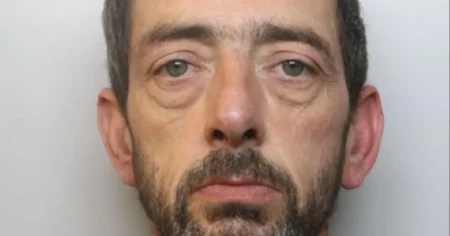

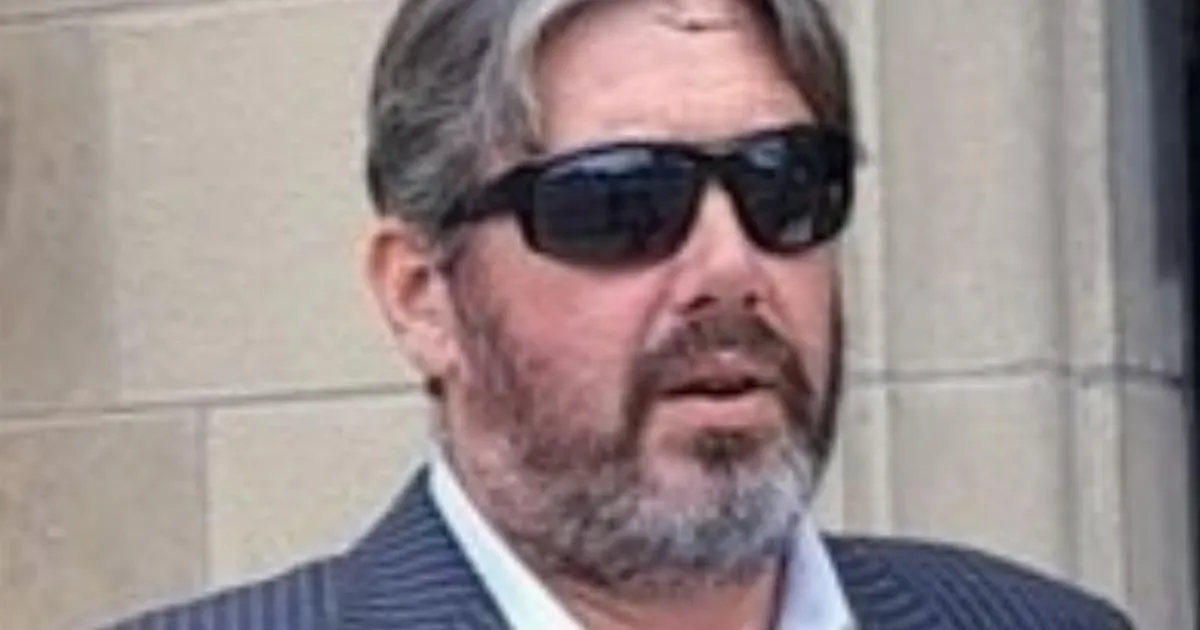
The case of Anthony Hall reads like a dark, surreal thriller, yet it is a terrifying reality that unfolded on the motorways of Northern England this past June. The 49-year-old Huddersfield man made the unthinkable decision to take his partner’s Vauxhall Meriva without her knowledge, embarking on a 150-mile journey in the dead of night. What makes this story truly chilling is not just the fact that he was driving under the influence of alcohol, but that Hall is registered blind. With no license, no insurance, and severely impaired vision, he managed to navigate the complex motorway network for two hours, leaving authorities and the public stunned at the sheer scale of the danger he posed to himself and everyone else on the road.
Hall’s method of navigation was as primitive as it was reckless. By his own admission to the police, he survived the journey by trailing the taillights of heavy goods vehicles, essentially using them as a guide through the darkness. For two hours, he shadowed these massive trucks across the country, weaving through traffic and navigating high-speed lanes without any visual awareness of his surroundings. It wasn’t until he reached the area near Junction 44 at Carlisle that his erratic driving—drifting dangerously between lanes and veering toward the hard shoulder—finally caught the attention of the authorities. At 1:45 a.m., police officers pulled the vehicle over, unaware at that moment of the shocking circumstances they were about to uncover.
When the officers approached the vehicle, they were immediately met with the distinct scent of alcohol, and Hall candidly admitted to having consumed wine before setting off. However, the situation escalated from a routine drink-driving stop to something far more surreal when Hall revealed that he had been blind for the past two years. The officers, who had been alerted that the car was reported missing, were faced with a man who had successfully operated a machine weighing over a ton for 150 miles while legally blind and over the legal alcohol limit. A subsequent breath test confirmed his impairment, showing 46mcg of alcohol per 100ml of breath, well above the legal limit of 35mcg.
In the aftermath, the legal proceedings at Rickergate Magistrates’ Court served as a sobering reflection on the event. Prosecutor Suresh Basra described the act as a “prolonged and persistent” display of dangerous driving, emphasizing that it was nothing short of miraculous that Hall hadn’t caused a catastrophic collision. Despite having no prior convictions and a history as a man of good character, Hall’s decision-making that night disregarded every fundamental safety rule of the road. His actions put innocent lives at risk in a way that defied logic, turning a standard stretch of motorway into a high-stakes hazard zone for every other driver he shared the tarmac with that night.
The court proceedings revealed a complex narrative, with defense attorney Adele Graham requesting a pre-sentence report to better understand the personal circumstances and background that led Hall to such a desperate and irrational decision. The magistrates, having listened to the details of the incident, decided to adjourn the sentencing until September 8. In the interim, Hall has been hit with a driving ban, though it serves as a symbolic gesture for a man who should never have been behind the wheel in the first place. The case remains a stark reminder of how fragile public safety can be when individual judgment fails so spectacularly.
Ultimately, this story leaves us grappling with the fragility of human behavior. While the legal system focuses on his guilt—admitting to dangerous driving, theft of the vehicle, and operating without a license—the broader public is left wondering how someone could attempt such a feat. There is no simple explanation that reconciles the danger posed with the lack of injury, and perhaps that is why the term “miracle” was used in court. As Hall awaits his final sentence, the incident serves as a haunting cautionary tale about the consequences of ignoring both the law and one’s own physical limitations, proving that a momentary lapse in judgment can rewrite the lives of everyone on the road in an instant.