


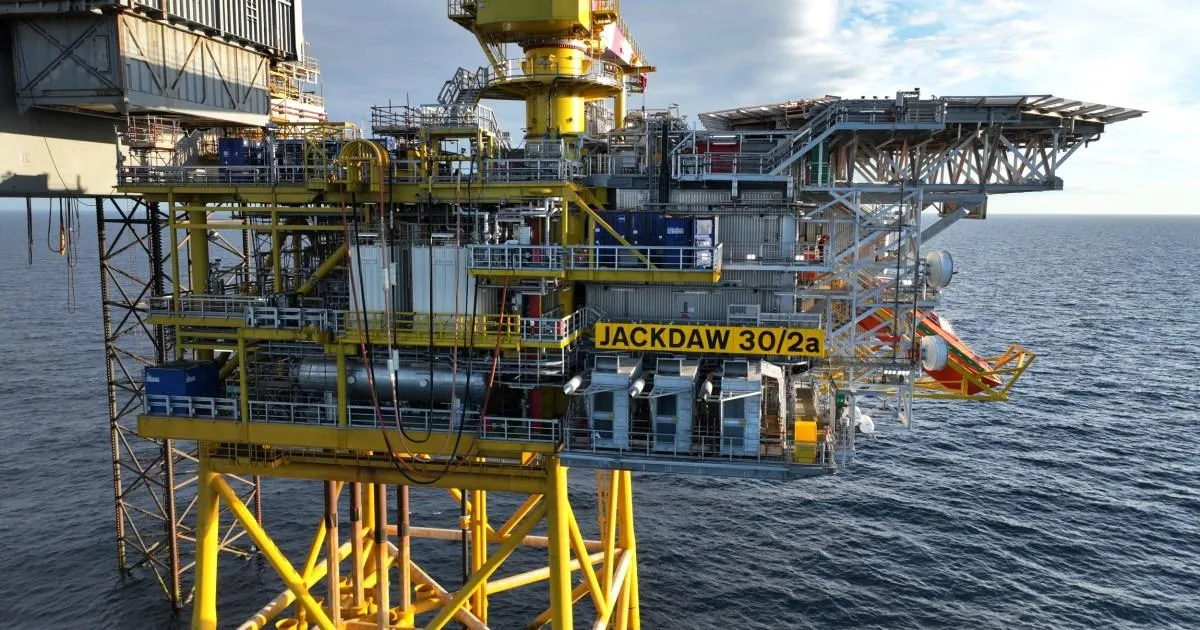
After what felt like an eternity of legal battles, political hesitation and shouting matches at Westminster, the UK government has finally given its official approval to the Jackdaw gas field in the North Sea. The timing is striking: gas from the field could be flowing into British homes in less than two weeks, just as households up and down the country are once again dreading their energy bills. For some people, this is a moment of relief — a sign that the country is serious about securing its own energy supply rather than depending on foreign imports. For others, it’s a punch to the gut — proof that the government is still willing to put fossil fuels before the future of the planet. The reaction has been exactly as split as you’d expect. Trade unions are cheering, climate campaigners are furious, and opposition politicians are saying Labour only did this after being dragged kicking and screaming. Miatta Fahnbulleh, the Energy Secretary who took over the role from Ed Miliband after Andy Burnham became Prime Minister, spent her morning media rounds insisting that this decision will not harm the UK’s “sprint” towards net zero. But her assurances have done little to calm the nerves of people who see this as a contradiction in terms. It’s hard not to feel conflicted when the same government that promises a green future is also approving new fossil fuel extraction — particularly when your own heating bill is the thing hanging in the balance.
To understand why this decision matters so much, you need to know a bit about Jackdaw itself. It’s a gas field located in the North Sea, about 150 miles west of Aberdeen, and it’s been at the centre of a much bigger argument about the UK’s energy future. Whenever people talk about Jackdaw, they almost always end up talking about Rosebank, too. The two projects were both backed by the previous Conservative government, and both were then blocked by a court ruling that said their climate impacts had not been properly assessed. That legal setback forced the companies behind the projects to go back to the drawing board, gather extra information about their predicted emissions, and resubmit their applications. Jackdaw is often described as the less controversial of the two because it’s designed to supply gas directly to British homes, whereas Rosebank is mainly an oil project whose output would be sold on the global market. Still, that hasn’t stopped environmentalists from describing Jackdaw as a catastrophe in waiting. The field is owned and operated by Adura, a joint venture between energy giant Shell and Norway’s state-owned oil company Equinor. Adura’s boss, Neil McCulloch, welcomed the announcement with the kind of measured corporate optimism you’d expect, saying it gives “certainty to the businesses and skilled workers already delivering the project.” He also made it clear that this isn’t the end of the road. Adura wants to develop Rosebank too, alongside another company called Ithaca Energy, and today’s decision gives them renewed hope that approval will follow.
The biggest question on everyone’s mind, though, is what this actually means for energy bills. And here’s where the government has been very careful to lower expectations. Miatta Fahnbulleh was blunt in her interviews this morning: this move will not make your bills cheaper. In fact, she said that was never part of the decision, because it won’t bring prices down. That might sound strange at first. Surely more domestic gas means less reliance on imports, which means lower prices? But the reality is more complicated. The price of gas extracted from Jackdaw is determined by international markets, not by how close it is to British shores. And those international prices have been volatile and high for years, partly because of Russia’s war in Ukraine and partly because of disruption in the Gulf linked to the war in Iran. That’s exactly why Fahnbulleh and her predecessor Ed Miliband have been pushing so hard for nuclear power and renewables. They argue that homegrown energy from wind, solar and nuclear isn’t affected by global events in the same way, so it can genuinely drive costs down over time. Chancellor John Healey also made an announcement today that was designed to soften the blow: tax revenues from North Sea oil and gas will be put into a new fund, which will supposedly invest in renewable and low-carbon energy projects and support the green transition. Fahnbulleh echoed that message, saying the country needs bigger reforms to get bills down for good, and that means clean, homegrown energy and a reformed energy market that works for consumers. But for families sitting in cold kitchens this winter, those promises can feel a long way off.
The political reaction has been predictably messy, and it shows just how toxic this issue has become. Conservative shadow energy secretary Andrew Bowie accused Labour of having to be “dragged kicking and screaming” into approving Jackdaw, and warned that nobody should mistake one gas field for a change of heart. He pushed the government to go much further: approve Rosebank, end the ban on new oil and gas licences, and scrap the Energy Profits Levy, the windfall tax on oil and gas companies. On the other side of the fence, there are people like Greg Jackson, the boss of Octopus Energy, who surprised a lot of people by calling the decision “good energy policy.” His argument was interesting: Jackdaw will replace around 20 ships a year of imported gas with cleaner British gas that pays tax here and keeps jobs in the UK. That’s a powerful way of framing it, because it turns the debate away from climate versus economy and toward a more practical question of where our energy comes from and who benefits. Trade unions were also quick to back the decision. The leaders of Unite and the GMB both signalled strong support, pointing out that gas production supports skilled jobs and brings revenue into the public purse. For them, this isn’t an abstract debate about emissions targets. It’s about real people, real communities, and the livelihoods of workers who have spent years keeping the lights on in Britain. If the transition to net zero is going to work, they argue, it has to include those workers rather than leave them behind.
But the backlash has been fierce, and it’s not hard to see why. Greenpeace UK’s head of politics, Ami McCarthy, said the decision showed the “toxic grip fossil fuel lobbyists still hold over our energy policy.” She argued that Jackdaw’s only guaranteed effect is to generate record profits for Shell and Equinor while “supercharging the climate chaos hitting families here and abroad.” That phrase — climate chaos — isn’t just rhetoric. The past year has felt chaotic for anyone paying attention to the weather, with heatwaves, floods, and unpredictable seasons becoming more common. On the same day as the Jackdaw announcement, the health secretary reportedly admitted that the summer heatwave had added extra pressure to the NHS. The connection between fossil fuels and real human suffering is becoming harder to ignore. Green Party leader Zack Polanski was even more scathing, calling the move “a victory for Shell over the people.” He said Labour had “abandoned all credibility in the fight against climate change,” and he pointed out something that’s been frustrating campaigners for months: Fahnbulleh herself admitted the decision won’t lower bills, the health secretary has acknowledged the health impacts of extreme heat, and the industry’s own assessment suggests the project will create only 27 jobs. Twenty-seven jobs. That’s a number that makes you pause. It’s difficult to justify approving a major fossil fuel project that contributes to climate breakdown, won’t reduce energy bills, and creates barely a handful of permanent jobs, no matter how many ships of imported gas it replaces.
In the end, the Jackdaw decision is a mirror reflecting all the contradictions at the heart of the UK’s energy policy. The government wants to be a climate leader, but it also wants to keep the lights on and avoid the political pain of energy shortages. It talks about net zero, but it keeps approving projects that push in the opposite direction. It promises that tax revenues from fossil fuels will help fund the green transition, but that’s little comfort to communities already dealing with floods, heatwaves, and rising costs. For ordinary households, the bottom line is simple: don’t expect this to fix your energy bills. The price you pay is still at the mercy of global events, wars, and market speculation. The government knows this, which is why Fahnbulleh and others are pointing to renewables and nuclear as the real long-term solution. But in the meantime, Jackdaw represents a compromise — an uncomfortable, messy, human compromise between the energy we need today and the future we want tomorrow. The companies behind it will now push harder for Rosebank, and the political battles over licensing, windfall taxes, and climate policy will continue. But if this decision teaches us anything, it’s that there are no easy answers. We all want cheap, reliable energy. We all want a livable planet. We all want secure jobs and thriving communities. The tragedy is that those things are currently pulling in different directions, and the people making the decisions are caught in the middle. The question isn’t really whether Jackdaw should exist — it’s whether we have the imagination and courage to build an energy system that doesn’t force us to choose between them.