


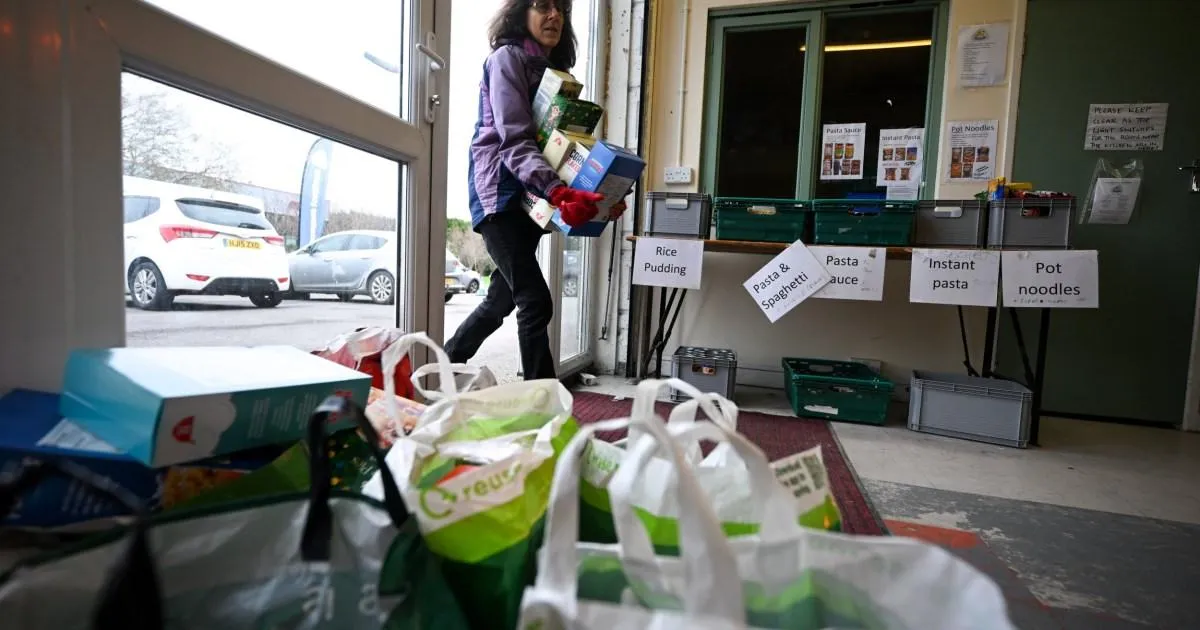
It is one thing to read a statistic about food poverty, and another to live it. This week, the Trussell Trust, one of the UK’s leading anti-poverty charities, released figures that should stop the country in its tracks: almost half of British families with disabled children have run out of food in the past twelve months and did not have the money to buy more. The same report found that just over a third of all families with children in the UK have been forced into the same impossible situation. These are not abstract numbers. They represent real parents, sitting at kitchen tables, wondering how they are going to stretch budgets that simply will not stretch any further. The Trussell Trust, which runs around 1,400 food banks across the country, now estimates that around nine million people could be at risk of needing a food bank in the coming year. That is roughly one in every eight people in Britain. Behind the scale of that figure is something even more heartbreaking: children going to bed hungry, parents skipping meals so their kids can eat, and families being forced to choose between heating the home and filling it with food.
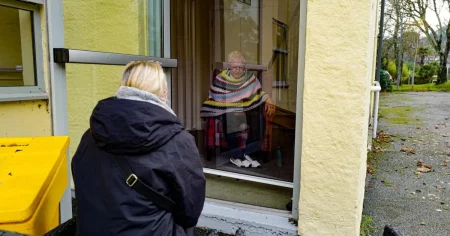
One of those parents is Deirdre, a former teacher and single mother of two from Belfast. Her story is a powerful reminder that food bank use is not simply about unemployment or poor decisions. Deirdre is educated, hardworking, and deeply committed to her children. But her son Niall has autism, and the everyday costs of supporting him have pushed the family finances to breaking point. Niall cannot eat the food provided by free school meals, so Deirdre must buy alternatives he will actually accept. He also cannot take the bus to school, which means she has to pay for taxis — fifteen pounds each way, every school day. Add that up, and the costs are staggering for a family already trying to keep their heads above water. As Deirdre put it, in a voice that will resonate with millions of parents: “Everybody, including the working poor, is finding that managing the food costs of a child with a disability — and that could mean physical, mental health, autism, or ADHD — is extremely costly. There’s no two ways about it, and it’s extreme pressure on families.” And then she added the words that should haunt every politician: “If you think we’re coming up to Christmas here, we’re coming up to colder months. People are saying heat or eat.”
For Deirdre, the pressure is not just about day-to-day survival, although that would be enough. It is also about the moments that childhood should be made of. She has had to contact food banks to be able to provide big meals at Christmas and Easter, and to free up just enough money to send her children on school trips. She explained the painful logic: if she did not ask for help with food, her children would be the ones left behind when their classmates went on outings. They would develop the stigma of being “the child that can’t afford to go on the school trip.” So she reaches out to food banks, humbling herself, explaining her situation honestly, and praying that the people on the other end will understand. They do, because they see her story every day. But the fact that this has become so normal is a quiet indictment of the society we have built. No parent should have to beg for food so their child can feel ordinary. No family should have to choose between a warm home and a festive meal. And no disabled child should face the extra cruelty of a system that does not account for their needs.
The statistics behind these personal stories are stark. The Trussell Trust’s report, using analysis from WPI Economics, shows that 34% of families with children have run out of food in the past year and could not afford to replace it. For families with disabled children, that figure leaps to 49% — nearly one in two. In human terms, that means millions of adults and children are living on the edge. The charity calculates that across the UK, around six million adults and 2.9 million children are now in this position. That is an increase of around 500,000 people in just two years. We are not talking about a problem that is fading away; we are talking about one that is deepening, even while politicians insist that economic recovery is underway. The cost of living crisis has hit everyone, but it has hit the most vulnerable hardest. Families with disabled children carry extra expenses that other families simply do not face: specialist foods, transport, care needs, medical appointments, and clothing that gets ruined or worn out faster. These are not luxuries. They are necessities. And when there is not enough money to go around, food is the first thing to be cut.
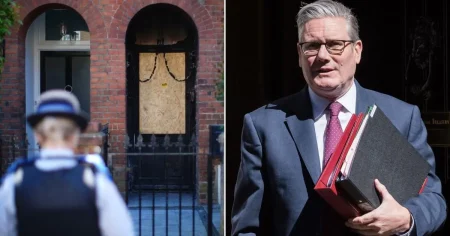
This is why the Trussell Trust is pleading with the Prime Minister to take the crisis seriously. Helen Barnard, the charity’s director of policy and research, put it plainly: “If we don’t act, we risk blighting the futures of a whole generation of young people who are experiencing and witnessing hardship UK-wide as the norm.” Those words should land heavily. We are not just talking about hungry children today; we are talking about the long-term consequences of growing up in a house where food is a source of anxiety, where parents cry behind closed doors, and where the family meal is a privilege rather than a given. The effects of hunger and poverty on a child’s education, health, and emotional development are well documented. The question is whether we have the will to do something about it. Barnard argues that the Prime Minister must renew Labour’s manifesto promise to end the need for emergency food, start strong in his first Budget, and make this a measurable goal in the government’s ten-year plan to raise living standards. These are not radical demands. They are pleas from a country that is tired of seeing food banks become a permanent fixture of life rather than a temporary lifeline.
Ultimately, this report is not just about numbers or policy. It is about the kind of country we want to be. Around nine million people — a population larger than many nations — may need a food bank in the coming year. They are not strangers. They are our colleagues, our neighbours, our children’s classmates. They are former teachers like Deirdre, who never expected to need charity but found herself with no other option. They are parents who are doing everything right and still falling short. They are children who are hungry not because their families do not care, but because the world around them has become too expensive. Food banks are an extraordinary act of community care, and the volunteers who staff them deserve endless gratitude. But they should not be a substitute for government action. The Trussell Trust does not want to expand its services forever; it wants to make itself obsolete. The real measure of a society is not how generously it feeds people in crisis, but how few people need that help in the first place. We can do better. We must do better. And if this report is not the wake-up call that ends the need for emergency food, then we will have to ask ourselves exactly what it will take to hear the alarms.