


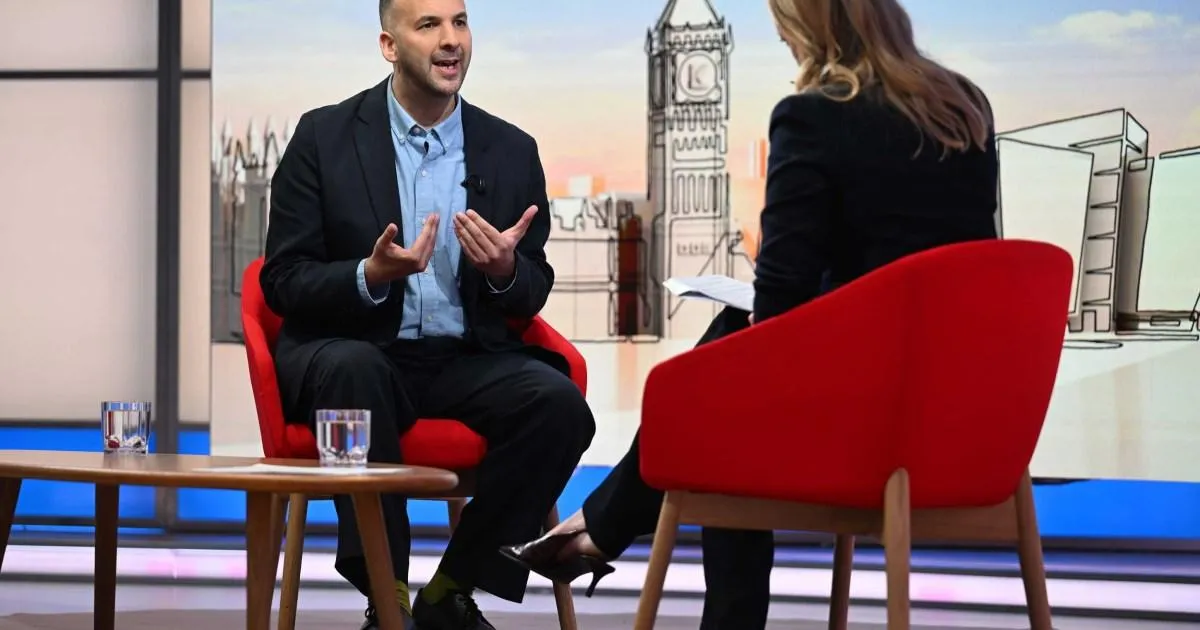
It is never easy to be a political leader caught between your own conscience and the will of your party, but Zack Polanski is currently living that uncomfortable reality in full view of the British public. The leader of the Green Party of England and Wales has spent the past fortnight defending—or rather, trying to distance himself from—a policy he never personally wanted. At the party’s annual conference in Brighton, members passed a motion denouncing Zionism as racism, a term usually understood as the desire for a safe Jewish homeland, and officially backing a single Palestinian state that would require the dismantling of the state of Israel. For many in the party, this was a bold statement of solidarity with the Palestinian people, a demand for justice after decades of conflict and occupation. For Polanski, it has become a nightmare. He is Jewish, he has spoken openly about the antisemitism he faces every day, and he does not believe that a one-state solution is something Western politicians should impose on the Middle East. Yet under Green Party rules, once a motion passes at conference, it becomes binding policy for two years. That means the man leading the party is publicly bound to a position he privately rejects, and he cannot do anything to change it until 2028. Appearing on the BBC’s Sunday with Laura Kuenssberg, he said plainly: “I don’t think it’s up to Western governments, and certainly not the UK government or the Green Party of England and Wales, to decide what the future looks like for Palestine and Israel.” It was a careful, diplomatic answer, but it left many viewers wondering exactly what he does believe. Does he support a two-state solution? Does he think Israel has a right to exist? Is he simply trying to keep his party together? The interview did not provide clear answers, only the image of a leader struggling to reconcile his personal values with the collective decisions of his own movement. It is a lonely place to be, and the next two years are going to feel very long.
The policy itself is explosive, and its wording has provoked outrage far beyond the usual party-political sparring. To many Jewish people, equating Zionism with racism feels deeply antisemitic, because it reduces a movement rooted in the search for safety after centuries of persecution to something hateful. To many Palestinians and their supporters, however, Zionism is inseparable from the ongoing occupation, displacement, and suffering they have endured for generations. The Green Party’s motion came down firmly on one side of that argument, and in doing so it alienated plenty of its own supporters, not to mention potential voters who might otherwise have been drawn to the party’s environmental message. Polanski, trying to navigate the wreckage, declined to say whether he supports a two-state solution—the traditional diplomatic formula of an independent Israel alongside an independent Palestine—dismissing it as “for the birds” because candidates in this year’s Israeli election do not back it either. That comment was hardly a clarion call of leadership. It sounded more like a man exhausted by a debate with no good options, trying to find a middle path that would satisfy neither side but at least allow him to sleep at night. He did offer one glimpse of his true intention: “I want to move away from ‘one state’ towards saying Israelis and Palestinians should decide that future for themselves.” But as any political strategist will tell you, “they should decide” is not a policy; it is a hope. And with the motion now entrenched for two years, hope is not enough. The Greens are a party that prides itself on participatory democracy, on letting the members speak, but that very virtue has now become a trap. Polanski cannot simply override the conference decision, because doing so would betray the party’s own principles. Instead, he must wait, persuade, and hope that by the time the next conference rolls around, the temperature has cooled enough for a more moderate position to win the day.
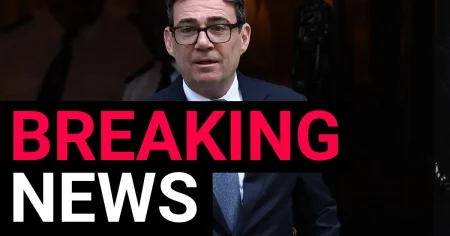
The fallout has been brutal, and it has come from all directions. At Prime Minister’s Questions, the Labour Prime Minister Andy Burnham—who replaced Sir Keir Starmer after the last general election—called the Green policy antisemitic and ruled out any coalition deals with the Greens while it remains in place. That might sound like a distant, Westminster-style threat, but it has real consequences. Labour quickly clarified that its ban applies not just to national agreements but to local councils too, telling its own councillors to dissolve power-sharing arrangements with Green colleagues unless those colleagues disavow the motion. For a party like the Greens, which has grown in influence largely through local government partnerships, this is a potentially devastating blow. It also puts Polanski in an impossible position: he is a Jewish leader who has spoken openly about experiencing antisemitism every day, yet he now leads a party officially branded as antisemitic by the Prime Minister. His response on social media was raw and angry. Quoting a post about the Labour ban, he wrote: “I’m the only Jewish leader of a political party. I’m a victim of Antisemitism every day and I’ve made it clear Jewish people are welcome in my party. You’re a Prime Minister who arms a genocide and locks pensioners up for opposing it.” The tweet was a cry of frustration, but it also showed how personal this row has become. Polanski is not just defending a policy; he is defending his own identity and his place in a party that sometimes seems to forget he is one of the people its rhetoric affects. He is also trying to survive in a political environment where every word he says is scrutinised, where his opponents are happy to use the motion to define him, and where his own party’s members are not necessarily in a hurry to help him out of the mess.
Nowhere is the tension more visible than in Sheffield, where the Green group runs the city council in coalition with Labour. The city has become a test case for whether national political battles can be contained at a local level—and the early signs are not good. After Labour’s national leadership ordered its councillors to end partnerships with the Greens unless they rejected the Zionism motion, Sheffield’s Green group leader, Angela Argenzio, wrote a defiant letter to the Labour council leader, Fran Belbin. Argenzio refused to accept the Prime Minister’s framing, arguing that “conflating Zionism with Judaism is itself antisemitic.” She insisted that the Green councillors are not antisemitic, that they stand with all Jewish residents of Sheffield, and that destabilising the council would hurt real people: city employees, housing plans, and the everyday work of running a community. Her letter ended with a pointed warning: “Our responsibility goes beyond the direction you are receiving from London. If Labour chooses to destabilise Sheffield City Council over this, Labour owns the consequences.” It is a powerful statement, and it captures the broader dilemma perfectly. On one side, Labour is trying to draw a moral line in the sand, insisting that antisemitism has no place in any governing arrangement. On the other side, Greens argue that the motion has been misrepresented, that they are being unfairly punished for a debate that is more nuanced than any single slogan, and that local residents should not be caught in the crossfire of a national political feud. Meanwhile, the people of Sheffield just want their bins collected, their streets cleaned, and their schools funded. The letter shows that the Greens are not willing to back down easily, but it also reveals just how fractured British politics has become when even a city council can be held hostage by a controversy that began at a party conference by the seaside.
For Polanski personally, this policy row could hardly have come at a worse time. Just days after the Brighton conference, he lost the Holborn and St Pancras by-election in north London—a constituency he had hoped to win from Labour after the departure of the former Prime Minister Sir Keir Starmer. Instead, Labour’s Sagal Abdi-Wali took the seat, and the Greens were left with another disappointing result. The leader’s poll ratings have also collapsed, with the party now hovering at roughly the same level it was before he swept to power a year ago. In his BBC interview, Polanski acknowledged that the political landscape had changed, saying Starmer’s departure as PM “probably played a part” in the party’s decline, and arguing that Burnham has been adopting Green policies, making it harder for the Greens to stand out. That may be true, but it does not explain away the fact that a leader who was supposed to take the Greens to new heights is now fighting to keep the party relevant. The Zionism motion has become a millstone around his neck, forcing him to answer for something he does not believe, while his political opponents use it to paint the entire party as beyond the pale. It is a classic case of a leader being held hostage by his own party’s internal democracy—and there is no obvious escape route. Every interview, every press conference, every social media post becomes an opportunity for someone to bring up the motion again, and Polanski is left to repeat the same careful, unsatisfying answers while hoping that something will change. But nothing will change for another two years, and in politics, two years is an eternity.
So where does this leave Polanski, the Greens, and the wider political conversation? For now, the leader says he will not try to overturn the motion, because that is not how his party works. Instead, he will wait for the first available opportunity to amend it—which, under Green Party rules, will be in 2028. That is a very long time in a political world that moves at lightning speed. If Prime Minister Burnham calls a snap election before then, the Greens could be forced to put the controversial policy in their manifesto, guaranteeing another round of damaging headlines and further alienating Jewish voters. Polanski’s hope is that by 2028 he can shift the party’s position away from a single Palestinian state and towards a more neutral stance that simply says Israelis and Palestinians should decide their own future. But in the meantime, he is left to manage a party that is divided, a coalition partner that is hostile, and a public that is confused about what the Greens actually stand for. The human reality is that leadership is not always about bold vision or grand speeches. Sometimes it is about surviving the gap between what you believe and what your party has voted for, and trying to keep your integrity intact while doing so. Zack Polanski may be a leader in name, but for the next two years, he is also a prisoner of his own party’s rules—and the only thing he can do is wait, hope, and try to keep the damage from becoming permanent. It is a lonely place to be, especially for a man who already feels like a target simply for being who he is. The question is whether he can survive the wait, and whether the Green Party can ever find a way to talk about Israel and Palestine without tearing itself apart.