

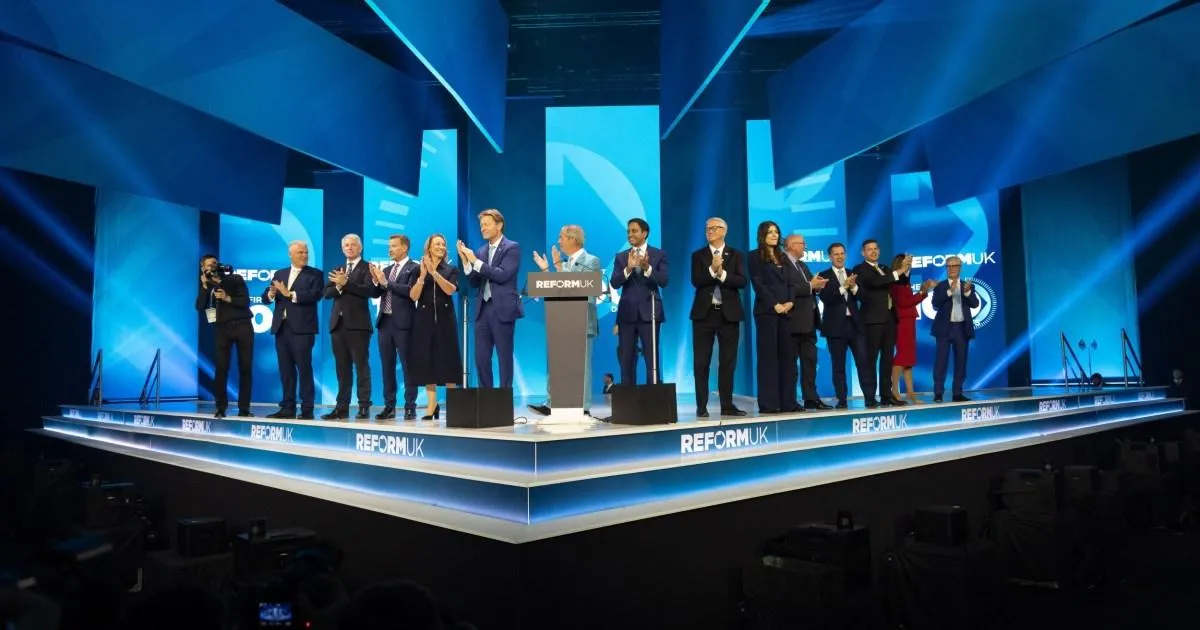
For months, Nigel Farage has insisted that Reform UK is a changed party, one with no room for racism, no tolerance for bigotry, and no place for the kind of extremism that has haunted British politics for years. But an undercover investigation by ITV News, captured in the documentary Undercover: A Year in Reform, tells a very different story. A reporter spent a year embedded inside the party, attending rallies, speaking with candidates, and recording conversations that expose a troubling pattern of prejudice among those hoping to represent Reform in public office. The most recent revelations come from an event nicknamed “Farage Fest,” a victory rally held after the August Clacton by-election, where hundreds of supporters gathered in an atmosphere of celebration. The event itself also faced scrutiny for not having a licence, though Reform insisted it was lawful and that any licence application was merely precautionary. More significantly, it was at this rally that an aspiring Reform MP, Jason Powell, was recorded making remarks so extreme they immediately drew national attention. The footage forces a stark question: can Farage truly clean up a party whose own candidates speak openly about concentration camps, executions, and the impossibility of being both Muslim and British?
Jason Powell, a party activist who had passed vetting checks and hoped to become a Reform parliamentarian, attended the Clacton rally to canvass for Farage. In conversation with the undercover reporter, Powell outlined his vision for dealing with people arriving across the English Channel. “They just need to be rounded up… and sent to concentration camps,” he said, describing how anyone crossing on a boat during the first week of an election would be detained. He went further, saying that every single person who arrives should be “rounded up” and sent to these camps, where they would be given an ultimatum: tell us where you are from, or stay for the rest of your life. The casual way he described this policy was chilling, as if he were discussing routine administrative procedure rather than the imprisonment of human beings. But it did not stop there. Powell also claimed that “you cannot be a Muslim and British,” comparing the two identities to “oil and water.” He said he was “hardline about Islam” and would be happy with any Muslim prepared to de-convert, but that those who remained faithful in Islam would face fundamental disagreements with him, even referencing Reform’s own Home Affairs spokesman, Zia Yusuf, who is Muslim. When challenged, Powell insisted his views were not extremist, but rather reflected the general opinion of the British people. That assertion is deeply troubling, as it suggests he genuinely believes cruelty and religious intolerance are mainstream values.
The investigation also captured two Reform councillors from Hounslow, Adam Parkins and David Kerr, discussing what they would do if the party gained power. Their conversation was filled with violent fantasy. Parkins said that if he were prime minister, he would “quite happily do Sunday morning Rose Garden executions of fucking rape gangs,” describing how he would walk behind them with a pistol and go “boom, boom, boom,” then casually go and have his coffee. Kerr, who stood as a Reform MP in 2024, agreed that perpetrators of grooming gangs should be “machine gunned down,” claiming their offending rates would plummet. The two men laughed and spoke as though such ideas were not monstrous but merely pragmatic. When explaining how to discuss immigration policy without being labelled a Nazi, Kerr remarked, “Certain things are best left done, best left until you’re in power, because there’s no way you’re going to be able to even discuss a tenable solution without being called a fucking Nazi.” The irony of that statement seems lost on him. He was complaining about being called a Nazi while proposing mass murder as a solution to crime and immigration. When ITV later contacted Kerr, he did not respond. Parkins, however, defended himself by saying that Reform policy is that grooming gangs should face the toughest possible sentences under British law, and that this was merely his view. But there is a vast difference between supporting harsh punishment and describing a cheerful morning of executions.
Perhaps the most revealing part of the investigation concerns how Reform handles its own candidates. The undercover footage shows that candidates for the Welsh parliament received media training, including from board member Darren Grimes. One of those trained was Karl Lewis, a serving councillor who had previously been criticised for liking and sharing extremist material online. In a mock interview, Lewis was challenged about his support for Tommy Robinson and Andrew Tate, as well as his sharing of conspiracy theories. He insisted his views had changed since 2016, saying, “We don’t tolerate extremism at all in the party. And anyone that is found to have extremist views are rejected straight away.” He assured the interviewer that he had gone through the party’s vetting process and that it was “totally robust, trust me.” He was applauded for his answer. But soon afterwards, he confessed to the undercover reporter that he had been lying. He said he was actually “ahead of his time” for endorsing a post titled “Sweden Raped to Death by Muslim Migrants,” and argued that while the post was once considered radical, it was now common knowledge. When asked to clarify what was common knowledge, he simply said, “Migrants coming over, yeah.” The footage is startling not just because Lewis held such views, but because the party was actively coaching him to appear moderate. That suggests Reform is not simply missing extremists during vetting; it is teaching them how to hide their beliefs.
Reform UK responded to the latest reporting by insisting that not everyone covertly recorded by ITV is a member of the party, and that where members, activists, and councillors have behaved inappropriately, investigations have begun. They pointed to suspensions and due process, and argued that vetting procedures have been improved and prioritised. “There is no room for racism in Reform UK,” the statement read, adding that no matter how good vetting is, one cannot vet a future comment. But the evidence collected by ITV paints a broader picture. This is not one bad apple. There was Dean Miller, a Bromley councillor who resigned after being filmed describing Black children as “animals.” There was Sarah Pochin, a Reform MP for Runcorn and Helsby, who was secretly recorded saying the party has a “male issue” and described it as “chauvinistic.” There was Luke Campbell, a Reform mayor, investigated for allegedly showing a colleague naked pictures of himself. The pattern is hard to dismiss as coincidence. For Farage, each new scandal is a test of whether his promise to clean up the party means anything. Yet the same messages keep emerging: candidates saying outrageous things, party officials promising reform, and then another video appearing.
What makes these revelations so significant is that they are not about anonymous online trolls or fringe figures far from power. Jason Powell wanted to be an MP. Adam Parkins and David Kerr are elected councillors. Karl Lewis was being prepared for public office by the party itself. These are people who could, if Reform continues to rise, hold positions of real authority over the lives of British citizens, including Muslims, Black Britons, migrants, and anyone else targeted by their rhetoric. The documentary airs on ITV1, ITVX, STV, and STV Player on Sunday, October 18, and it raises questions that go far beyond one party. When a political organisation says there is no room for racism, but its own future candidates speak of concentration camps, when it promises robust vetting while secretly training candidates to lie about their past, voters are entitled to wonder whether the promise is genuine or just another performance. It is easy to condemn extremists once they are exposed. It is much harder to explain why they were welcomed in the first place. In the end, the undercover investigation is not just an embarrassing moment for Reform UK. It is a warning about what can happen when political parties prioritise loyalty over values, and when words like “no room for racism” become nothing more than a line to repeat on television.