
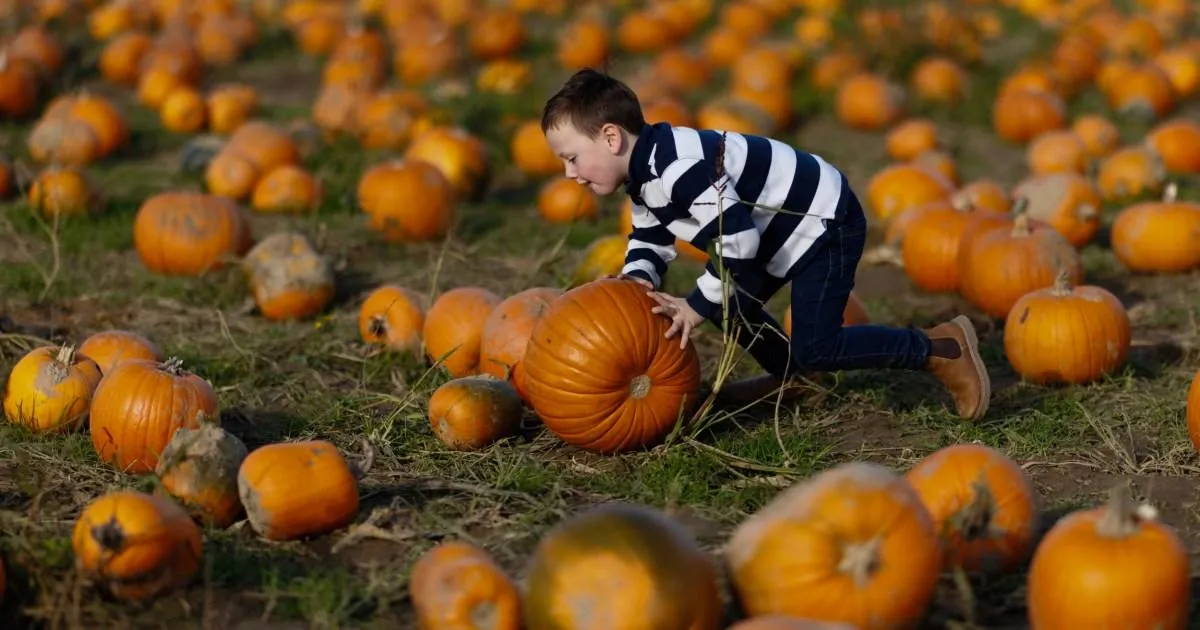
October has a way of turning ordinary things into magic. The air goes crisp, the evenings close in early, and suddenly pumpkins are everywhere—on doorsteps, windowsills, supermarket shelves, and kitchen counters. Carved into grinning faces, stacked beside bales of hay, or simply left whole to remind us that autumn has arrived, the pumpkin is the emblem of Halloween in Britain. It is impossible to imagine October without that familiar flash of orange. And yet, this year, sharp shoppers may notice something a little different. The pumpkins on sale are smaller. The displays seem less abundant. The big, round, prize-worthy specimens that people love to photograph are harder to find. Across the United Kingdom, around 24 million pumpkins are sold every year, feeding an appetite for autumnal tradition that stretches from pick-your-own farms to city supermarkets. But the 2026 crop has been badly affected, and farmers are talking openly about a shortage that has left fields emptier and harvests dramatically reduced. After Britain’s hottest summer on record, the land itself seems to have pushed back. Growers report lower yields and noticeably smaller fruit, and the consequences are being felt by everyone from commercial farmers to families looking forward to a day out at a pumpkin patch. It is a strange and unsettling thing: one of the most reliable symbols of the season has suddenly become fragile.
Nowhere is that fragility more vivid than in Bury St Edmunds, Suffolk, where Liz Paterson and Andrew King have spent months watching their pumpkin crop stubbornly refuse to grow. In a normal year, their farm produces around 10,000 pumpkins. It is a number that has probably felt dependable, almost routine, after years of steady harvests. This year, they have just 50. Fifty pumpkins from a farm that should be overflowing with thousands. Paterson puts it plainly: “The pumpkins just didn’t grow this year.” It was not for lack of effort or care. The farm has water, and irrigation was possible, but there was a difficult decision to be made. They also have 500 breeding ewes, and in a summer of intense heat and drought, those sheep needed the water far more than a crop of decorative gourds. “We could have tried to irrigate; we have got water, but we also have 500 breeding ewes, so we needed to give the water to them,” she explains. It is a moment that captures the reality of farming so well: a constant balancing act, a series of quiet sacrifices, a choice between one living thing and another. The pumpkins lost. But even if they had received every drop of water, the heat itself would still have been a problem. “I think the weather was too hot as well; they just didn’t pollinate, so it just never worked at all really.” Too hot for the bees, too hot for the pollen, too hot for the delicate process that turns a flower into a fruit. The result is a bare, disappointing patch in a season that should have been full of colour. For Paterson and King, this is not just a financial loss. It is the strange silence of a farm that should be humming with activity. It is the sight of empty rows and the knowledge that they did everything right and still came up short.
The scorching summer has left its fingerprints across the entire farm, not just the pumpkin field. Paterson describes the drought as “horrendous,” and the word carries real weight. The grass that the sheep rely on has been burned brittle and brown, leaving the farmland dry, dusty, and depleted. Rearing 500 ewes requires pasture, and pasture requires rain. When the weather refuses to provide it, every decision becomes a trade-off. Do you water the animals or the crops? Do you try to rescue one part of the farm and accept that another will fail? Do you hold out hope for a wet September, or begin to accept that the season is already lost? There is little comfort in looking ahead. With El Niño expected to influence weather patterns in the years to come, there is not much optimism that next year will be dramatically better, and forecasters are already muttering about 2027 bringing more of the same. Paterson and King are not the kind of people to give up easily. They plan to try again. They will plant another batch of gourds, adjust what they can, and hope for kinder conditions. But there is a limit to how many times you can push against the climate before something has to change. “If it doesn’t work, then we’ll have to start thinking this climate doesn’t work for pumpkins. What else can we do?” That question is hanging over farms all over the country. It is the sound of a livelihood being recalibrated in real time, and it is a reminder that climate change is not a distant, abstract threat. It is happening in the fields, in the harvest, in the quiet decisions farmers make every single day.
The scale of the problem becomes even clearer when you talk to Niall Smith at Picking Patch, a seasonal farm attraction in the New Forest, Hampshire. Smith has been running pumpkin events for years, and he knows exactly what a good crop should look like. This year, though, is the second season in a row that the pumpkins have been badly affected, turning a one-off weather disaster into a worrying pattern. Conditions were so poor that Picking Patch had to make an unusual choice: instead of relying on their own crop for Halloween events, they turned to a local family farm to supply the pumpkins. Even then, the results were deeply disappointing. The pumpkins that arrived were 50 to 60 per cent smaller than the ones they normally grow. That is a staggering reduction, and it changes the entire atmosphere of a pumpkin patch. Instead of heavy, round, golden gourds that children can wrap their arms around, there are smaller, lighter specimens—charming in their own way, but not quite the magical vision people carry in their heads when they plan an autumn visit. Smith is honest about how challenging the season has been. “We have a pumpkin market, it all looks very pretty, but then we’ve gone very much into Halloween activities, and we’re not just a pick-your-own site.” His business has grown over the years from simple pumpkin picking to a full seasonal experience, with mazes, tunnels, tractor rides, spooky trails, and warm drinks on cold afternoons. All of that depends on pumpkins. And pumpkins, this year, are not cooperating. He knows that other farms are in even worse shape. “I know there’s a lot of patches that have got very, very disappointing crops, and by half term they’ll be out,” he says. In previous years, growers could lean on one another, buying up surplus from farms that had more pumpkins than they could sell. Not this time. “There’s not a chance,” Smith says bluntly. The safety net has gone, and farms are having to face the season alone.
Ross Wright, a farmer from Exeter, sees the same picture from a different angle. He describes a national shortage of pumpkins, with particularly large ones in extremely short supply. The pumpkins that make the best Jack-o’-lanterns—the big, smooth, symmetrical ones that sit proudly on doorsteps and win prizes at local competitions—are simply not there in the numbers they used to be. Smaller pumpkins might still be available, but if you are looking for something substantial to carve, you may need to travel further, pay more, or settle for something that looks less like a classic pumpkin and more like a squash trying its best to blend in. Wright’s response is not to give up but to adapt. “We’re just going to have to grow more acres to get the pumpkins we need for Halloween every year,” he says. It sounds simple, the kind of practical solution a farmer would naturally reach for. But behind that sentence lies a deeper truth. Growing more acres means taking land away from other crops, spending more money on seeds and labour, and hoping that next summer will be kinder. It means accepting that the old normal has shifted. A farm that once produced enough pumpkins on a certain amount of land now needs more space, more water, more input, just to achieve the same result. And if the climate continues to warm, even those extra acres may not be enough. The shortage is not just a problem for farmers. It ripples through the whole season. Supermarkets have fewer pumpkins to display. Market stalls sell out earlier. Families planning Halloween parties have to think differently about their decorations and their baking. The humble pumpkin, once so reliable, has become a symbol of uncertainty—and a reminder that even our most cherished traditions are connected to the health of the natural world.
In years gone by, a small pumpkin might have been passed over in favour of something bigger and more impressive. This year, perhaps, it deserves a second look. The smaller gourds are not failures; they are survivors. They made it through a summer that pushed them to the edge, and they still turned orange. They still carry the warmth of the season, the promise of carved faces and candlelight, the familiar scent of autumn. As you choose a pumpkin this Halloween, consider the hands that grew it. Think of Liz Paterson and Andrew King, who had to choose between their sheep and their pumpkins. Think of Niall Smith, arranging a pumpkin market that looks pretty but hides the difficult truth of a second bad harvest. Think of Ross Wright, already planning to plant more acres in the hope of keeping the tradition alive. These farmers are not asking for sympathy. They are asking for understanding. They are asking us to notice that the world is changing, and that the food and traditions we love are caught up in that change. The pumpkin shortage is a story about climate change, but it is also a story about people—about patience, resilience, and the stubborn determination to keep growing even when the weather says otherwise. There may still be pumpkins this year, but there are fewer, and they are smaller. Perhaps that is a reason to be more creative, to carve smaller faces, to make smaller pies, to celebrate what we have rather than mourn what we expected. Or perhaps it is a reason to look more closely at where our food comes from and who grows it. The farms that feed our Halloween traditions deserve support, not just in October but all year round. If there is one thing this year’s pumpkin crop teaches us, it is that nothing can be taken for granted. Not the harvest. Not the season. Not the simple, joyful act of putting a glowing pumpkin on your doorstep. But as long as farmers keep planting, there is hope. And as long as we keep carving, Halloween will still feel like magic—even if the pumpkin is a little smaller.