



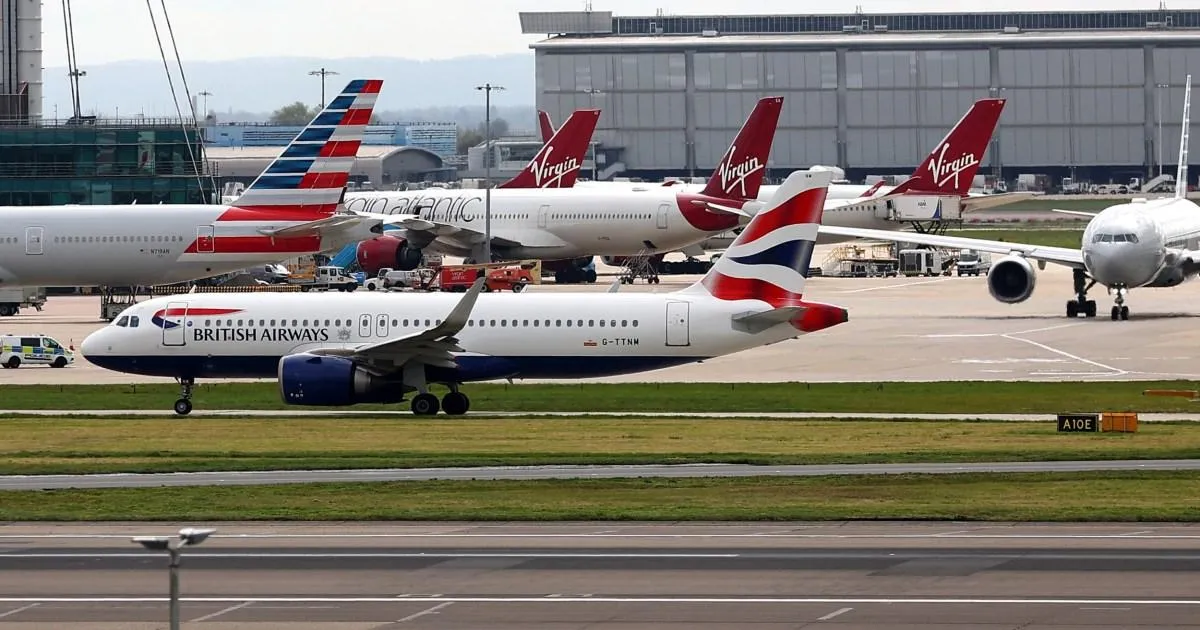
The sky above London is beginning to feel like a crowded motorway at rush hour. Aircraft stack up, queue on taxiways, and squeeze into terminals that were never designed for the sheer number of people now passing through them. For years, the four big airports serving the capital—Heathrow, Gatwick, Stansted, and Luton—have been running out of road, and their owners have responded by digging out ambitious expansion plans that were once considered too difficult, too expensive, or too politically toxic to touch. If all of those plans were delivered in full, London’s airports would be able to handle an extra 150 million passengers a year by the 2040s. That is not just a statistic; it is a human story about millions of people being reunited with families, starting holidays, attending business meetings, and, yes, losing their luggage in ever more spacious surroundings. The race is already underway. Some projects are being physically built, others are still working through the courts, and one—the seemingly eternal debate about Heathrow—remains a national soap opera. What makes this moment so fascinating is that the UK has not opened a major new runway since Manchester’s second one back in 2002. That is more than two decades of growing demand and frozen supply, and the pressure is finally reaching boiling point. Industry leaders say the country has no choice but to expand. The communities living beneath the flight paths say they have heard that argument before, and they are not convinced. The race is not just about concrete and steel; it is about what kind of country Britain wants to be.
At the centre of this storm is Heathrow, the heavyweight that everyone loves to argue about. The airport already handles more than 84 million passengers a year and operates at nearly 99 per cent capacity, which means there is almost no margin for error. One weather delay, one small technical fault, and the consequences ripple across the world. The proposed solution is a third runway to the northwest of the airport, and it has become one of the most contested infrastructure projects in British history. Supporters see it as a vital engine for trade, tourism, and jobs, not just in London but across the whole country. Heathrow’s chief executive, Thomas Woldbye, has made the case with considerable force, telling MPs that sixty per cent of the economic benefit of a new runway would be felt beyond the South East and that no other project of comparable scale can deliver the same national advantage. Opponents, on the other hand, argue that expanding a giant airport in a densely populated area is an ecological disaster in waiting, incompatible with the UK’s climate commitments, and unfair to the thousands of people who would suffer from increased noise and air pollution. Even the once-fanciful idea of a new mega-airport in the Thames estuary, championed by Boris Johnson, was eventually set aside. The Airports Commission concluded in 2015 that Heathrow was the most cost-effective answer to the capacity crisis, but that conclusion has never ended the argument. It has only made it louder.
The political battle over Heathrow is about to enter another critical phase. A national policy statement on expansion is due to conclude its parliamentary review, and a crunch vote is expected in the House of Commons. The government’s position is far from settled. Since Labour took office, senior figures have sent mixed signals, trying to balance economic growth with environmental promises. Andy Burnham, the Mayor of Greater Manchester, has refused to endorse the third runway and instead called for more investment in regional hubs, including his own city. John Healey, the Defence Secretary, has been far more enthusiastic, saying that Heathrow has always been a powerful case for growth. This kind of internal tension is not new, but it is significant because investors are watching closely. The aviation industry needs certainty, and certainty has been in short supply for years. Even if the policy statement gets through Parliament, there will be further legal challenges, consultations, and environmental assessments. A final development decision is not expected until 2029, and if the runway is eventually built, it will not open until at least 2039—four years later than originally planned. For local residents, that feels like an endless nightmare repeating itself. For business leaders, it is a lesson in frustration. And for the rest of the country, it is a reminder that big infrastructure projects in Britain rarely move quickly. The Heathrow saga is not just about an airport; it is about the way the nation makes decisions, how it balances competing interests, and whether it can ever look beyond the next election.
While Heathrow remains stuck in the weeds of national politics, Stansted is quietly getting on with actually building something. The Essex airport, which serves as Ryanair’s largest base, is not the most glamorous name in British aviation. It does not have Heathrow’s global status or Gatwick’s sleek modern terminals. But it has a multi-billion-pound plan and, crucially, the work has already started. A £1.1 billion programme will extend the original terminal, which was designed by the celebrated architect Norman Foster back in the 1980s. The old passenger transit train that currently shuttles travellers to satellite piers will eventually be decommissioned, and for a while, passengers will be bussed out to the aircraft while new “skylink” bridges are constructed overhead. It may not sound glamorous, but it is real progress. The aim is to raise Stansted’s capacity to 51 million passengers a year by 2040. That is a dramatic increase from the airport’s current numbers, and it comes with promises of something that budget travellers have rarely experienced at Stansted: a more spacious departure lounge, filled with natural light and views of the apron. For the millions of holidaymakers who have squeezed through the airport’s crowded halls, often before dawn, that is a genuine transformation. Stansted’s expansion might be the least ambitious of the four projects, but it is also the most likely to be delivered on time. In an era of grand promises and endless delays, there is something quietly reassuring about an airport that simply gets on with the job.
Luton, meanwhile, is the underdog that refuses to disappear. The airport has long lived in the shadow of its wealthier and more famous rivals, but it has a loyal following among travellers who value its convenience and its no-frills approach to flying. Now it is about to get a much bigger footprint. Plans for a second terminal have been cleared after a long and bitter legal battle, with the Supreme Court rejecting a final appeal against the expansion. Passenger numbers are expected to rise to 32 million a year by 2043, nearly double what the airport currently handles. What makes Luton unusual is that it is not owned by a private investment company. It is operated by Luton Rising, a company controlled by the local council, which means the financial rewards of expansion will flow directly to the community. That has made the project deeply personal for the town. Supporters point to the jobs, the economic spin-offs, and the chance for Luton to step out of the shadows. Opponents, however, have fought every step of the way. The independent body that examined the project warned that it would harm the Chilterns landscape and increase road congestion, and environmental campaigners have argued that the carbon cost is simply too high. The Transport Secretary, Heidi Alexander, ultimately decided that the economic benefits outweighed the environmental damage, and the courts have now agreed that her decision was lawful. The campaign group LADACAN has not given up, but its options are running out. For the time being, the bulldozers are poised, and Luton is preparing for a future that once seemed impossible.
And then there is Gatwick, Britain’s second-biggest airport and the busiest single-runway airport in the world. For four decades, a formal agreement with West Sussex Council prevented Gatwick from building a second runway. That restriction finally lapsed in 2019, and the airport has been moving with surprising speed ever since. The centrepiece of its expansion is a £2.2 billion project to bring the northern runway, currently used only as a backup strip, into regular, full-time operation. Government consent was granted in September, and the last legal challenge was dismissed by the Court of Appeal in August, leaving the airport free to press ahead. Bosses are confident that dual-runway operations will begin by 2030, which would make Gatwick the first of London’s major airports to deliver a genuinely significant increase in runway capacity. In the meantime, the airport is also investing in its terminals, including a £140 million extension to the North Terminal’s satellite pier. There is a sense of momentum at Gatwick that is hard to ignore. It has faced doubts, court cases, and local opposition, but it has also shown that it is possible to get things done. The bigger picture, though, is not just about one airport winning a race. All four expansion projects are bets on a particular version of the future—one in which people keep flying, demand keeps growing, and the South East remains the beating heart of the British economy. Communities on the ground will carry the noise, the air pollution, and the disruption. The climate will carry the carbon. The airlines will carry the passengers. And by the 2040s, when the extra 150 million journeys have become an ordinary part of life, the argument may still be raging. The sky above London will be busier, the terminals will be fuller, and the question of whether it was all worth it will still be asked by the people who live closest to the runway lights.