



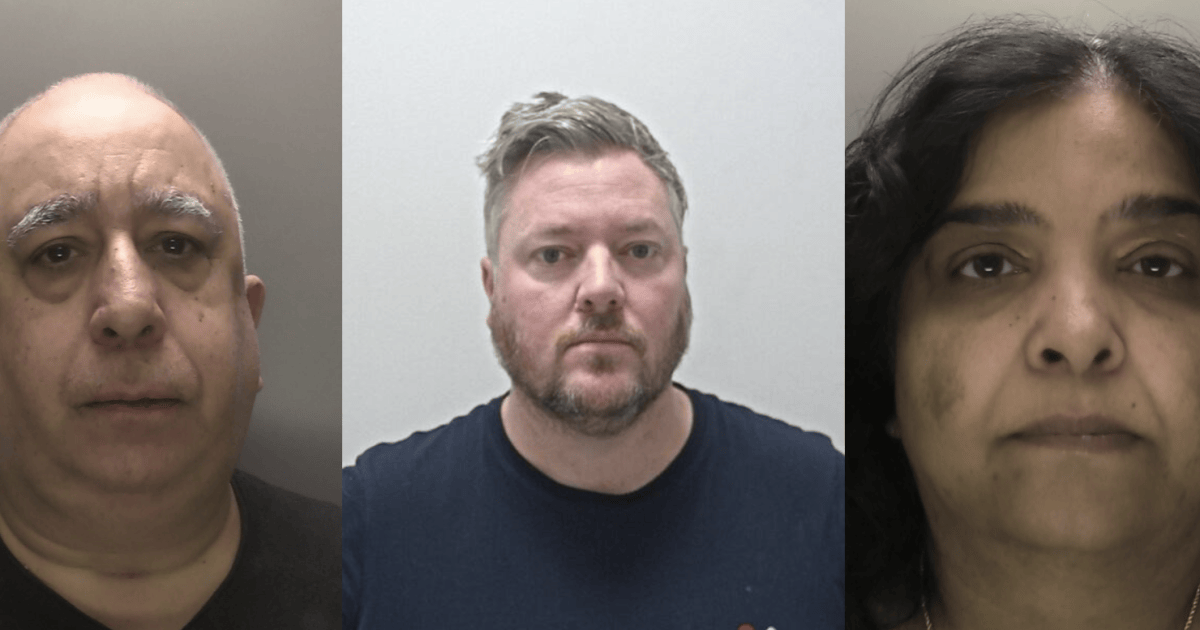
In the early months of 2020, the Covid-19 pandemic turned the world upside down. Streets emptied, hospitals filled, and ordinary people suddenly understood what it meant to be truly vulnerable. For healthcare workers, that vulnerability was not a distant fear but a daily reality. They faced a virus that spread invisibly, and their defense depended on simple but essential equipment: masks, gowns, and nitrile gloves. Those thin blue gloves, once taken for granted, became a symbol of protection and of hope. Hospitals scrambled to find suppliers, governments competed for cargo planes, and anyone who claimed to have access to personal protective equipment was listened to with desperate attention. It was in this atmosphere of urgency and fear that Jogesh Bhandari, his wife Meenakshi Bhandari, and their associate Craig Morris chose to reveal who they really were. Instead of helping, they exploited. They set up a company that claimed to buy and sell nitrile gloves for use in hospitals, promising to deliver 12 million boxes to facilities in both Britain and the United States. On the strength of those promises, they collected more than £5 million from legitimate businesses that believed they were doing the right thing. The gloves never came. The money, instead of saving lives, was hidden in a sham account arranged by Frank Labruzzo, a US Assistant Attorney General in Louisiana, and then slowly drained into the personal lives of three people who had decided that the pandemic was their personal lottery. This is not a story about a failed business deal. It is a story about greed, betrayal, and the cruelty of people who saw a global catastrophe as nothing more than a chance to enrich themselves.
The mechanics of the fraud were simple, which made it all the more devastating. Jogesh Bhandari, a 59-year-old man who should have known better, took the lead in presenting himself as a credible supplier. He and Meena created a company that looked legitimate from the outside, with bank accounts, contracts, and the appearance of real operations. At a time when hospitals were begging for supplies, the Bhandaris said exactly what their victims wanted to hear. They did not need to be sophisticated; they only needed to be convincing enough to take advantage of the chaos. The fake account, with Labruzzo’s help, made the whole scheme feel safe. It gave the illusion that money was being held in good faith while the gloves were being sourced. But there were no gloves. There were no suppliers waiting, no cargo planes on the runway. Instead, there was a casino of theft, and the Bhandaris had the house advantage. Jogesh immediately pocketed more than £300,000 to clear his personal debts. Then he spent £126,000 on a brand-new Porsche. A video clip later showed him showing off the red sports car, grinning and saying he could not stop smiling. Craig Morris, meanwhile, claimed £200,000 for his role in the scheme and had arranged a separate agreement to receive regular £5,000 payments. For a while, it must have felt like free money, a river of cash flowing from the suffering of strangers into their pockets. The investigation would later show that the company was a sham in almost every way, built not to facilitate trade but to capture money under false pretences.
What makes this case so deeply unsettling is the sheer extravagance of the spending. Investigators from the National Crime Agency found that instead of using the funds for PPE supplies, the Bhandaris and Morris spent hundreds of thousands of pounds on Rolex watches, expensive jewellery, and a collection of cars that included an Audi A5, a Land Rover Discovery and a VW Golf. They used the stolen money to refurbish their home, including a lavish kitchen renovation, and they took luxury holidays abroad while the rest of the world remained locked down. The image is hard to shake: hospitals running out of gloves, nurses wearing bin bags as protective coverings, doctors begging for equipment on social media, while these fraudsters sat in first-class lounges or stood in their new kitchens choosing expensive fixtures. In one clip, Jogesh is seen next to the red Porsche, his face bright with pride, unaware that the evidence of his greed was being recorded. The contrast is not just ironic; it is obscene. Every one of those luxury items was paid for by people who believed they were protecting the sick. Every holiday was funded by a hospital that never received its order. The Bhandaris and Morris did not steal from faceless institutions; they stole from nurses, from doctors, from patients, from every person who trusted that the supplies arriving would be real. They took that trust and exchanged it for jewellery and fast cars. And then they smiled about it, because for them, the pandemic had been a windfall, not a tragedy.
The fraudsters were reckless in their own words, and their arrogance became their undoing. Investigators analysed more than 47,000 messages exchanged between Craig Morris and the Bhandaris, and what they found was a portrait of casual, self-congratulatory criminality. At one point, Jogesh asked Morris to pose as a “previous satisfied customer” for what he himself admitted was his scam. Morris replied, with no hesitation, “I’ll do what I can to help.” In another message, Morris quoted the famous line from the film Jerry Maguire, writing, “What was it Jerry Maguire shouted… show me the money!!!!!!!!” The exclamation marks practically drip with glee. On yet another occasion, Morris asked Jogesh for a link to a hospital that Jogesh was supposedly building in South Africa, explaining, “I’m trying to blackmail a supplier.” He then added a laughing emoji, as if blackmail were just another joke between friends. The language is chilling because it is so ordinary. These were not masterminds carefully covering their tracks; they were people so convinced of their own impunity that they played with words the way playground bullies play with insects. Morris had agreed to receive regular £5,000 payments for his part in the plan, but his relationship with the Bhandaris eventually broke down, and the payments stopped after 2021. The messages, however, had already done their work. They preserved for the courts a clear picture of intent, of greed, and of a complete absence of empathy. The laughing emoji will forever stand as a symbol of the moral vacancy that allowed them to joke while hospitals suffered.
The end came when the law caught up with them. In February 2023, the trio were arrested and later charged with several counts of false representation and money laundering. Jogesh Bhandari did not accept the situation gracefully. He failed to appear in court on two occasions, claiming health problems, and was ultimately forced to appear after a bench arrest warrant was issued. On Friday, a judge sentenced him to eight years in prison. His wife, Meenakshi Bhandari, received a sentence of two years in prison, suspended for two years, along with a requirement to complete 250 hours of unpaid work. Craig Morris was sentenced to three years and nine months. The sentences reflect the seriousness of the crime, though no amount of prison time can fully undo the damage. The legitimate businesses that paid out millions were left with losses that threatened their survival. Hospitals had to find alternative suppliers at even higher prices, often waiting even longer for the equipment they needed. And the public, already exhausted by the pandemic, had to absorb the knowledge that some people had used the crisis to line their own pockets. The criminal justice system did its job, but the harm remains part of the story. It remains in the memory of every nurse who wondered why her gloves had not arrived, every procurement officer who had to explain the losses, and every hospital administrator who had to cancel orders for other supplies to cover the damage. Justice is not a refund. It is simply a verdict, a judgment on choices made.
Paul Boniface, operations manager at the National Crime Agency, captured the wider meaning of the case in a statement that deserves to be remembered. “These defendants took an opportunity to target legitimate businesses and line their own pockets for a lavish lifestyle during a pandemic that caused uncertainty around the world,” he said. “While Bhandari was picking up his brand-new luxury car and talking about how he couldn’t stop smiling, healthcare facilities had not received the vital PPE they needed at a time when demand was exponential, and companies were millions of dollars out of pocket.” He added that the sentences recognise the “far-reaching effects” of their selfish actions, and that the NCA would continue to target fraudsters who cause significant harm to the UK economy. But the true weight of this story lies beyond the official statements. It lies in the faces of the people who trusted them, the nurses who went home afraid of infecting their families, the patients who needed those gloves, the small businesses that were defrauded and left to carry the loss. The pandemic was a test of character. Most people failed in small ways, perhaps being impatient or selfish now and then. But the Bhandaris and Morris failed in the most extreme way possible: they turned other people’s suffering into profit, then dressed that profit in Rolexes and fast cars. In the end, the red Porsche was not a triumph but a monument to their greed. The holidays, the kitchen, the gleaming showroom of stolen goods—all of it now stands as evidence of what happened when ordinary people made an extraordinary choice to be cruel. Justice has been served, but the lesson remains. Greed can wear a happy smile, but it cannot smile forever. Eventually, the bill comes due, and even the most confident fraudster has to face the consequences.