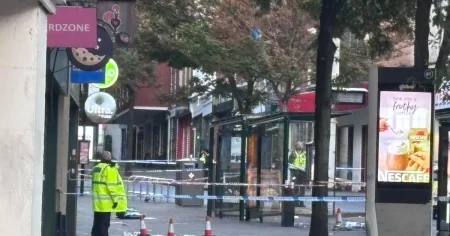


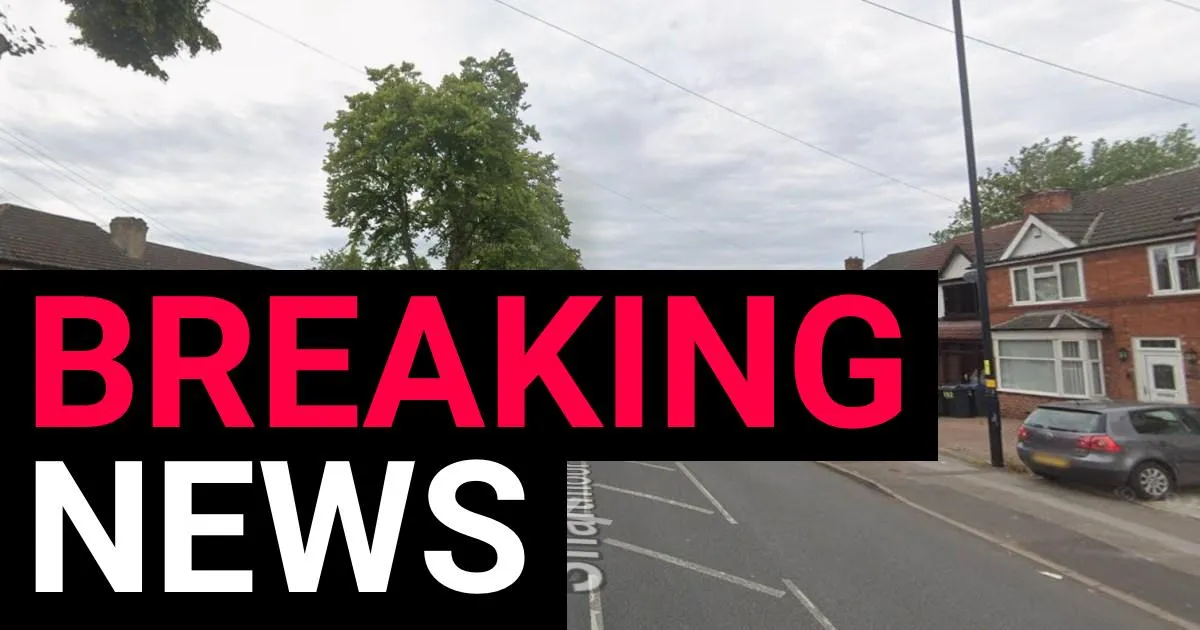
Every so often, a story arrives that stops you mid-sentence—not because of statistics, but because of the faces behind them. In Birmingham, on an ordinary evening along Shaftmoor Lane, a car crashed into railings, and in that terrifying instant, the lives of very young people were irreversibly changed. Police were called to the scene at around 8.30pm, after the peace of the evening was broken by the sudden screech of tyres and the sickening, hollow sound of metal colliding with metal. A white Seat Ibiza had left the road and slammed into railings, leaving behind a crumpled wreck, scattered debris, and the kind of chaos that nobody who witnesses it ever forgets. Emergency services arrived quickly, but they were too late to save one 16-year-old boy, who was pronounced dead at the scene. Another boy, still in his teens, was rushed to hospital with a serious arm injury. He has also since died. Two families, two funerals, two lifetimes of memories reduced to photographs and social media tributes. This is not just a police report or a news headline; it is the background to every birthday that will now go uncelebrated, every graduation that will never happen, every ordinary Thursday that will now be a date of remembrance. The teenager who died there had a name, a laugh, a future. The other boy who died had friends who will never again hear his footsteps coming up the stairs. In the space of seconds, Shaftmoor Lane became a place of grief, and an entire community began trying to understand how something so sudden could leave such a permanent mark.
Details of the crash are still emerging, and the police have been careful and respectful in their language as they piece together what happened. What is known is that the vehicle, a white Seat Ibiza, smashed into railings in Shaftmoor Lane. The force of the impact was so severe that one passenger was declared dead at the scene. The second passenger, a teenage boy with serious injuries, was taken to hospital, but despite the best efforts of medical staff, he too has lost his life. It is impossible to write those words without pausing. To be sixteen is to be at the beginning of everything—first jobs, first exams, first love, the dizzying possibility of an adult life that has not yet been shaped by disappointment or routine. To be told that a child has died in a car crash is every parent’s worst nightmare, and that nightmare is now real for two families. They are now part of a painful, unwanted club—parents who have outlived their children. And while the two boys are the centre of this tragedy, there is also a young man at the heart of the investigation: a 19-year-old who was arrested at the scene. He was still in his youth, just past the threshold of adulthood, an age that should still be about making mistakes and learning from them, not handcuffs and police cells. He was detained on suspicion of causing death and serious injury by dangerous driving and failing to provide a breath specimen. He remains in custody. Whatever the facts reveal, this is a triangle of devastation: two boys killed, a young man facing serious accusations, and multiple families now forever connected by one terrible moment on a Birmingham street.
The arrest raises questions that will be examined in painstaking detail over the coming days. West Midlands Police held the 19-year-old at the scene, and he was later further detained on suspicion of causing death and serious injury by dangerous driving and failing to provide a breath specimen. That second detail—the breath test—adds an extra layer of gravity to the case, though suspicion is not guilt, and the legal process must be allowed to run its course in a calm and fair manner. Still, the mention of a refused breath specimen suggests a complication that will weigh heavily as the investigation progresses. If it is eventually proven that drink or a refusal to cooperate contributed to this tragedy, it will add a bitter twist to an already unbearable loss. But even now, before a single court appearance, the families of the boys are facing the slow, agonising process of waiting for answers. They will have to sit through courtroom proceedings, hear witness testimony, and listen to forensic evidence that describes the final moments of their children’s lives in cold terms of speed, impact, friction, and mechanical failure. No verdict will bring anyone back. No sentence, however long, will fill the empty chairs at their dinner tables tomorrow. This is the real weight of dangerous driving: it does not simply bend metal or scratch paint; it breaks people, shatters families, and leaves scars that never fade. The young man in custody is also somebody’s child, and his arrest means another family is now caught in the glare of public attention. In a tragedy like this, nobody walks away unchanged—not the families, not the first responders, not the witnesses, and not the young man whose choices are now being scrutinised by detectives, lawyers, and eventually, likely, a jury.
The investigation is now being handled by the Serious Collision Investigation Unit, a name that sounds official yet represents something far more human: a team of people whose job is to find the truth for families who have been torn apart. They have asked anyone with dashcam footage from around the time of the collision to come forward, and they are speaking with witnesses who may have seen the white Seat Ibiza before it crashed. In a situation like this, there is no such thing as a meaningless detail. A tiny fragment of memory—a car driving erratically, a sudden burst of speed, a glimpse of something in the road—could be the clue that helps explain why two boys are no longer alive. The police are not just collecting evidence; they are trying to reconstruct the final minutes of two young lives, hoping to give grieving families some understanding of what their children experienced. It is a grim task, but it matters more than words can say. If you were near Shaftmoor Lane last night and your vehicle has a camera, check the footage. If you saw anything unusual, say something. You might believe that what you saw is unimportant, but to a parent trying to make sense of the senseless, it could be the difference between answers and permanent uncertainty. The police also want to hear from anyone who has not yet spoken with them, and their contact details are available through West Midlands Police. Sharing dashcam footage is not an intrusion; it is an act of compassion. In a world that often feels disconnected and distracted, this is a chance to hold a family together in the only way that remains—by giving them the truth, however painful that truth might be.
Beyond the official appeals and legal processes, there is the simple, overwhelming fact of loss. Shaftmoor Lane is not just a name on a map; it is a street where people live, work, and move through their daily routines. Children have walked home from school along that road. Drivers have waited at traffic lights and hurried through their commutes. Residents have looked out of their windows at the normal rhythm of city life, unaware that one ordinary evening would change everything. All of that was interrupted by a catastrophe. The railings that are now damaged or bent will probably be repaired in the coming weeks, but the emotional damage will not be fixed so easily. Local people will gather, leave flowers, and stare at the spot where a car came to rest. They will shake their heads and say the same things over and over: so young, so sad, such a waste. And they will be right. Every year, too many young people die on roads, and their deaths become statistics in government reports. But statistics do not capture the sound of a mother crying, the sight of a father clutching his son’s phone, the friends who keep sending messages because they have not yet found the strength to stop. These two boys deserve to be remembered as more than just victims of a collision. They were not merely passengers in a car; they were somebody’s world. Somebody will now have to learn how to celebrate birthdays without them. Somebody will have to answer questions from younger siblings asking when they are coming back. The community will rally, as communities often do in the aftermath of tragedy, but the loss will settle deep into the lives of those who loved them and remain there forever.
In the end, there is no way to make sense of an event like this. A night that probably started with the simple pleasure of being young and out with friends has ended with two coffins and two grieving families. A 19-year-old man sits in custody, unable to rewind time, unable to undo the choices that led to the crash, unable to bring back the lives that were lost. The families are left with the deepest kind of pain, the kind that has no timeline and no cure. What we can do, as a community, is be careful, be kind, and pay attention. If you drive, remember that a car is not just a piece of machinery—it is a weapon that can destroy lives in an instant. Road safety is not only about obeying traffic laws; it is about protecting the people who are waiting at home for someone to walk through the door, about respecting the vulnerability of every passenger, every pedestrian, every person sharing the road. And if you read this story and feel a heaviness in your chest, that is the right response—because these were people, not headlines. They were teenagers with dreams, routines, favourite songs, private jokes, and people who loved them. We should hold our own loved ones a little closer tonight, and we should keep these two boys and their families in our thoughts and prayers. The investigation will continue, and hopefully answers will come, but no answer will ever be enough. The best we can do is honour their lives by refusing to forget them. They were too young, too loved, and far too full of possibility to be reduced to a brief report. And now, because of a crash on Shaftmoor Lane, they have become a story we must tell—not as a warning, but as a reminder of how precious and fragile everything is. Rest in peace to the boys lost, and strength to all who loved them.