
In July 2024, I boarded a plane bound for London from the other side of the world, and every mile of that flight felt heavier than the last. I had spent years trying to outrun that night, but now I was voluntarily flying straight toward it, toward the person who had once been my friend and who had stolen something from me I could never quite name. As the plane cut through the clouds, I kept repeating a mantra to myself, a fragile little prayer: “They wouldn’t have pressed charges if they didn’t think they would get a conviction, right?” I needed to believe that the system would do what I could not, that it would see the truth and deliver the justice I had been too afraid to seek for so long. I told myself that the Crown Prosecution Service, the police, the lawyers, the judge, the jury, all of them, would look at the evidence and know that I wasn’t lying. I needed to believe that because I was terrified. Not just of seeing him again, but of being seen, of being picked apart, of having every choice I had ever made held up to the light and found wanting. I didn’t know then that the hardest part wouldn’t be telling my story. It would be watching the world refuse to believe it.
Back in 2010, the assault happened so quickly and so quietly that for years I could barely believe it had happened at all. He was my friend, someone I trusted, someone I thought I knew. After a night out, he asked if he could stay at mine, and I said yes, because that’s what friends did. He asked if he could sleep in my bed instead of the sofa, and I said sure, just don’t snore, because I was too comfortable, too naive, too unaware that trust could be weaponized like that. I fell asleep in my own bed, in my own room, feeling safe. I woke up with my pyjama bottoms around my ankles and his fingers inside me, and there was a smile on his face. I said, “What are you doing?!” and he stopped. I don’t remember what I said after that, or what he said, or how I got him out of my house. What I remember is the shame, thick and sticky, coating everything. I saw him at work on Monday, and I made a choice: I would pretend it never happened. I would go back to being his friend, because that was easier than admitting what he had done, easier than admitting what I had allowed to happen, easier than facing the question I wasn’t ready to ask: If I had been stronger, or louder, or more careful, would it have happened at all? I pushed it all down. I became numb. I would hear myself laugh with friends and feel like I was watching a stranger. I moved to New Zealand in 2016, thinking distance would heal me, but I just carried the wound across the world, buried under work and routine and the relentless effort of not feeling anything.
Then Covid hit, and the silence caught up with me. Suddenly there was nowhere to hide, no busy schedule to drown in, no distraction big enough to keep the nightmares at bay. I started reliving it in my sleep, waking up in a cold sweat, feeling his fingers on my skin, hearing my own voice saying “What are you doing?!” over and over again. Everything I had refused to feel for a decade came flooding out in waves of grief and rage and confusion. I finally started therapy, and after months of slowly unpacking the wreckage, I was able to admit to myself what had happened and how deeply it had marked me. I wrote a blog about it, partly to make it real, partly to release it, and I told my family and friends. I didn’t expect to press charges. I wasn’t sure I had the strength. But then I learned that he had admitted it to a mutual friend. When asked if it was true, he said, “Yeah, but I apologised the next day.” That casual dismissal, the idea that an apology could erase what he had done, lit a fire of anger in me that I hadn’t known was still burning. A friend asked the question that changed everything: “What if he does it to someone else?” I couldn’t live with that. So from New Zealand, I made an online report to the Metropolitan Police in London. What followed was three and a half years of waiting, of limbo, of trying to hold on to hope while everyone around me warned me not to expect too much. It took eighteen months just for the CPS to decide whether to press charges. Everyone told me historical cases rarely go to court, and I prepared myself for the words “there is not enough evidence.” But those words never came. They charged him with assault by penetration. I was given hope, which turned out to be the most dangerous gift of all.
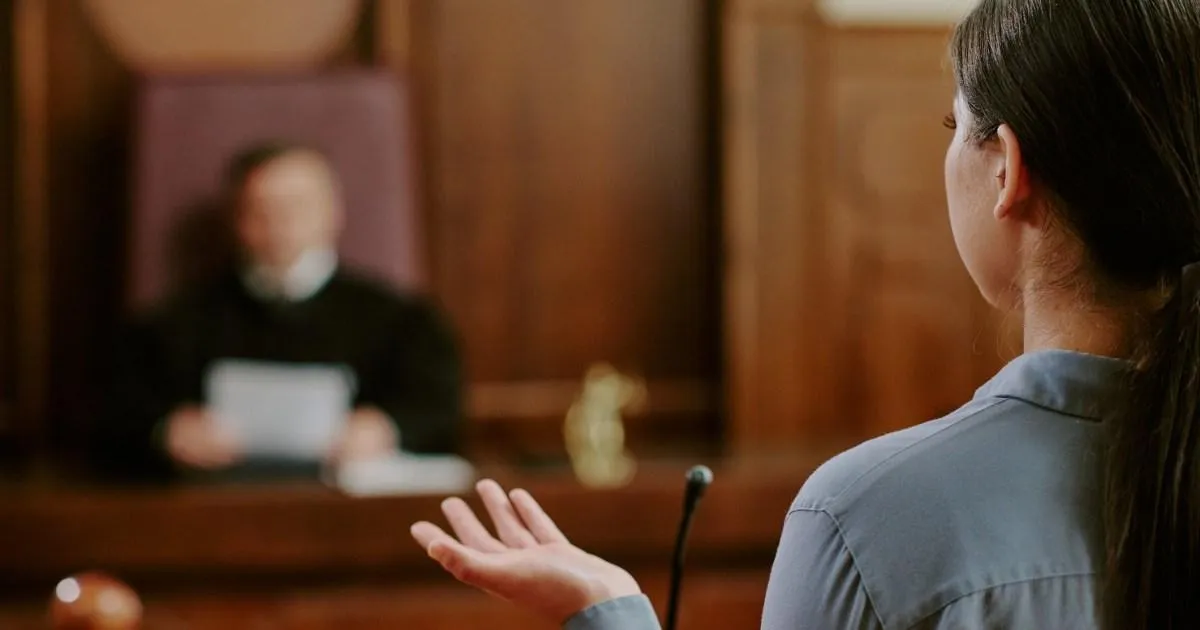
The trial finally began in July 2024, and the day before I was set to take the stand, I met with the prosecutor for half an hour. The advice was repeated again and again: “Don’t give the defence more than they ask for. Keep your answers short.” I nodded, but I didn’t really understand what was coming. The court had explained rape myths to the jury, and I was grateful for that small acknowledgement of everything survivors face when they speak up. But then those same rape myths were used as his defence, systematically and relentlessly. For hours, I sat in the witness box while the defence took apart every choice I had ever made. Why did you go back to being friends with him? Look at those photos of you together, you look happy. You kissed months before, didn’t you? You still trusted him. You still spent time with him. The implication was clear: this wasn’t assault, this was regret. The prosecutor, who should have been my champion, barely asked me anything. They played a video of my police interview from New Zealand, asked me a few questions for ten or fifteen minutes, and then sat down. I was never given the chance to explain. Never given the chance to say, “I went back to being friends because I was ashamed, because I didn’t know how to admit it, because I wanted to believe it didn’t matter, because I was scared of what would happen if I didn’t.” I wasn’t asked how I felt, or why I had acted the way I did. My water glass shook so violently that I couldn’t drink from it. The tears I had been holding back all day spilled down my cheeks as the jury left, and I collapsed into my chair. My legs gave out. My whole body gave out. I was told I had to return the next day because they had run out of time, and I walked out of the courtroom in a daze, held up only by the presence of two university friends who had come to support me. I don’t remember leaving the courthouse. I don’t remember how long it took me to speak.
The next morning, I walked that long corridor again, every step feeling like a betrayal of everything I was trying to hold together. I was only on the stand for twenty minutes, but they nearly broke me in that short time. The defence’s final words hit me with the force of a baseball bat to the chest: “I put it to you that you’re lying.” All I could manage was a whisper: “You’re wrong.” I wanted to scream. I wanted to tell them that he had already admitted it to his own friends, that he had said “Yeah, but I apologised the next day,” but that evidence never made it into court, and I had been told to say no more than I was asked. I had been told to be a good victim, to be quiet, to be cooperative, and so I sat there and swallowed everything I wanted to say. Just before the trial concluded, the judge turned to me and asked, in a voice that sounded almost curious: “So tell us, why did you go back to being friends with him?” By then I knew it was over. I knew they had already made up their minds. “It was easier for me to be friends with him,” I whispered. Taking the stand didn’t feel like justice. It felt like a prolonged attack on my actions, my choices, my character. I have never felt so alone, so judged, so utterly stripped bare in my entire life. When I got back to New Zealand, the police sexual assault liaison officer texted me: “The jury’s come back: They found him not guilty.” I wasn’t surprised. I tried to tell myself I was grateful that I had spoken up, that I had tried, that I had been brave. But that was a lie. I was shattered. I started therapy again in August 2024, trying to scrape together the pieces of myself that the legal system had left behind.
It has taken me a long time to understand that the verdict, the mistreatment on the stand, the broken system, they are all a part of my story, but they do not get to decide who I am or what I am worth. For so long, I told myself that things like this don’t happen to people who are worthy of being loved, that somehow I had deserved it, that if I had been better, it wouldn’t have happened. But I know now that none of that is true. I am still angry, deeply angry, at a system that promises justice and then abandons survivors, a system that tells victims not to be “too much” and then shuns us when the verdict is not guilty. There is no aftercare for the people who are brave enough to speak up. We are not even allowed to use our names, which is why this piece is anonymous. They break us on the witness stand and then expect us to disappear. I very nearly did. But no verdict will ever take away the truth of what happened to me, and no acquittal will ever make me feel less than. Looking back, I would take the stand again, but I would do it differently. I would ignore the prosecution’s advice. I would say everything I wanted to say, not just the short answers they told me to give. My only real regret is the silence I chose, both after the assault and inside that courtroom. Because I didn’t fly halfway around the world to be quiet. I flew there to be heard, and even though the jury didn’t listen, even though the system failed me, even though he walked away, I know now that my voice matters. It matters to me. And if telling this story helps even one other survivor feel less alone, then that is its own kind of justice, the kind that no court can ever take away.