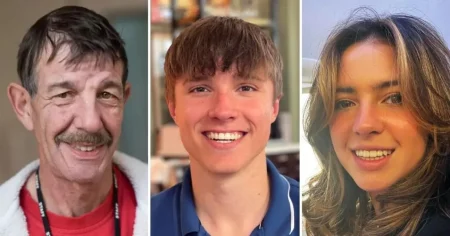


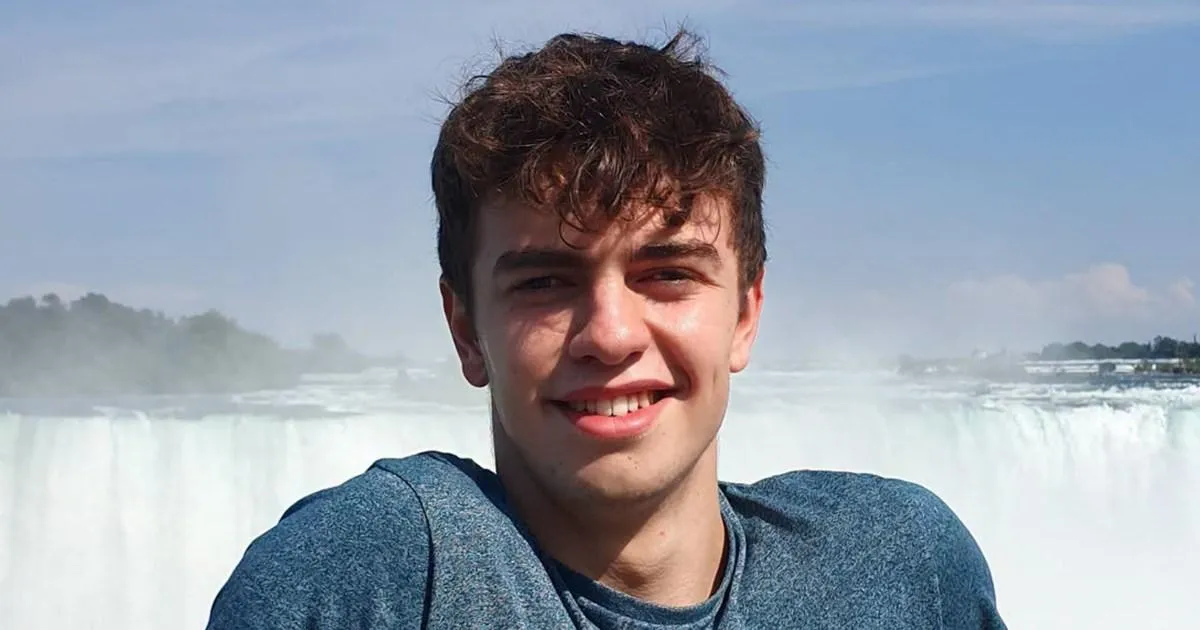
The sudden death of William Chapman has left a community in mourning, and the grief is perhaps best captured in the words of a teacher who knew him long before tragedy made his name known to the world. Marylyn Phillips, a 76-year-old educator who taught the 24-year-old for a decade, described him as a “talented” student from a “lovely” family, a young man who had “everything going for him.” Speaking to reporters, she conveyed a sense of disbelief that still clings to those who knew him, recalling not just his academic promise but the warmth of the household he came from. “It’s heartbreaking enough when they leave [school], let alone this,” she said, her words carrying the weight of someone who watched a child grow into adulthood and then received news that no teacher should ever have to hear. She was careful to emphasize that his parents, too, were “lovely” people, “not pushy at all,” the kind of family who supported their son without pressure, allowing him to pursue his own path. The image she paints is one of ordinary decency and quiet hope, which makes the circumstances of his passing all the more cruel. There is a particular pain in witnessing grief that seems impossible to reconcile, and Phillips’ tribute reminds us that behind every headline is a human life, shaped by love, ambition, and struggle, now remembered mostly through the unbearable weight of what happened on a sunny Saturday afternoon at a wildlife park.
The fatal incident occurred at Yorkshire Wildlife Park, where William entered the enclosure of Altai, a 200kg Amur tiger, and suffered injuries that would prove fatal. At an inquest held at Doncaster Coroner’s Court, the court heard that William had climbed onto a suspended bridge within the enclosure and, according to witnesses, asked someone to take a photograph of him with the tiger. In a moment that seems almost impossible to comprehend, he then leapt from the bridge, landing within reach of the great cat. The animal attacked, leaving him with multiple traumatic injuries, and despite the rapid response of emergency services, William was declared dead at the scene. The provisional cause of death was recorded as “multiple traumatic injuries,” a clinical phrase that barely touches the horror of what actually occurred. The tiger, Altai, was not euthanized following the incident, a decision that has sparked debate about animal behavior, human responsibility, and the impossible balance between conservation and public safety. The park itself reopened to visitors on Friday, a fact that feels jarring to those still reeling from the news, but the management made clear that the focus would remain on the wellbeing of the animals and the investigation that continues to unfold. The inquest was adjourned, with a full hearing scheduled for March 18 of the following year, when more details about the circumstances surrounding William’s death are expected to be examined in depth.
What has emerged since the tragedy is a fuller, more complicated picture of William Chapman, one that reveals a young man of considerable promise who also battled profound mental illness. As a child actor, he had shown real talent, appearing in productions as young as ten years old, including an ITV drama titled May Contain Nuts, where he acted alongside Shirley Henderson, best known for playing Moaning Myrtle in the Harry Potter films. He also featured in a BBC True Stories programme, and it was clear to those around him that he had a future in the arts if he chose to pursue it. But his life was shadowed by bouts of psychosis, and he had been diagnosed with schizophrenia. At the time of his death, he was under the care of adult mental health services in Doncaster, and it has been reported that his family had registered concerns about his wellbeing in the period leading up to the attack. This detail adds another layer of sorrow to an already devastating story, raising questions about how the system failed to fully support a young man who was clearly vulnerable. The family’s grief is not just the grief of sudden loss, but the compound grief of those who loved someone struggling with a difficult illness and feared that something terrible might happen. Their private worries have now been exposed to public scrutiny, their pain broadcast across news platforms, and they have had to endure not only the loss of their son but the invasion of their most intimate moments of fear and hope.
In a written statement, William’s family spoke out against what they called insensitive coverage of the incident, particularly the circulation of a video that appeared to show the attack itself. The video, which was shared widely across social media and even by former US President Donald Trump, caused the family immense distress, and their statement pleaded with the public to stop engaging with such material. “The family are utterly devastated by their loss and are struggling to come to terms with what has happened,” the statement read. “The publication and circulation of deeply offensive media content is causing them severe distress at an exceptionally vulnerable time. We ask people to stop doing this.” The plea is heartbreaking in its simplicity, a desperate request to be allowed to grieve without the additional torment of seeing the worst moment of their lives turned into viral entertainment. In an age when content is consumed without thought, the circulation of such a video is a stark reminder of how empathy can be lost in the scramble for attention. The family’s words should give us all pause, prompting a reflection on the ethical responsibility we share when confronted with graphic material online. The fact that a video of a man’s death, recorded without consent, could be shared by a world leader only amplifies the sense that dignity has become a casualty of the digital age. The family did not ask for sympathy in that statement; they asked only for decency, and that request seems tragically modest given the magnitude of what they have endured.
The aftermath of the tragedy has also raised serious concerns about the sanctity of medical privacy. It was revealed that two members of staff at the Yorkshire Ambulance Service NHS Trust may have inappropriately accessed or attempted to access William’s medical records following his death. The trust launched an investigation into the matter, acknowledging that such conduct was wholly unacceptable and in breach of the strict standards expected of healthcare professionals. This revelation points to a disturbing willingness among some to intrude upon the private life of a public figure, even after death, perhaps motivated by morbid curiosity or a desire to share salacious details with others. For the family, this would have felt like another violation, another instance in which their son’s life was treated not as something sacred, but as a source of entertainment. The breach also raises broader questions about data protection, accountability, and the culture of gossip within institutions that are supposed to be governed by trust and compassion. It is small comfort that an investigation was launched, and it is unclear what disciplinary measures, if any, will follow. But the incident serves as a reminder that the impulse to look away from tragedy, or to consume it from a safe distance, is widespread, and that the line between legitimate public interest and private exploitation is often crossed without consequence.
As the Yorkshire Wildlife Park reopens its gates and the tiger named Altai returns to its enclosure, the community and the family must find ways to move forward with the weight of a life cut tragically short. Full information about what happened that day will likely only emerge during the inquest in March, when the family will finally hear a comprehensive account of their son’s final moments. There are no easy answers to be found in such cases, only the hope that some measure of understanding might offer a small degree of closure. William Chapman was more than the circumstances of his death; he was a son, a former child actor, a young man with a history of mental illness, and someone who was deeply loved by a family now left to navigate an unbearable new reality. His teacher remembered him as talented, his family described him as loved, and those who knew him will carry forward the memory of the person he was before the world reduced him to that photograph, that leap, that tiger. Whether the tragedy points to failures in mental health care, safety measures at wildlife parks, or the cruelty of viral media, one thing remains certain: a family has lost a son, and no amount of explanation will bring him back. In the months ahead, as the investigation concludes and the fences are placed back where they belong, the hope must be that William is remembered not as a headline, but as a person, and that his death finally leads to changes that protect the vulnerable and demand the respect that every human life deserves.