

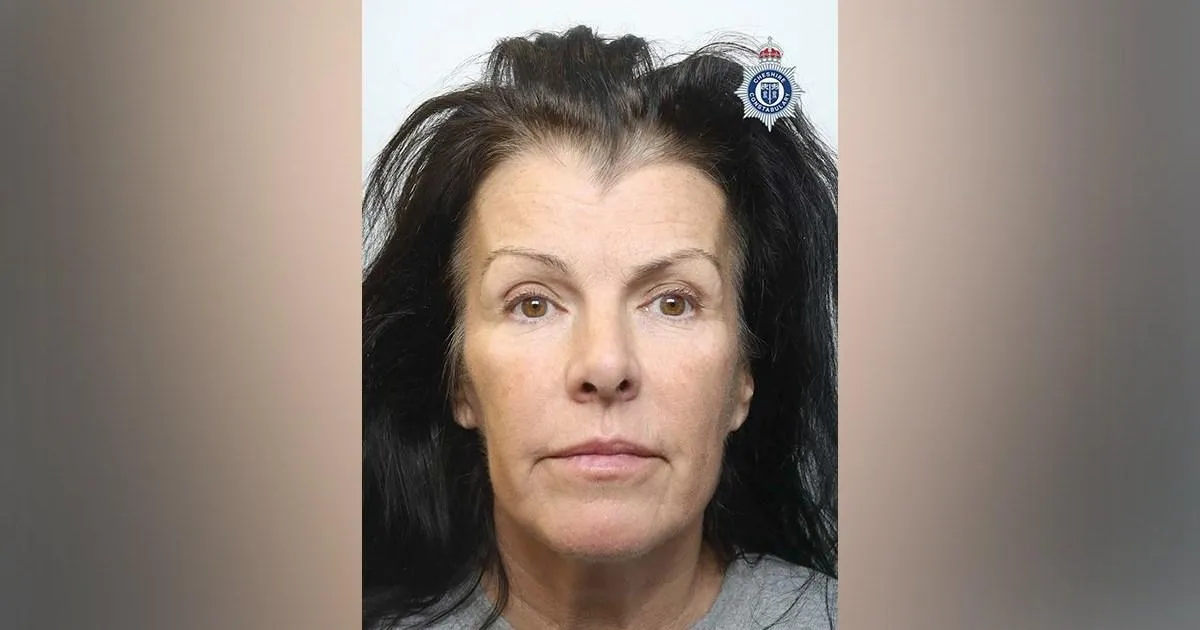
Some betrayals are so unexpected that they leave scars far deeper than any financial loss. This is the story of a daughter who discovered that her own mother had been living a double life—not with a secret lover or a hidden career, but with a hidden financial identity: the daughter’s. For nine years, Karen Leahy, 57, of Marton, Cheshire, pretended to be her own child. She opened bank accounts, created fake email addresses, and quietly took out cash and credit in her daughter’s name, all without the young woman’s knowledge. By the time the deception was uncovered, Leahy had siphoned around £18,000, leaving the daughter not only broke but burdened with debt she had never incurred. The daughter’s world unraveled when she finally looked at her own finances and found arrears, penalties, and legal judgments. She had no idea why her credit was ruined, why loan applications were refused, why court letters arrived for debts she didn’t recognize. The painful truth slowly emerged: her mother, the person she should have trusted most, had been systematically defrauding her. The case eventually reached Chester Crown Court, where Leahy pleaded guilty to 11 counts of fraud by false representation. On Friday, she was given a 15-month prison sentence, suspended for 24 months. The sentence means she will avoid jail unless she breaks the law again. For the daughter, however, there is no suspended sentence. She will carry the consequences of her mother’s actions for years, and the pain of knowing that the woman who gave her life was the same person who tried to destroy her financial future.
The mechanics of the fraud are almost disturbingly meticulous. Leahy did not simply take money from her daughter’s wallet or borrow her credit card without asking. Instead, she constructed an entire false identity, using her daughter’s personal details to create accounts and email addresses from scratch. This was not a moment of desperation or a spontaneous lapse in judgment; it was a calculated, repeated process that stretched from 2015 to 2024. Nine years is a long time to keep any secret, let alone one that requires constant maintenance. Every time a bank statement arrived, every time a bill came due, every time an email notification was sent, there was a risk of discovery. Yet Leahy persisted. She may have rationalized her behavior, telling herself that she would pay it back, or that her daughter wouldn’t really be harmed, or that she deserved the money for some imagined grievance. The court was told that the total amount involved was £18,000. It is not an astronomical sum compared to some fraud cases, but for a young woman trying to build a life, it was enough to cause chaos. Two county court judgments were issued against her, and those judgments are not easily erased. They can remain on a credit file for years, making it hard to rent a home, secure a mortgage, or even open a basic bank account. The daughter was effectively being punished for a crime she didn’t commit, and the criminal was her own mother. The betrayal was not a single mistake or a moment of weakness; it was a sustained campaign of deception, carried out with chilling precision over nearly a decade.
The emotional impact of this kind of betrayal is impossible to quantify. Financial fraud is often described as a victimless crime, but this case proves otherwise. The daughter has been robbed of more than money; she has been robbed of trust, security, and the simple comfort of believing that her mother wanted what was best for her. In a statement after the sentencing, DC Vickie Wallace said that Leahy’s crimes had a lasting impact. The victim not only suffered the betrayal of her mother but also found herself unable to get loans or any other personal finances in order to purchase items for herself and her family. Imagine the humiliation of having to explain to a bank or a mortgage broker that your mother stole your identity. Imagine watching your partner struggle to provide because you cannot contribute financially. Imagine the sleepless nights spent wondering how many other secrets your mother is hiding. The daughter may also have to deal with legal processes to remove the fraudulent debts, a task that can be daunting and emotionally exhausting. She must prove that she did not open those accounts, did not sign those agreements, and did not spend that money. The burden of proof often falls on the victim, even when the evidence seems clear. In the meantime, she has to live with the stigma of a poor credit score, as if she were somehow irresponsible or dishonest. None of this is fair, and none of it was her fault, but the justice system does not always make things right quickly. The damage goes beyond finance; it reaches into the very core of her identity, because the person who knew her best used that knowledge to harm her.
The court proceedings brought some measure of accountability. Leahy pleaded guilty to 11 counts of fraud by false representation, sparing her daughter the ordeal of a trial. The judge imposed a 15-month prison sentence but suspended it for two years. In practical terms, Leahy will remain free, but she is now a convicted criminal. She will likely have to meet with probation officers, attend appointments, and stay out of trouble. If she stumbles, she could be sent to prison. For some, the sentence may seem too lenient. £18,000 is a significant sum, and the breach of trust is immeasurable. Yet judges have to balance many factors. Leahy’s guilty plea may have earned her credit, as such pleas often do. Her age, her health, the likelihood of reoffending, and the impact of a custodial sentence on her family may all have been taken into account. A suspended sentence is not a slap on the wrist; it is a sword hanging over the offender’s head. But the daughter may still feel that justice was not fully served. After all, she has been living with the consequences of her mother’s crimes for years. She will continue to live with them long after the legal case is closed. The suspended sentence may be enough to make the mother think twice, but it cannot undo the damage. It cannot repay the stolen money or restore the daughter’s credit rating or mend a broken heart. It cannot give the daughter back the years of peace she should have had, nor can it erase the painful memories of discovering that her own mother was a stranger wearing a familiar face.
DC Vickie Wallace’s comments after the sentencing capture the bitter irony of the case. Leahy, she said, went to great lengths to carry out her crimes, creating multiple fake accounts and fake email addresses in order to take out thousands of pounds worth of cash in her daughter’s name. The detective added that the case had had a lasting impact on the victim, who had not only been betrayed by her own mother but had also been unable to get any loans or other personal finances in order to purchase items for herself and her family. Wallace then expressed hope that the conclusion of the case and the sentence handed to Leahy would provide the daughter with some closure and allow her to move forward with her life. These words are important because they acknowledge the dual nature of the harm: financial and emotional. The police and the court have formally recognized that the daughter is a victim, not a debtor. That recognition may help her as she works to rebuild her financial reputation. It may also give her the strength to tell her story without shame. She did nothing wrong. She was deceived by the one person she should have been able to trust absolutely. The detective’s hope for closure is not naive; it is a reminder that even the deepest wounds can heal over time, especially when the truth is finally known and the wrongdoer is held accountable. For the daughter, the conviction may not bring back the stolen money, but it does bring validation. It tells her that she was not crazy, not careless, not responsible for the disaster that fell upon her.
This story is a stark reminder that financial abuse can come from the most unexpected places. We tend to imagine identity theft as a faceless crime carried out by hackers or call-center scammers, but here the perpetrator was a mother, armed with nothing more than her daughter’s birth date and a working knowledge of her personal history. It is also a warning to everyone to check their credit reports regularly, to question unexpected bills, and to protect their personal information even from those closest to them. For the daughter, the future will be difficult, but not impossible. She can dispute the fraudulent debts, apply for a notice of correction, and begin the slow process of rebuilding her credit. More importantly, she can begin the emotional process of rebuilding her life. The betrayal by her mother will always be a part of her story, but it does not have to be the whole story. She has already shown incredible strength by coming forward and cooperating with the police. She has endured the painful process of seeing her mother convicted, and she has survived. Whether she chooses to maintain a relationship with her mother is a deeply personal decision. Some victims of such betrayal cut ties completely; others seek therapy and try to understand. There is no right or wrong answer. What matters is that the daughter now has the opportunity to move forward, unburdened by the secret that was never hers to keep. As the detective said, the hope is that she can find closure and live the life she deserves. It is a modest hope, but a powerful one, and it speaks to the resilience of the human spirit. Even after the deepest betrayal, there is a path forward, and this daughter has taken the first brave step along it.