

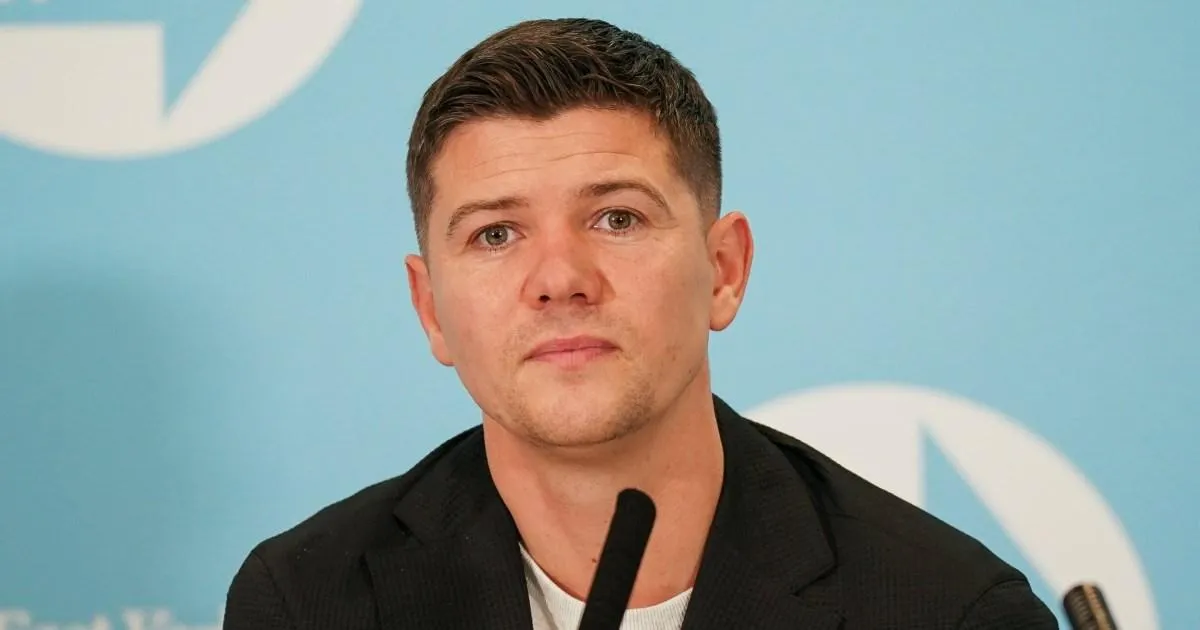
When Luke Campbell won the mayoralty of Hull and East Yorkshire in May 2025, it felt like a modern story with an old-fashioned hero. A former Olympic boxing champion, born and raised in Hull, nicknamed “Cool Hand” for the calm he kept in the ring, Campbell seemed to belong to the people in a way that career politicians never could. He was the outsider who had actually achieved something, not just talked about it. He said he wanted to give back to his home city, and thousands of voters believed him. Yet now, just months into his term, that heroic image has been torn open by an accusation that is almost impossible to reconcile with the man people thought they elected. Campbell, 39, is under police investigation after allegedly showing four “fully naked and sexualised images” of himself to a senior female colleague in the workplace. The woman, who has not been named, says she was deliberately exposed to the images without her consent, and that when she reacted with visible embarrassment, Campbell mocked her. She described the experience in her complaint as unwanted conduct of a sexual nature that violated her dignity and created a humiliating, degrading and offensive working environment. For a man whose public identity was built on discipline, physical control, and fair play, these are shocking accusations. They have already triggered an employment tribunal, an internal investigation by the combined authority, and an interview with Humberside Police. No charges have been brought, and Campbell has not spoken publicly about the matter, but the shadow of the allegations now hangs over every public appearance and every policy announcement.
The details contained in the documents obtained by The Observer paint a picture that will be deeply uncomfortable for anyone who believed in Campbell’s political promise. The female officer said she was shown the images in the workplace, not as part of a private conversation or a misunderstood joke, but in a way that made her feel trapped and humiliated. A second filing included a witness who said they saw Campbell and two other male colleagues ushering a female officer toward his laptop, on which there was “a naked man with a tattoo.” The witness said they felt uneasy afterwards, which is itself a damning description of the atmosphere inside the mayor’s office. Other alleged incidents were less direct but equally troubling: Campbell is said to have lowered the waistband of his trousers to show a tan line and reveal a tattoo on his lower abdomen to a woman. The alleged cyberflashing incident is said to have taken place in May 2026, and the timeline that followed is brutal. The female officer had recently accepted an offer to make her role permanent, which should have been a moment of security and recognition. Instead, about three weeks after the incident, she was informed on an eight-minute Teams call that her role had been withdrawn. An eight-minute call is more than abrupt; it is cold, impersonal, almost designed to remove any chance of a real conversation. Her complaint was later heard by an employment tribunal, which asserted that she lost her employment because of her rejection of unwanted sexual conduct. That finding does not mean Campbell is guilty of every accusation, but it gives official weight to the connection between her refusal to accept the behaviour and the sudden end of her job. In ordinary terms, she spoke up, and then she was removed.
What happens now depends on systems that can feel painfully slow and frustratingly opaque. Humberside Police interviewed Campbell earlier this month in relation to the incident, but no arrest or charge has been made, and the mayor has not addressed the allegations publicly. He is entitled to that silence; the law treats him as innocent until proven otherwise, and that principle must be respected even when the allegations are serious. But the woman at the centre of the complaint is also waiting, and her waiting is not neutral. She has already lost her job, already appeared at a tribunal, already had her reputation dragged into public discussion, and now she must wait for police and internal investigators to decide whether she was believed. The Hull and East Yorkshire Combined Authority has begun its own internal probe, but there are already significant questions about how independent that probe will be. An organisation investigating its own leader is always vulnerable to the pressure of institutional self-preservation. The authority has to balance its duty to staff, its duty to the mayor, and its desire to protect its own image, and those interests are not naturally aligned. A Heyca spokesperson said that the combined authority has a standards process and a complaints procedure that must be carried out in a fair and independent manner. But fairness and independence are not guaranteed by promises; they are demonstrated by genuine impartiality, transparency, and the willingness to let the evidence lead where it will. In a brand-new mayoral authority, this is the first serious test of whether it can hold its own most powerful figure accountable. If the process is seen as a whitewash, public trust in the entire institution will be damaged, not just trust in Campbell.
To understand why this scandal has landed with such force, you have to understand the strange and improbable path Campbell took to power. He was not a career politician. He had no prior political experience, and by his own admission, he had never even voted in an election before becoming a candidate. He grew up in Hull, became a world-class boxer, and compiled a professional record of 20 wins and four losses from 24 fights. He won an Olympic gold medal in 2012, and when he retired from boxing in July 2021, he wrote on social media that he had spent his career testing himself against the very best and never shying away from anyone. He was also familiar to millions outside sport, having finished third on Dancing on Ice in 2013. That mix of sporting heroism and reality television warmth made him a perfect political outsider for an era tired of polished, carefully managed politicians. His entry into politics seemed almost accidental. The idea of running for mayor began, he said, as a joke with friends. He was selected at the last minute after meeting Nigel Farage at Reform UK’s office in London. He said he did not care for politics, but he would vote Reform anyway, so why not. He had followed Farage for a while and believed that everything Farage said seemed like common sense. That refusal to take politics too seriously was part of his appeal. He won the mayoral election with 35.8 percent of the vote, and in his victory speech he said he felt humbled and honoured. He promised to be a champion for the people of Hull and East Yorkshire, and for a moment, the region believed it had found a leader who was not contaminated by the political establishment.
This is not the first controversy to touch the mayor’s office, and that context makes the current allegations even more alarming. Last August, The Telegraph reported that staff at the Hull and East Yorkshire Combined Authority were experiencing a “toxic working environment.” Campbell asked five senior employees to resign because of conflicts, which was a dramatic and unsettling move for an administration that was still finding its feet. It could have been a newly elected leader clearing out people who resisted his leadership, but it could also have been something more disturbing: a leader unwilling to tolerate anyone who challenged him. The current allegations now cast that earlier turmoil in a darker light. A workplace described as toxic is exactly the kind of environment where inappropriate behaviour can go unchecked, where a powerful leader might believe he is untouchable, and where staff might fear that complaining would cost them their jobs. The female officer’s story fits that pattern all too well. She did not leave because she was unhappy with her work; she was told, in eight minutes, that her role no longer existed after she rejected sexualised conduct. That kind of culture does not happen overnight. It happens when boundaries are blurred, when leadership is treated as entertainment rather than responsibility, and when people who speak up are pushed out. Campbell’s lack of professional management experience does not excuse anything, but it helps explain how someone could rise so high in public office without understanding the basic duty of care an employer owes to a member of staff. The same personality that made him a popular sportsman and a fresh face in politics may have made him dangerously ill-prepared for the power he now holds.
At the heart of this whole story is a woman who did something incredibly difficult. She confronted a popular elected mayor, someone with wealth, celebrity, and institutional support, and she told the truth about what happened to her. She described being deliberately exposed to naked images of her boss, being laughed at when she flinched, and then being pushed out of her job in an impersonal phone call. Whatever the final legal outcome, her experience is real, and it happened inside a system that should have protected her. Her own words are the most important thing in this affair: “I was deliberately exposed to naked and sexualised images involving the mayor in the workplace, without my consent, and was laughed at when I was visibly embarrassed. In my view, this was unwanted conduct of a sexual nature which violated my dignity and created a humiliating, degrading and offensive working environment.” No political analysis should ever become so focused on the fate of a politician or a party that it forgets the human being who had the courage to speak up. Campbell is entitled to due process, and the police investigation and internal review must be allowed to proceed without prejudice. If the evidence shows he did these things, there must be real consequences, not only for him but for the culture that allowed him to feel he could do them. If the evidence does not support the allegations, then he is entitled to clear his name and rebuild his reputation. But this case has already served a larger purpose. It has reminded voters that public office is not a prize for celebrity; it is a trust, and that trust can be broken in private as easily as it can be won in public. Hull and East Yorkshire deserves a mayor who can be trusted, a combined authority that takes workplace safety seriously, and a political culture where the person who reports abuse is not the one who ends up paying the price. The next chapter belongs to the police, the tribunal, and ultimately the voters. They will decide what kind of leader this region really wants, and whether the man once celebrated as a hometown champion can ever restore the faith that has been lost.