

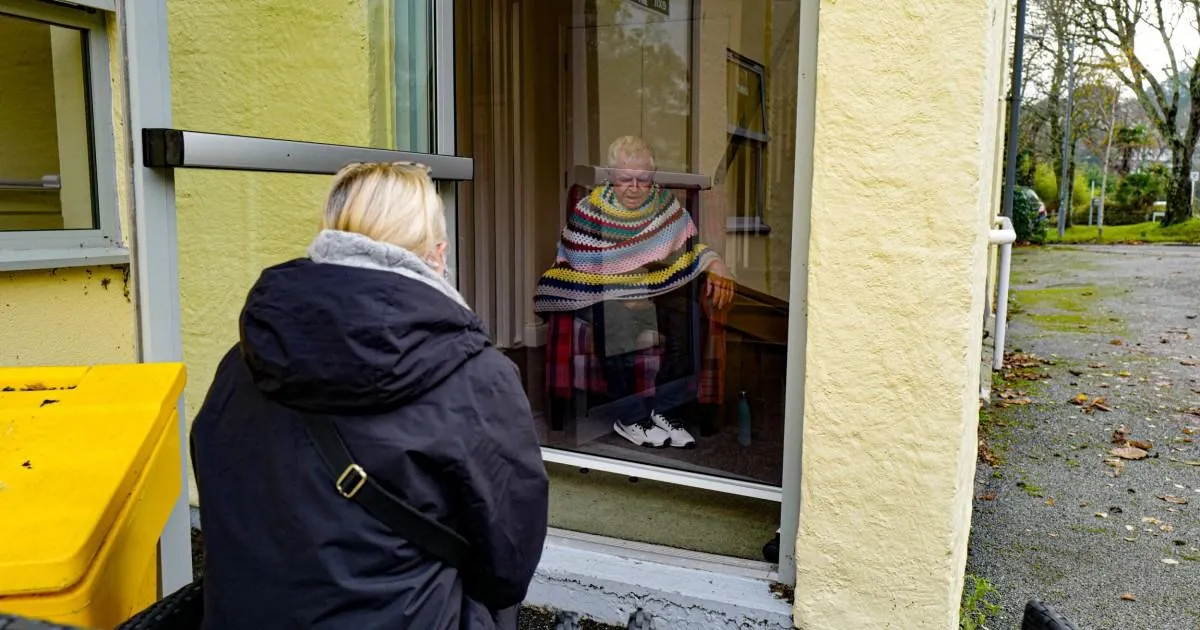
The human cost of the pandemic’s care home restrictions has been laid bare in devastating detail by the official Covid inquiry, revealing a painful truth that many families have carried for years: loved ones in an “essential carer” role should have been allowed through the doors far earlier than they were. Baroness Heather Hallett’s latest report does not deal in abstract policy failures; it speaks of profound isolation, of residents who felt abandoned and forgotten, and of relatives forever haunted by the thought of what they could not do. For many, the memory of waving through a window, of holding a phone to an uncomprehending ear, of watching a beloved face fade without the comfort of touch, remains raw and unhealed. The inquiry found that the blanket barring of family members and friends from care homes caused “immense emotional harm,” a phrase that barely scratches the surface of the quiet devastation experienced by thousands. Perhaps most heartbreaking is the guilt carried by those who were blocked from visiting dying loved ones. Baroness Hallett writes that these individuals “remain wracked by a guilt that they do not deserve to carry,” a powerful acknowledgement that the system failed not just the living, but also the memory of the dead.
The report is careful to acknowledge that when the pandemic first erupted, care home providers and policy-makers “had little choice” but to impose restrictions. In those terrifying early weeks, the priority was the protection of life, and the science of transmission was still murky. But the inquiry’s findings show that by September 2020, there was no “strong evidence” that visitors posed a particularly high risk of transmitting Covid. More than that, the research pointed in a starkly different direction: the risk presented by loneliness and isolation to residents was “likely an order of magnitude higher” than the risk of infection itself. It is a staggering conclusion, one that reframes the entire tragedy. While the virus could be fought with PPE, testing, and careful protocols, the crushing weight of isolation had no such easy remedy. Residents with dementia and other cognitive conditions were hit especially hard, experiencing significant declines in health and wellbeing as their worlds shrank to the four walls of a room and the figure of a masked carer. The report highlights that the concept of designated visitors and essential care partners was not introduced until the summer of 2020, a delay of several vital months that may have significantly reduced the harm caused by isolation had it come sooner. It is a delay that will haunt the official record, a period of time that cannot be returned and lives that cannot be relived.
One of the most hope-infused elements of the report is the call to adopt a version of Anne’s Law, a piece of Scottish legislation that emerged from an unbearable personal loss. Anne Duke was a care home resident who died in 2021, and her daughter, Natasha Hamilton, channelled her grief into a successful petition demanding change. Anne’s Law identifies an essential care supporter for every care home resident, a named person who has a legal right to visit and provide close, caring support. Baroness Hallett’s recommendation that the other administrations across the UK follow Scotland’s lead is a recognition that such rights should not depend on geography or luck. It is a way of ensuring that the loneliness experienced by so many is never repeated, and that the bond between residents and their chosen family is treated as something essential, not optional. The humanisation of this recommendation is poignant: it gives a name and a story to a policy change. Behind the legal language is a daughter who could not be with her mother, and a sustained campaign that turned an individual’s grief into a legacy of protection for others. It is a reminder that the pandemic’s lessons are not abstract; they are written in the stories of people like Anne and Natasha, and the law must now reflect them.
The report does not shy away from political accountability, and it is here that Baroness Hallett delivers some of her most damaging conclusions. She dismisses claims from the then-Health Secretary Matt Hancock that there was a “protective ring” around care homes “right from the start.” On the contrary, she says, a continuing lack of significant action to protect care homes across the UK lasted until mid-April 2020. This is not a minor discrepancy; it is a fundamental challenge to the official narrative of the early pandemic response. The report suggests that the protection of the adult social care sector appeared to be “something of an afterthought” as governments focused overwhelmingly on protecting the NHS. The mantra of saving the health service, while noble in its intent, sometimes came at the expense of the users and providers of care. The consequences are written in the statistics: across all four nations of the UK, Covid-19 was the second leading cause of death in care homes in 2020, with more than 43,000 deaths involving Covid-19 recorded in care homes between March 2020 and July 2022. Behind each number is a person, a family, a story cut short or left unresolved. Baroness Hallett’s repudiation of the “protective ring” claim matters because it restores the truth of what actually happened, however uncomfortable that truth may be for those in power at the time.
The report, the sixth of ten modules examining the UK’s response to the pandemic, does not stop at criticism. It offers eight headline recommendations for changes that “must be acted upon now before the next pandemic strikes.” These are not vague aspirations but concrete steps to build a more humane and resilient system. Among them is better planning for keeping care home residents with potential infections separate from others at risk, including those discharged from hospital. This is a crucial safeguard, because the pressure to free up hospital beds during the pandemic led to vulnerable patients being sent into care homes without adequate testing or isolation, creating new outbreaks and needless deaths. Another recommendation calls for mandatory end-of-life training for care workers, as a lack of requisite skills during the pandemic “resulted in sensitive discussions occurring in a hurried manner or not at all.” This is an uncomfortable but essential finding. No one should die among strangers with questions unanswered and final words unspoken. The training would ensure that care workers are equipped not just to manage symptoms, but to have the difficult conversations, to offer comfort, and to honour the wishes of residents and their families. These recommendations acknowledge that preparation is not just about stockpiles and ventilators but about human dignity and emotional support in the most vulnerable moments of life.
Baroness Hallett’s conclusion is stark and urgent: “At the critical early stages of the pandemic, not enough was done to protect those living and working in care homes.” The adult social care sector as a whole appeared to be something of an afterthought, a secondary concern in a national emergency. But this report is not merely a historical document; it is a call to action. The next pandemic may come sooner than we think, and the question is whether we have learned anything at all. The emotional harm detailed in these pages is not an inevitable byproduct of a global health crisis; it is the result of choices, priorities, and a failure to see the humanity behind the statistics. To humanize this story is to remember that care homes are not just facilities but homes, filled with people who love, remember, and yearn. It is to remember that the relatives who fought to visit were not being unreasonable; they were trying to fulfil a fundamental duty of love. The inquiry’s recommendations now sit with the government, and the clock is ticking. As Baroness Hallett warns, they must be acted upon now. The dead cannot be brought back, and the guilt carried by so many will not disappear overnight. But we can build a future in which no resident is left to die alone, no family is barred from a final goodbye, and no essential carer is treated as an optional extra. That is the least we owe to those who endured the darkest days of the pandemic, and to those who will rely on care in the years to come.