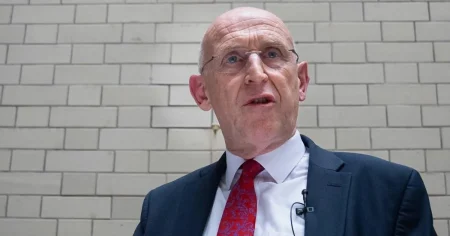


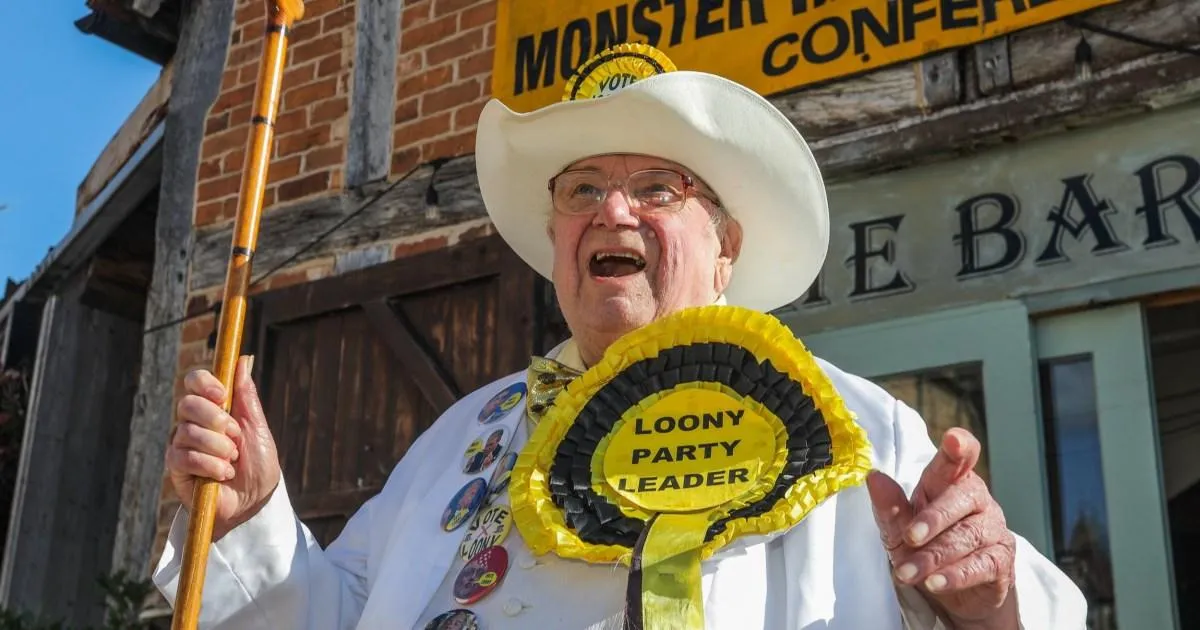
In the often-gray landscape of British politics, where the stakes are perpetually high and the rhetoric increasingly sharp, the Monster Raving Loony Party serves as a vital, absurdist mirror reflecting our collective national confusion. Its leader, the venerable Howling Laud Hope—whose real name is Alan Hope—recently found himself scratching his head over the latest tactical gymnastics performed by Nigel Farage. Farage’s decision to resign his Clacton-on-Sea seat only to promptly fight for it again in a by-election has left Hope baffled. Having known the Reform UK leader personally for years, Hope views the move as fundamentally illogical, questioning why anyone would purposefully choose to subject themselves to the exhaustion of an unnecessary re-election campaign. While Hope concedes that Farage will likely sweep to victory, he dismisses the entire spectacle as a performative “mock election” that prioritizes political theater over the genuine needs of the constituency.
Rather than fixating on the sterile parliamentary squabbles that define Westminster, Hope envisions a far more imaginative future for the struggling, unemployment-weary seaside town of Clacton. With an eccentricity that has become the hallmark of his party’s long-standing survival, he proposes a transformation of the area into a sprawling “British Disneyland.” Hope speaks with a sincere, if whimsical, desire to see the town return to its mid-century glory days, complete with the bustling fanfare that once characterized the historic arrival of the region’s early holiday camps. In his vision, economic prosperity doesn’t come from dry policy papers or complex legislation, but from bringing back the joy of a seaside destination where citizens can find reasons to sing and dance in the streets once again.
This upcoming electoral showdown in Clacton will also feature a clash of the titans within the fringe political scene, most notably the candidacy of the intergalactic campaigner, Count Binface. Hope remains characteristically unbothered by his costumed rival, humorously reminding the bin-masked orator that the Monster Raving Loony Party has a mandate to “rule the loony-verse” that simply cannot be negotiated away. Yet, beneath the playful banter, there is a sense of historical weight; for Howling Laud Hope, this contest marks a professional milestone. He is currently on the precipice of his 38th parliamentary run, a feat that would secure his spot in the Guinness Book of World Records as the most persistent candidate for a single party, finally surpassing the shared legacy he held with the group’s legendary founder, Screaming Lord Sutch.
The party’s plans for the by-election extend beyond mere record-breaking, as they intend to field a colorful roster of candidates, including characters known affectionately as “The Flying Brick” and Sir Grumpus from Wales. By injecting this specific brand of levity into the electoral process, Hope is attempting to reclaim the democratic spirit from a system he feels has become mired in ego and obsession. He views this as a vital corrective to the monotony of mainstream politics, where candidates often seem more interested in the sound of their own voices than the actual improvement of their communities. It is a testament to the endurance of the Raving Loonies that, in an era of digital vitriol and heavy-handed partisanship, they still manage to offer a satirical safety valve for the frustrated voter.
However, the political climate surrounding Clacton is far from harmless fun, as the mainstream parties are currently grappling with much darker, structural concerns. Reform UK finds itself under a cloud of scrutiny, with the Labour Party and various investigative bodies questioning the origin of significant financial contributions. Reports regarding a Metropolitan Police inquiry into £500,000 worth of donations have cast a shadow over Farage’s reputation, with Labour’s Anna Turley suggesting that the public is tired of being treated with indifference. While Reform UK maintains that these investigations are merely “hit jobs” orchestrated by an anxious political establishment desperate to stop their momentum, the tension between the legal reality and the party’s narrative of being persecuted victims is intensifying with every passing news cycle.
Ultimately, we are left looking at a snapshot of a British political system trapped in a state of high-octane dysfunction. Whether it is the serious allegations surrounding party finances or the absurdity of a leader resigning just to be re-hired, the divide between the political class and the public feels wider than ever. Howling Laud Hope and his band of misfits remind us that, even when politics descends into madness, there is room for a little bit of nonsense as a form of protest. As Farage deals with the interrogations of the authorities and the pressure of the campaign trail, he simultaneously has to contend with a man who wants to turn his constituency into a theme park. It is a uniquely British brand of chaos—a saga where the lines between the serious, the sinister, and the utterly ridiculous are blurred beyond recognition.