

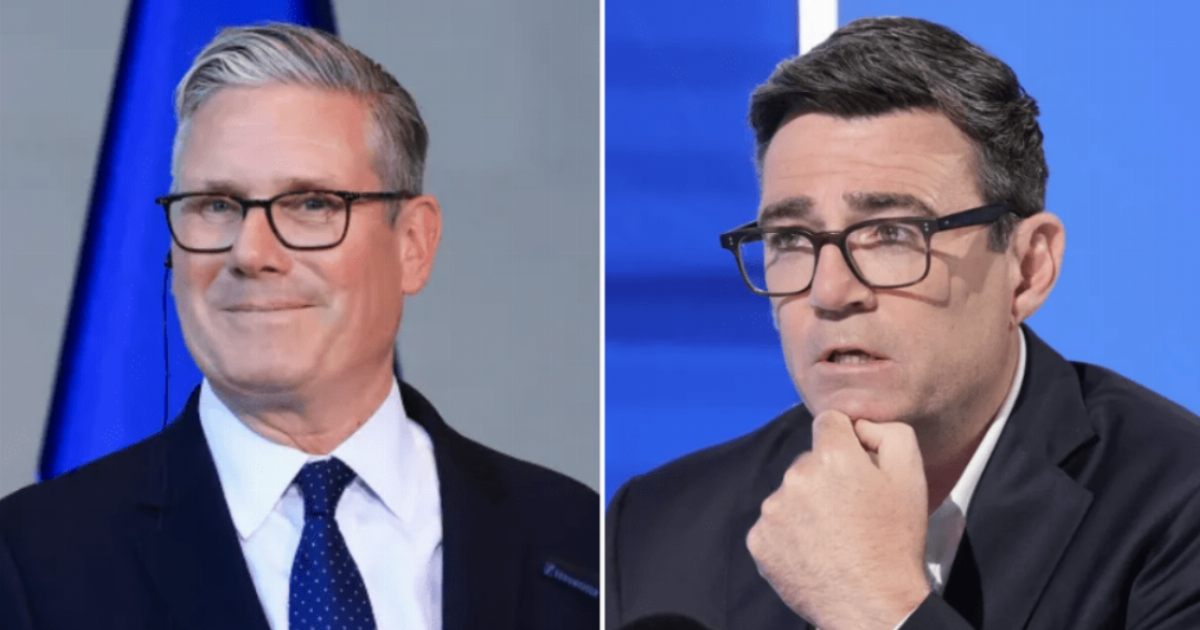
The political landscape in Westminster is currently moving at a dizzying pace, with the inevitable rise of Andy Burnham to the premiership becoming all but official. With fewer than two weeks remaining before he is expected to step into 10 Downing Street, the transition period feels less like a smooth handover and more like a high-stakes sprint. Barring a deeply unlikely last-minute challenge in a party leadership contest, the office of Prime Minister is set to change hands, yet the window for preparation remains shockingly small. This leaves the public and political observers alike wondering how a man who has spent the last several years as a regional mayor will suddenly manage the immense machinery of the British state.
Sir Keir Starmer, preparing to exit the stage, leaves behind a daunting “in-tray” of unfinished business that would humble even the most seasoned statesman. From the urgent necessity of a Defence Investment Plan to the complexities of an EU reset and the persistent ache of the cost-of-living crisis, the list of pending issues is as extensive as it is grave. Add to this the social care crisis, the looming energy price hikes fueled by global volatility, and impending reports on personal independence payments and youth unemployment, and the scale of the challenge becomes clear. Burnham is inheriting not just a government, but a tangled web of policy decisions—some half-finished, others barely begun—that demand immediate and decisive action.
The logistical pressure on the incoming Prime Minister is compounded by a lack of time. It has been only a short window since Burnham won his by-election in Makerfield, marking his return to national politics after years in the North West. By the time he officially takes the helm, his total preparation period will have been roughly equivalent to a brief, frantic election campaign. In the rhythm of real-world time, it is a period so short that the milk in your fridge might still be fresh from the day he won his seat to the day he begins appointing his Cabinet. This creates a genuine question: can a politician jump from the localized, practical world of mayoral governance to the crushing, high-speed demands of national leadership without a significant learning curve?
Critics—and indeed curious supporters—are right to question whether Burnham’s previous experience as an MP will be enough to bridge the gap. While he spent years in Westminster before 2017, the political climate today is fundamentally different, more volatile, and globally interconnected than the one he left behind. Furthermore, while he has surrounded himself with advisors who have helped sketch out a policy platform, the concrete details of how he plans to implement his vision remain largely under wraps. The public only has a vague sense of his intentions, and as he steps into the room where decisions are made, he will have to move from the comfort of campaign slogans to the stark reality of government fiscal deficits and public service reform.
Perhaps the most significant leap for Burnham is the transition into the role of Commander-in-Chief. Unlike a regional mayor, who deals with local transport, housing, and integration, the Prime Minister holds the weight of national security on their shoulders. Burnham has not, until now, had access to the high-level intelligence briefings or the intimate daily interactions with the military establishment that a long-standing party leader enjoys. As global threats—such as the warning from NATO regarding potential conflicts by 2030—loom large, he must quickly build rapport with the nation’s top brass. This isn’t a task that can be delegated; it is a fundamental shift in responsibility that requires immediate strategic competence.
Ultimately, the nation is watching to see how the Mayor of Greater Manchester handles the transition to the most demanding job in the country. He faces a “perfect storm”: a crumbling fiscal outlook, as highlighted by the Office for Budget Responsibility, coupled with a public desperate for stability after years of churn. If Burnham is to succeed, he will need to immediately shed the skin of his previous roles and adapt to a high-pressure environment where every decision is scrutinized and every delay has a human cost. The countdown to July 20 is on, and the political world is about to see if his experience is the perfect preparation—or if the sheer scale of the British state is about to present him with his toughest challenge yet.