


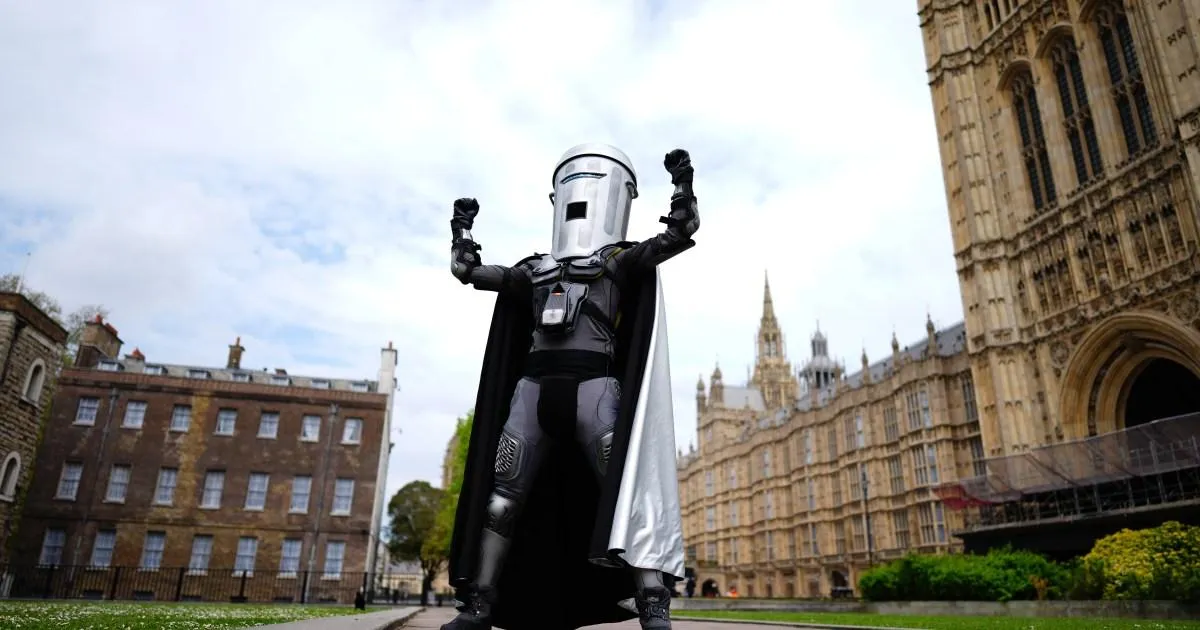
The landscape of British politics has always been prone to moments of absurdity, but the current circus surrounding Nigel Farage’s by-election in Clacton has pushed the boundaries of satire into a surreal new territory. Deputy Prime Minister David Lammy recently captured the bizarre essence of the contest, framing it as a clash between the “establishment”—characterized by sleek city traders and high-rolling crypto billionaires—and the ultimate outsider: Count Binface. It is a stunning pivot in the national narrative. What began as a bold, calculated power move by the Reform Party leader has rapidly transformed into a spectacle where the public is genuinely debating whether an “intergalactic space warrior” might be the most fitting foil to a veteran politician.
While the prospect of a man wearing a literal trash can on his head becoming a Member of Parliament sounds like a fever dream, it speaks volumes about the current state of voter disillusionment. The major parties have largely cleared the field, choosing not to engage directly with Farage’s bid, which has left a significant vacuum. Into this void has stepped Count Binface, who, despite his comedic origins, is now polling with odds as favorable as 4/1 at some bookmakers. There is a palpable, cheeky energy in the air; if enough Clacton residents decide that sending a shockwave through the establishment is more important than status quo politics, we could be staring down the barrel of the most humiliating upset in modern British history.
History provides us with only rare, scattered blueprints for such an event. We have seen the success of Stuart Drummond, the man who paraded as “H’Angus the Monkey” to win the mayoralty of Hartlepool—and who, surprisingly, proved to be a capable and well-regarded public servant for years. However, a parliamentary seat is a different beast entirely. Should the “Bin” prevail, we would witness a surreal reality where comedian Jon Harvey must retire his costume to abide by the strict sartorial decorum of the House of Commons. He would be forced to navigate the halls of power, perhaps sitting between icons of the left like Jeremy Corbyn and other independent voices, all while being held accountable for his uniquely eccentric campaign platform, which includes capping ice cream prices and winning Eurovision.
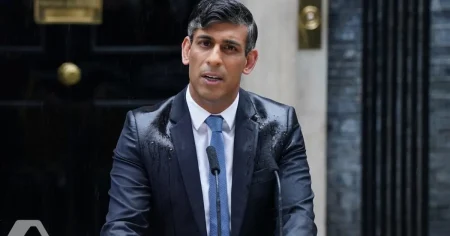
For Nigel Farage, the stakes feel paradoxically heavy for such a lighthearted opponent. Farage is currently navigating a sea of controversy, from investigations into his finances and his ties to crypto-backed donors to the scrutiny surrounding his high-profile friendships. A loss in this by-election would mark his eighth defeat in nine attempts, a statistical catastrophe that would likely force him to step down as the head of Reform. The fallout would be seismic, potentially handing the party reins to figures like Richard Tice or Robert Jenrick and shifting the trajectory of the opposition entirely. It is a high-wire act where a defeat to a man in a bin would not just be a loss; it would be a humiliation so profound it might effectively end his long, turbulent career in electoral politics.
Ultimately, we are left wondering what a victory for the underdog—or “under-bin”—would actually look like. If Farage were sent packing, he would at least be free from the relentless cycle of media scrutiny, parliamentary standards inquiries, and the noise that follows his every financial disclosure. He could retreat from the public eye and enjoy a quiet life away from the cutthroat nature of Westminster. Yet, the irony is thick; the man who has spent decades shaping the discourse of British nationalism could find his exit orchestrated by a satire act. It is a reminder that the British electorate possesses a sharp, sometimes wicked sense of humor that is as potent as any political manifesto.
Whether or not the people of Clacton pull the lever for the Count, the underlying message is clear: the public is hungry for change, even if that change has to arrive with a bit of a laugh. We might be looking at a future where, in the next general election in 2029, a new challenger appears—perhaps a candidate disguised as a pint of bitter with a suspiciously familiar voice. This absurd theater is a mirror held up to ourselves, reflecting the frustration and playfulness of a nation that has grown tired of the script and is ready to write its own, however ridiculous the characters may be. In the end, the bin might not just hold our waste; it might contain the unexpected future of our Parliament.