

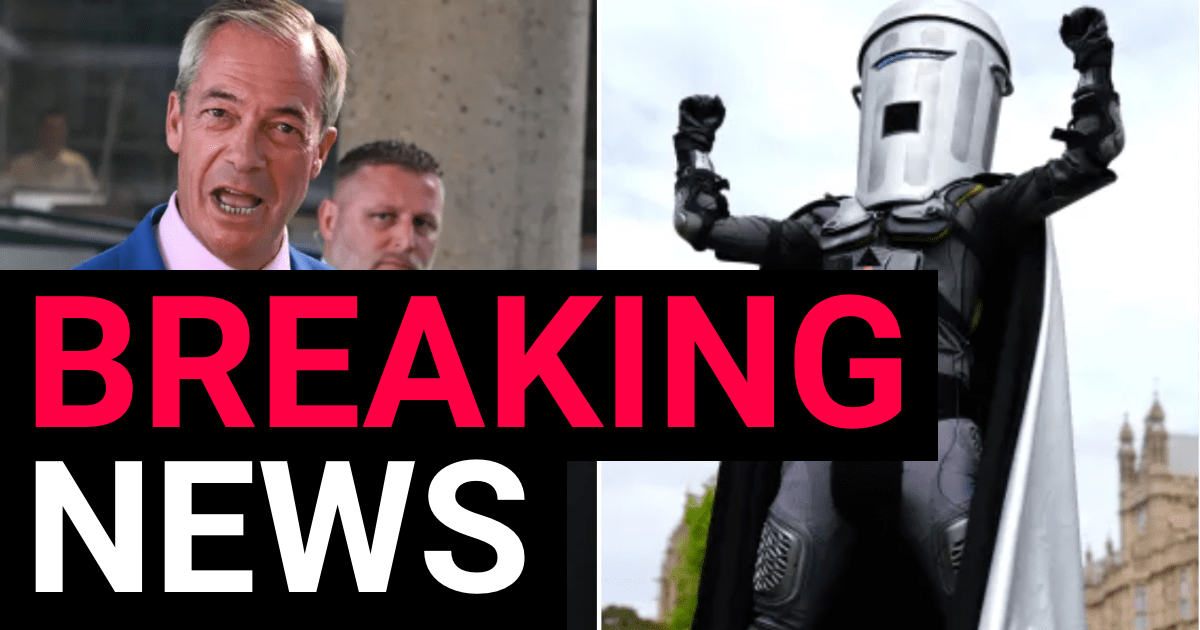
The landscape of British politics rarely stays still for long, but Nigel Farage has managed to inject a new level of surrealism into the Westminster drama. After resigning his seat in Clacton amid intense scrutiny over £5 million in undeclared gifts, Farage has essentially forced a by-election to seek a fresh mandate from voters. It is a bold, albeit polarizing, gamble. While he frames this tactical resignation as a battle of “The People versus the Establishment,” his political rivals have interpreted the move quite differently. They see it as a desperate diversionary tactic designed to outrun a looming parliamentary investigation into his financial conduct.
The reaction from the major political parties has been swift and unified in its refusal to play along. Both the Conservative and Labour parties have publicly declared they will not be fielding candidates for this by-election. Kemi Badenoch, representing the Conservative perspective, was particularly scathing. She dismissed the vote as a “fake by-election,” suggesting that Farage is terrified of the findings of the standards investigation. From her viewpoint, rather than facing the music and clarifying his financial affairs, Farage has opted for a theatrical display of defiance. She, and others in her party, have chosen to ignore what they view as a distraction, focusing instead on broader national issues and refusing to lend legitimacy to what they perceive as a “hissy fit.”
Labour has taken a similar stance, framing the scandal as a classic case of political “sleaze.” Their representatives have made it clear that they refuse to participate in what they call a “circus.” By opting out, Labour is signaling that it considers the parliamentary standards process to be the only legitimate venue for addressing these issues. Their message to the electorate is that they are staying focused on the tangible needs of the working class, rather than engaging in what they characterize as an ego-driven maneuver by the Reform leader. By refusing to run a candidate, these major parties are essentially snubbing Farage, denying him the traditional political sparring match he likely hoped for to validate his claims of persecution.
However, where the political heavyweights refuse to tread, the eccentric flourishes. Enter Count Binface, the satirical political figure known for his interstellar-themed campaign appearances. Seizing the vacuum left by the major parties, Binface has stepped forward as a self-styled “unity candidate.” His pitch is characteristically bold, promising to build “at least one affordable house” and mockingly accepting Farage’s challenge of “The People versus the Establishment.” His intervention highlights the bizarre nature of the current parliamentary climate, turning a high-stakes controversy into a theatrical showdown that underscores just how much the traditional political norms have been upended.
This move by Farage captures the essence of his unique, if controversial, political brand. By resigning only to immediately run again, he is attempting to bypass the slow-moving mechanisms of parliamentary accountability and take his case directly to the court of public opinion. Whether this serves to vindicate him in the eyes of his supporters or further alienate him from the political mainstream remains to be seen. His approach is designed to disrupt the status quo, but the collective decision of the other parties to step aside serves as a potent, silent protest—a refusal to let the narrative be dictated entirely by his terms. It is a standoff where silence may prove to be just as loud as the loudest campaign rhetoric.
As the situation develops, the residents of Clacton find themselves in a peculiar position, caught between a national, high-pressure investigation and a political climate that has descended into something approaching performance art. The coming days will test whether Farage’s gamble will pay off or if he has overreached in his attempt to control his narrative. For now, the drama continues to unfold, illustrating the volatility of modern governance and the strange, unpredictable ways in which political crises are managed—or avoided—in the current era. It remains a developing story, but one thing is certain: in the battle for influence in Westminster, the rules of the game are being rewritten in real-time.