

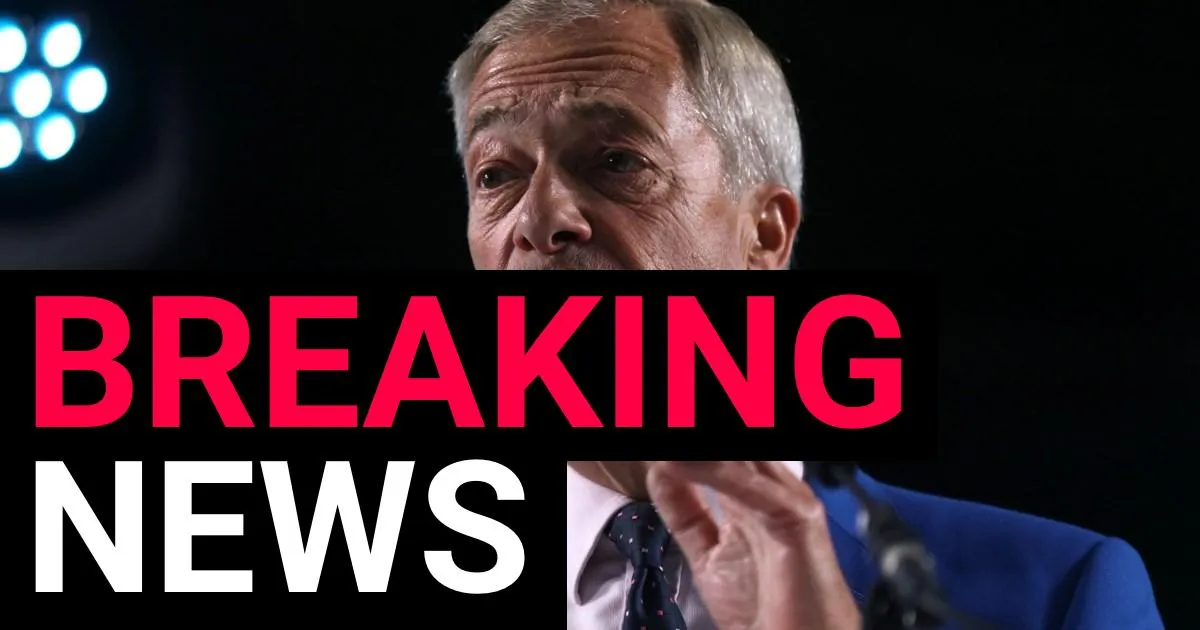
The political landscape in Westminster is often defined by unpredictable shifts, but even by those standards, Nigel Farage finds himself in an unusually precarious position. As the leader of Reform UK, Farage has long positioned himself as an anti-establishment outsider, a man of the people fighting against the perceived rot of the political elite. However, the tables have turned, and the very scrutiny he has spent decades applying to others is now being directed squarely at him. With a much-anticipated statement scheduled for two o’clock, the air in London is thick with speculation about whether we are witnessing a temporary political fire-fighting exercise or the beginning of the end for one of the most polarizing figures in modern British history.
At the heart of the storm is a series of serious questions regarding the transparency of the Reform UK leader’s financial affairs. Farage is currently the subject of an investigation by the Parliamentary Standards Commissioner regarding an allegedly undeclared £5 million gift from crypto billionaire Christopher Harborne. While the scale of the sum is grabbing headlines, the core issue is one of basic accountability. In a political system that demands total transparency to ensure that MPs are not beholden to wealthy backers, Farage’s failure to properly account for such a massive influx of capital has created a credibility gap that is proving difficult for even his most ardent supporters to ignore.
Adding to the complexity of the situation is the uncomfortable narrative surrounding his personal associations. Reports linking him to George Cottrell, a figure with a controversial background in finance and law, have brought fresh intensity to the spotlight. According to a recent exposé by the Sunday Times, it appears that Cottrell may have played a significant role in professionalizing Farage’s digital presence, effectively bankrolling the engine room of his social media influence. For a politician who prides himself on grassroots authenticity, the revelation that his reach may have been artificially inflated by the deep pockets of a convicted fraudster is a narrative blow that cuts deep into his carefully crafted “man of the people” persona.
The situation recently boiled over in a rather dramatic fashion when Farage was filmed in an aggressive confrontation with a journalist from Sky News at an airport. Rather than addressing the substance of the questions—which centered on his judgment in accepting these high-value gifts—Farage lashed out, accusing the broadcaster of harassing his family. This defensive outburst, while perhaps understandable from a human perspective under immense stress, has only served to fuel the perception that he is rattled and struggling to handle the heat of the same media scrutiny he has frequently exploited to his own advantage. Sky News has categorically denied his claims of harassment, leaving Farage’s outburst looking more like a diversionary tactic than a reasoned defense.
The political opposition has certainly not missed an opportunity to capitalize on this volatility. The Labour Party, sensing blood in the water, has formally called upon the Electoral Commission to investigate potential breaches of electoral law. Anna Turley, the Labour chair, has been particularly vocal, suggesting that Farage is treating the British public with contempt by refusing to address these scandals with the seriousness they deserve. By framing this as a “self-inflicted scandal,” the opposition is not just attacking his finances; they are trying to dismantle the moral authority he claims to have, arguing that he cannot play by a different set of rules than everyone else in Parliament.
As we wait for his statement, the broader question remains: what does this mean for the future of British politics? Farage has spent his career dancing on the edge of the mainstream, often thriving in the friction between the establishment and the excluded. Yet, accountability is the one force that even the most skillful political operator finds hard to evade forever. Whether he provides a transparent, satisfactory explanation or continues to pivot toward hostility and deflection, the standard of trust required of public officials remains unchanged. By this afternoon, we will likely know if this is merely a bump in the road for Nigel Farage, or if the complicated web of his finances and friendships has finally caught up with him.