


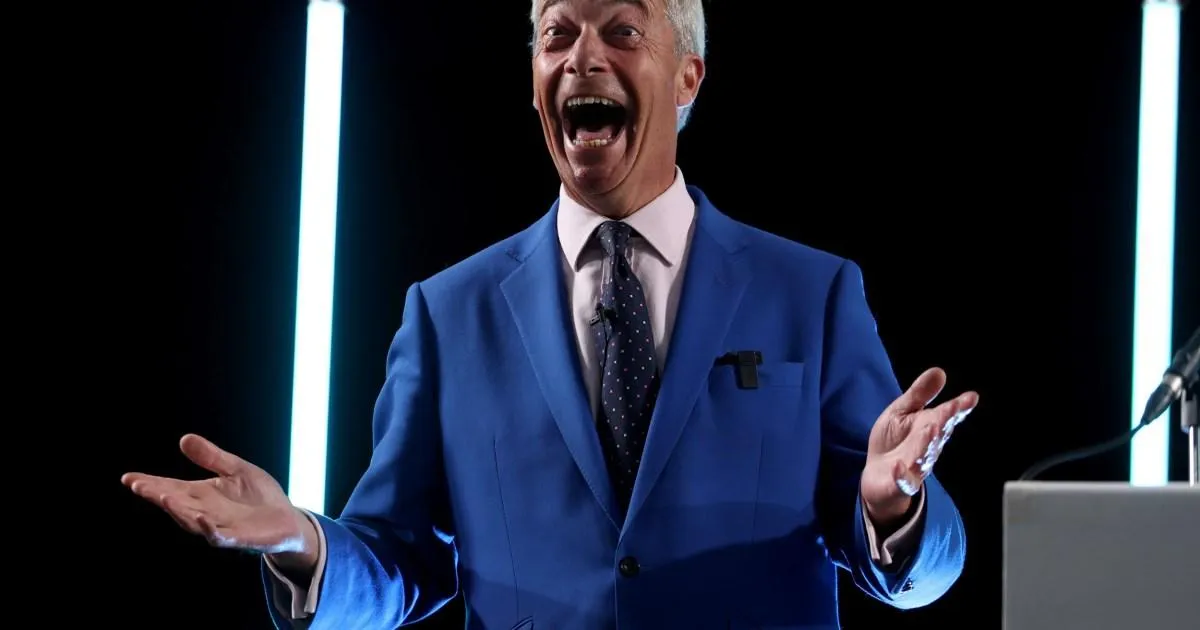
The British political landscape was jolted this week when Nigel Farage, leader of the Reform party, announced a move that can only be described as a high-stakes theatrical gamble. Westminster had been braced for drama, with rumors swirling about potential resignations, health struggles, or the mounting pressure of financial scrutiny. Instead, in a live-streamed reveal that left even veteran observers blinking in disbelief, Farage announced his resignation as the MP for Clacton—only to immediately declare his candidacy to run for the very same seat in a by-election. By effectively firing himself to re-apply for his own job, Farage has staged an audacious power move that demands we look closely at his motives, his public image, and the timing of this unprecedented maneuver.
To understand why a politician would voluntarily vacate a hard-won seat, we have to peel back the layers of Farage’s reality. On the surface, he paints this as a courageous act of defiance against an “establishment” that he claims is ruthlessly targeting him. He wants his supporters to see an outsider standing his ground against the powers-that-be, doubling down on his brand as the “man of the people.” Yet, this carefully curated image has been struggling under the weight of recent headlines. Scrutiny regarding a £5 million donation from a crypto billionaire and his lobbyist activities at the Bank of England have caused many to pause. For the average voter sitting in a pub, the connection between a populist politician and such eye-watering wealth is difficult to reconcile with the narrative of a champion for the working class.
This isn’t the first time a British politician has attempted such a stunt to force a by-election for personal branding. Back in June 2008, Tory MP David Davis famously resigned his seat to highlight what he saw as the erosion of civil liberties, effectively daring the public to judge his stance. Like Farage, Davis turned his political future into a statement of principle. However, the optics of the two scenarios differ significantly. Where Davis was driven by an ideological crusade against government overreach, critics observe that Farage’s motivation feels more reactive—a defensive maneuver intended to regain the narrative and outmaneuver mounting pressure from parliamentary authorities regarding his personal finances.
Indeed, the subtext of this announcement involves a quiet but serious investigation currently being conducted by the Parliamentary Standards Commissioner. Farage has been under the spotlight regarding whether or not he properly declared that significant £5 million gift. While he vehemently denies any wrongdoing, the prospect of a formal investigation and the potential for a forced suspension from the House of Commons looms large. By jumping before he might be pushed, Farage has seized control of the calendar. He is attempting to transform what could have been a humiliating investigation-led by-election into a choice between him and his critics, betting that his loyal base will carry him across the finish line before any official verdict is even reached.
Whether this move will pay off is the million-dollar question in a summer that has already proven to be politically volatile. Farage is taking a calculated risk that, by framing this as a choice between “the people” and “the elites,” he can once again bypass a scandal and come out looking like a martyr for the cause. It is a classic move from his playbook: when the pressure gets too high, change the context of the fight. He is betting everything on the idea that even if the establishment questions his finances, his constituency will prioritize his personality and his rhetoric, validating his leadership through the ballot box regardless of the surrounding controversies.
Ultimately, we are left to wonder if this “bananas” summer of politics has any cards left to play. As we watch the fallout of this decision, it is clear that Farage is trying to preemptively insulate himself from both media firestorms and official parliamentary accountability. If he wins, he gains a fresh mandate to silence his detractors; if he loses, he risks the kind of humiliation that could signal a turning point for his influence. It is a bold, bizarre, and highly cynical piece of political theater that puts his own ego at the center of the democratic process. Whether the electorate rewards this audacity or grows tired of the dramatics remains to be seen, but one thing is certain: Nigel Farage has successfully ensured that the conversation remains entirely focused on him.