


The landscape of British political financing is currently undergoing a significant transformation, driven by an urgent need to insulate the democratic process from foreign influence. Central to this shift is a new legislative strategy explicitly designed to address loopholes that have, until now, allowed high-net-worth individuals to inject massive sums of money into party coffers while potentially sidestepping residency requirements. At the heart of this controversy is Reform UK and its relationship with Christopher Harborne, a prominent crypto billionaire who recently made history with a staggering £9 million donation. Despite Harborne being a long-term resident of Thailand—where he held citizenship under a different name—he has recently moved to re-register as a UK voter. This maneuver was widely perceived as a tactical effort to bypass new, stricter caps that limit overseas donations to a modest £100,000.
The government’s response to these tactics has been swift and decisive. Under new “safeguards” announced by the Ministry of Housing, Communities and Local Government, the rules are being tightened to ensure that simply signing up to the electoral roll is not enough to grant immediate access for large-scale donations. Moving forward, anyone relocating to the UK will be subject to the £100,000 cap for at least a full year, effectively closing the window for “instant” large-sum political bankrolling. Communities Secretary Steve Reed has framed these measures as a world-leading initiative, intended to safeguard the integrity of British elections from the shadow of foreign financial influence. By requiring that campaign funding be vetted for its legitimacy, the government aims to restore public trust in the financial foundations of our political parties.
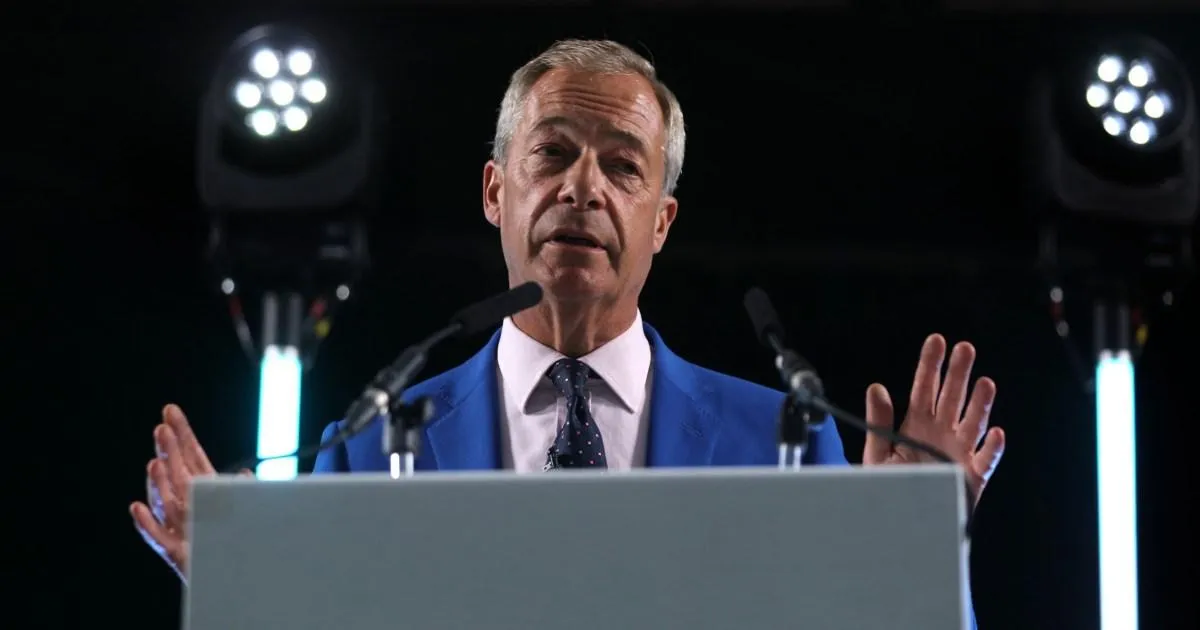
For Nigel Farage and Reform UK, these developments have created a complicated political and legal environment. Farage had initially welcomed Harborne’s re-registration, stating he would “gladly” accept further funding; however, the new government amendments to the Representation of the People Bill may render that enthusiasm moot. Beyond the specific issue of current donations, Farage finds himself under scrutiny regarding past financial dealings. Currently, the Parliamentary Standards Commissioner is investigating a £5 million payment Farage received from Harborne in early 2024. While Farage maintains that the money was a personal gift unrelated to his political activities, the lack of formal declaration has ignited a firestorm of speculation and official inquiry. As a public figure, Farage’s insistence on the private nature of these funds is being tested against the rigorous transparency expected of an MP.
The controversy is further compounded by allegations surfacing in the Sunday Times regarding Farage’s failure to declare benefits received from George Cottrell, an aristocrat with a history involving fraud convictions. While Reform UK spokespeople have dismissed these reports as non-stories, the accumulation of reports concerning Farage’s financial entanglements paints a picture of a party operating on the fringes of traditional political etiquette. These scrutiny points have become part of a larger national conversation about how political figures interact with wealthy donors and the potential risks that come with opaque funding streams. It is no longer enough to simply follow the letter of the law; in the current climate, leaders are being held to a higher standard of accountability, where public perception and transparency are just as critical as the legislation itself.
A final, defining blow to Reform UK’s previous fundraising model is the government’s total ban on cryptocurrency donations—a direct response to the independent Rycroft Review on foreign interference. Last year, Reform UK stood out as the only major party to embrace crypto, banking on the digital currency trend to bolster their campaign war chest. By officially banning such transactions, the government is effectively modernizing election law to keep pace with the volatile and often untraceable nature of digital assets. This decision signals a clear intent to remove the “wild west” element from campaign finance, ensuring that every pound entering the system is transparent, legal, and clearly linked to its source. It is a sobering shift for a party that relied so heavily on such progressive, high-risk financial structures.
Ultimately, these legislative changes represent a maturation of UK election oversight. The days of exploiting geographical grey areas or leveraging decentralized currencies to fuel political campaigns appear to be coming to an end. While parties like Reform UK argue that they are being unfairly targeted by these regulations, the broader legislative consensus suggests that the protection of democracy must take precedence over the funding convenience of any single faction. As these amendments move through the House of Commons, the political world remains on edge, waiting to see if these “tough new rules” will truly be enough to stem the flow of foreign money and restore the image of unbiased, clean politics. For the electorate, the hope is that these measures will ensure that the voice of the voter—not the deepest pocket of a multinational donor—remains the driving force of British governance.