

The landscape of international diplomacy is often viewed as a rigid, formal arena defined by stiff handshakes and carefully scripted communiqués. However, recent revelations from Morgan McSweeney, Sir Keir Starmer’s former chief of staff, provide a rare and humanizing glimpse into the unpredictable nature of statecraft. In a candid interview on Nick Robinson’s Political Thinking podcast, McSweeney detailed the tension and absurdity of the first official call between the British Prime Minister and Donald Trump. Far from the expected geopolitical heavy-lifting regarding trade or security, the conversation spiraled into a surreal monologue about wind turbines and, more bizarrely, the waistlines of Scottish wildlife.
According to McSweeney, the call began with President Trump expressing his well-documented disdain for wind turbines, or “windmills” as he prefers to call them. What started as a predictable critique of renewable energy policy quickly devolved into a bizarre, vivid narrative. Trump claimed that these turbines are responsible for killing large numbers of birds, which in turn provides an endless feast for local foxes. His theory grew increasingly elaborate as he described the consequences of this high-protein diet: the foxes were growing gluttonous, lazy, and so morbidly obese that they had become unrecognizable, wandering the Scottish countryside as unrecognizable, rotund creatures rather than the lithe, cunning predators they were supposed to be.
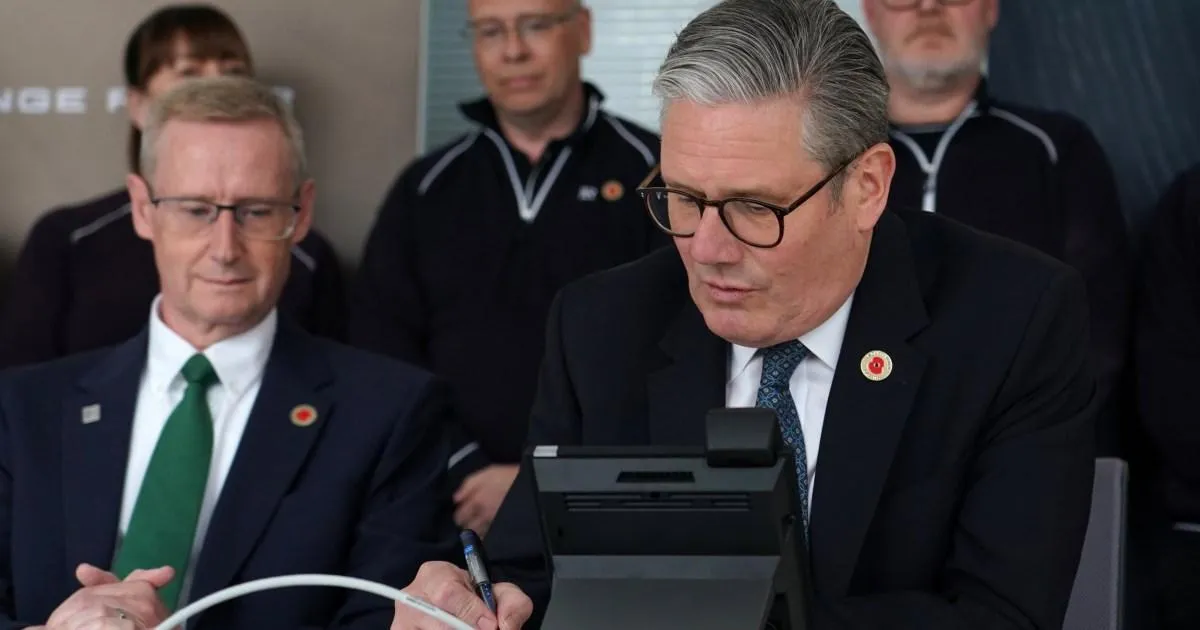
The scene inside Downing Street during this exchange was one of high-stakes comedic restraint. The seasoned civil servants and political aides monitoring the call were reportedly in agony, struggling to maintain a professional facade in the face of such an unexpected and humorous narrative. While the officials in the room were described as being unable to contain their amusement, the Prime Minister himself remained remarkably composed. Despite the absurdity of being lectured on the physical health of Scottish wildlife by an American President, Starmer maintained a stoic demeanor, a testament to his characteristic discipline and his focus on the serious nature of his position.
McSweeney noted that Trump was clearly playing for laughs, using his signature style of storytelling to lighten the mood of an inaugural call. This anecdote captures the duality of the modern political office, where leaders must navigate the fine line between personal rapport and policy-driven diplomacy. For Starmer, this bizarre interaction was a trial by fire, setting the tone for a relationship that was guaranteed to be anything but conventional. It served as an early indicator that engageing with Trump requires not just a firm policy grip, but the ability to roll with the unpredictable tangents that the President often weaves into his interactions.
Beyond the humor of the encounter, the segment highlights the strategic philosophy behind Starmer’s premiership. McSweeney emphasized that while Starmer is prepared to challenge the President on issues of fundamental importance—such as defense and international law—he purposefully avoids “performative” politics. In an era where many politicians use loud, public theater to demonstrate their strength, Starmer appears to prioritize a methodical, pragmatic approach that saves his political capital for moments that truly necessitate a public rebuke. This philosophy is also evident in how his team reflects on past administrative stumbles, such as the initial handling of the winter fuel payment or the confusion surrounding Starmer’s 2023 comments on Gaza.
In reflecting on these past challenges, McSweeney displayed a sense of genuine humility and regret, specifically regarding how quickly the government clarified positions that had been misconstrued in the media. By owning these mistakes and acknowledging the need for faster, clearer communication, McSweeney offers a humanized look at the machinery of Downing Street. Whether it is managing the fallout from a complex policy issue or staying silent while the President of the United States riffs on the girth of foxes, the role of a modern leader is perhaps more defined by how they navigate the absurd and the difficult in real-time than by the headlines they create the following morning.