


The quiet community of Wyong, New South Wales, is currently grappling with a tragedy so profound and unsettling that it has left a permanent scar on the hearts of its residents. A four-year-old boy, described as a bundle of energy with a sweet, shy temperament, has lost his life under circumstances that defy comprehension. The child was discovered in his own home following a welfare check triggered by a harrowing admission from his 32-year-old mother. Upon turning herself in to local authorities, the woman allegedly confessed to committing acts of cannibalism against her own son, claims that remain a focal point of a deeply distressing investigation. As the community attempts to process the news, the sense of shock is palpable, moving far beyond the walls of the small unit where the tragedy unfolded and touching everyone in the surrounding neighborhood.
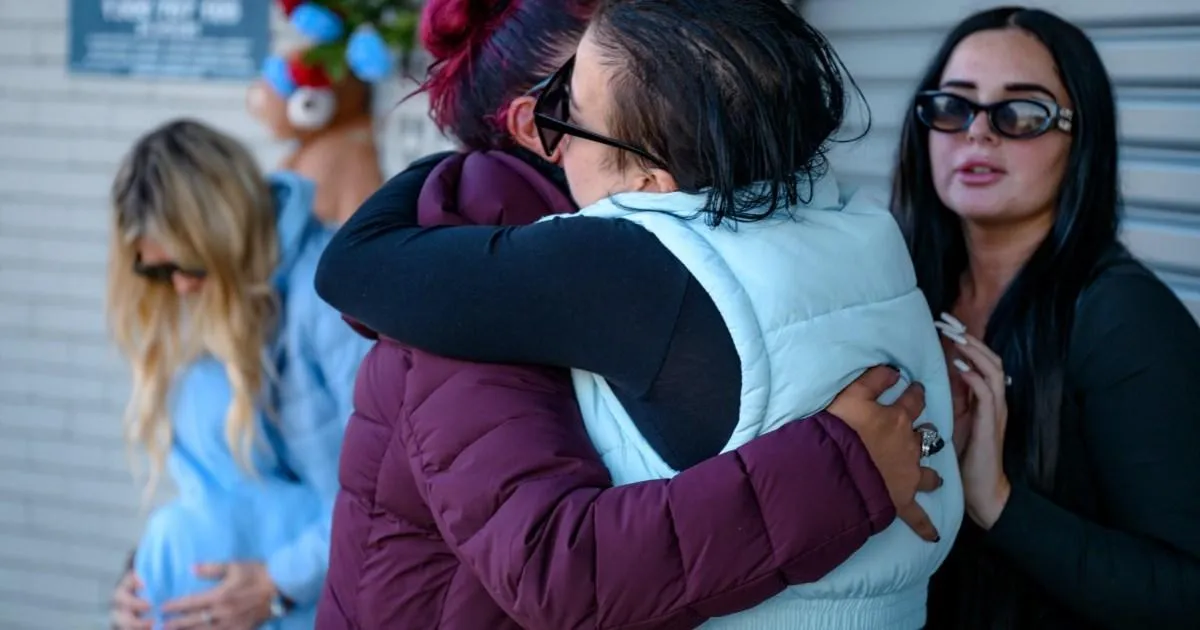
In the wake of the discovery, the local community gathered at the Wyong Memorial Pool for a vigil that was as somber as it was heart-wrenching. Parents stood alongside their children, many of whom were visibly distraught, their eyes filled with tears as they placed teddy bears, floral tributes, and flickering candles on the ground. For those who had known the boy, the reality of his death is impossible to reconcile with the memory of a child who was just recently running through the neighborhood with his puppy or playing with his toy cars. One local mother, who had seen her son play with the victim, spoke through her grief, recalling a boy who seemed “really normal and happy” and full of life. The realization that he is gone, and the nature of the allegations surrounding his final moments, have cast a long, dark shadow over the everyday innocence of local playtime.
The mother, whose identity remains protected by Australian law, was known to local police prior to this incident, though residents acknowledge that behind the closed doors of their home, there were no outward signs of a coming disaster. Neighbors describe her as having been quiet and polite during brief interactions, underscoring the universal, chilling realization that one can never truly know the turmoil occurring within someone else’s home. The investigation is currently in a delicate phase; while the mother’s own statements to police sparked the initial fears regarding the horrific nature of the crime, forensic teams are working to establish the truth of what transpired. Police have seized the mother’s vehicle and physical evidence from the home, while a post-mortem examination by the coroner is expected to provide the definitive answers into how the young boy met his end.
For the neighbors who lived alongside the pair, the grief is intensely personal. Harley Chislett, a resident who frequently interacted with the young boy, captured the collective mourning when he remembered the child as a “little angel.” He spoke of a vibrant youngster who possessed boundless energy—a “rug rat” at times, as many four-year-olds are—who would spend his evenings running around with his Staffordshire Bull Terrier puppy. To those who watched him grow, the boy was adorable and inherently good; the idea that such a spirited, playful life could be extinguished so violently is a heavy burden for the neighbors to carry. It is a stark reminder of the vulnerability of the very young and the deep, silent impact that an act of extreme violence has on a community’s sense of safety.
Now, as the investigation moves forward, the people of Wyong are left to navigate a strange and painful landscape of mourning. The vigil markers—the stuffed toys and letters—serve as a physical manifestation of a community trying to offer the boy the love and protection he was denied in his final days. There is a palpable sense of anger mixed with confusion, as well as a poignant concern for the other children in the area who are suddenly being forced to confront the concept of mortality and evil at such a tender age. The authorities have confirmed that the mother and son shared a close domestic relationship, a fact that only deepens the complexity and horror of the case for those attempting to make sense of the incomprehensible.
As the town waits for the formal findings from the coroner, the focus remains on honoring the memory of a little boy whose life was cut tragically short. No amount of reporting or official explanation will undo the damage, but the presence of so many residents at the memorial acknowledges that even in the face of such darkness, the community chooses to remember the boy not as a headline, but as a friend and a neighbor. The tragedy in Wyong has become a defining moment for the area, serving as a solemn testament to the fragility of life and the enduring human need to come together when faced with the unspeakable. The boy’s memory lives on in the quiet, reflective spaces of the neighborhood, in the candles still burning by the pool, and in the heavy hearts of those who simply remember him as a happy, energetic, and sweet-natured child.