



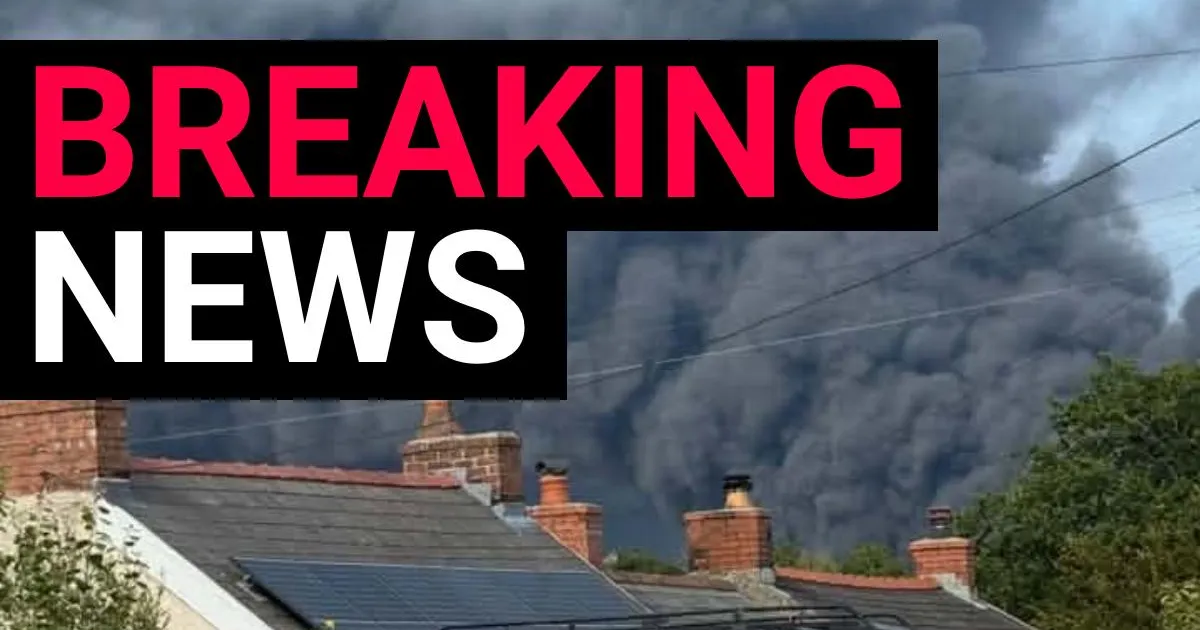
On Monday evening, the skyline over Milford Haven, Wales, was dramatically transformed as a massive fire erupted at the site of a decommissioned oil refinery. Known locally as the former Puma Energy facility and currently operated by Impala Terminals, the site became the focal point of an urgent emergency response. Around 6:00 p.m., thick, black plumes of smoke began billowing into the air, visible from miles away, signaling the severity of the blaze. The sight was enough to draw the attention of the entire community, as the scale of the smoke served as a sobering reminder of the potential hazards associated with such historical industrial sites.
The Mid and West Wales Fire and Rescue Service acted swiftly, dispatching multiple crews to the Robeston West location to combat the spreading flames. Recognizing the urgency of the situation, officials issued a stern warning to the public, urging commuters and local residents to avoid the area entirely to ensure that emergency vehicles could access the scene without obstruction. For those living in the immediate vicinity, the primary directive was clear: keep windows and doors tightly shut to prevent the inhalation of potentially toxic smoke drifting from the industrial site as firefighters worked to contain the inferno.
Local resident Donna Hooker, who witnessed the unfolding event from her home, provided a human perspective on the chaos. After hearing alarms sound, she looked outside to see the dark clouds rising over the facility. She noted that the community remained calm, trusting in the professional response of the emergency services. According to Hooker, the police moved rapidly to secure the perimeter, blocking off roads in both directions to maintain safety. By the time the situation had stabilized later that evening, she reported that the smoke was beginning to thin, offering a sense of relief that the worst had been averted.
The facility has a long history in the region, serving as a pillar of local industry for years. While ownership of the depot transitioned from Puma Energy to Impala Terminals in late 2022, the transition has been subtle in the eyes of the locals, many of whom still refer to the site by its former name. In fact, some of the original signage remains, serving as a vestige of the site’s previous life. At the time of the fire, the focus of the activity at the depot was centered on a long-term demolition project, specifically the decommissioning of old oil storage tanks, which had been the primary activity on-site in recent months.
While the fire in Wales captured national attention, it was not the only emergency crews were forced to contend with on that busy Monday. In a stark reminder of the unpredictable nature of fire hazards, firefighters in Oxfordshire were simultaneously battling a massive blaze in Aston Tirrold. Starting in the early afternoon, that fire consumed approximately 100 acres of open fields, spreading with terrifying speed. With 14 fire engines deployed to the scene, the situation required an immense level of coordination and manpower to prevent the flames from threatening nearby properties or critical infrastructure.
These incidents represent a heavy operational load for emergency responders, highlighting the diverse challenges they face—from complex industrial cleanup operations to fast-moving rural wildfires. Whether it is an urban site being demolished or a vast expanse of countryside, the role of the fire service remains the frontline of public safety. As the communities in both Milford Haven and Aston Tirrold begin the process of recovery and investigation, the immediate takeaway for the public is the vital importance of staying informed and following official safety protocols during crises that can materialize in a matter of seconds.