


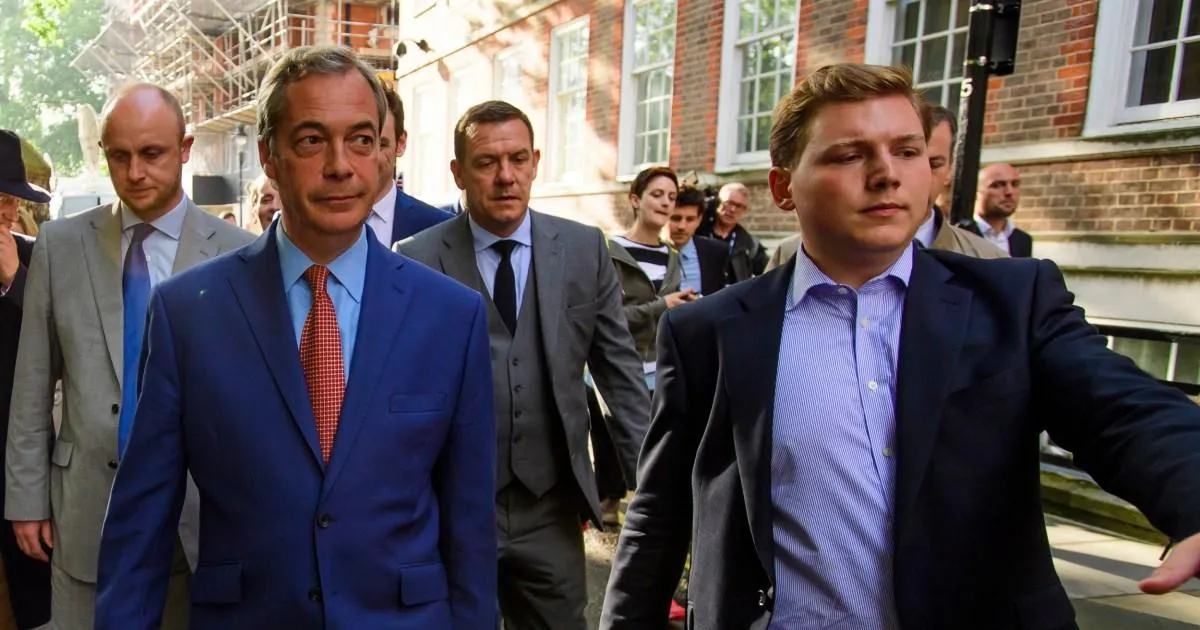
The recent spotlight on the financial relationship between Nigel Farage and multi-millionaire George Cottrell has sparked intense scrutiny and calls for a parliamentary standards inquiry. At the heart of the controversy are questions surrounding donations made to Farage in the year leading up to his election as the MP for Clacton. These contributions, which reportedly funded security and social media staff for the Reform leader’s digital platforms, have drawn fire from the Liberal Democrats, who argue that the lack of oversight warrants a formal investigation. While critics see a lack of transparency, Farage and his team remain steadfast in their defense, insisting that the support was received in a “purely personal capacity” long before he stepped into the House of Commons, and that no rules were broken during that transition.
To understand how these two figures became entwined, one must look at the unconventional life of George Cottrell. Now 32, Cottrell is a man of significant privilege, born into the landed gentry with a lineage that includes a soap empire and even a historical connection to the Royal Family—his mother, Fiona Cottrell, once briefly dated King Charles. Despite being expelled from Malvern College for gambling, Cottrell’s pedigree and sharp mind allowed him to carve out a niche in the high-stakes world of Mayfair hedge funds. He is frequently described by associates as a charismatic, “blue-blooded chancer” who moves with ease through circles of extreme wealth, often balancing his high-level professional ventures in cryptocurrency and gambling with a lifestyle defined by excess.
The dynamic between the ageing political firebrand and the younger, wealthy benefactor is reportedly rooted in deep personal affinity rather than just professional collaboration. Sources close to the pair suggest that Cottrell views Farage not just as a political icon, but as a genuine “father figure,” famously referring to him by the unusual moniker of “daddy.” Their bond is cemented by shared tastes: both men are known to enjoy a drink and a smoke, and they seem to speak the same language when it comes to political vision and, perhaps more tellingly, a desire to live life on an expansive, sometimes risky scale. This mentorship—or, as some critics might frame it, patronage—has seen Cottrell become an integral part of Farage’s inner circle, even reportedly acting as a negotiator for the MP’s lucrative television appearances.
Cottrell’s history, however, is far from conventional. In 2017, he made international headlines not for his aristocratic connections, but for a brush with the American legal system. After being caught in a sting operation where he posed as a money launderer to deceive criminals on the dark web, he pleaded guilty to wire fraud and served eight months in a US federal prison. Upon his return to the UK, he maintained a high-profile lifestyle, including a stint in the tabloids for dating reality television stars. Despite the incarceration and reports of heavy financial losses on gambling tables in places like Croatia, his ability to bounce back and maintain his standing among the wealthy remains a hallmark of his turbulent, yet highly magnetic, persona.
The controversy currently unfolding centers on whether these private arrangements should have remained private. The Sunday Times recently revealed that Farage had utilized property rented by Cottrell near Buckingham Palace, further fueling reports that the two are inseparable. While the Reform Party dismisses these claims as a “baseless and contrived” narrative manufactured against a man who, at the time the money was exchanged, held no public office, the political fallout continues to bubble. For Farage, these allegations are merely another hurdle in a career defined by polarization; he remains confident that his track record is clean, viewing the scrutiny as an attempt to undermine his growing political influence.
Ultimately, the story of Nigel Farage and George Cottrell is one of two “larger than life” characters whose friendship defies the traditional boundaries of political association. It is a tale of old money, modern digital currencies, and the blurred lines between personal friendship and public accountability. Whether this investigation into their financial ties leads to a formal sanction or simply adds another layer to the enduring mythos of Nigel Farage, it highlights the increasing tension in British politics regarding how politicians navigate their private support networks. For now, Cottrell remains an elusive and influential player in the background, a man who sees in Farage a role model, and who seems determined to continue supporting him, regardless of the noise from Westminster.