



The saga of Prince Andrew’s association with Virginia Giuffre remains one of the most bizarre and contested chapters in modern royal history. Central to this controversy is his infamous 2019 BBC Newsnight interview, where he famously attempted to dismantle claims of sexual impropriety by offering an incredibly mundane alibi: he insisted he could not have been with his accuser on March 10, 2001, because he was at a Pizza Express in Woking with his daughter, Princess Beatrice. The remark, delivered with an air of odd certainty, quickly became a point of public ridicule, fueling skepticism about the prince’s transparency regarding his relationship with convicted sex offender Jeffrey Epstein.
The absurdity of using a casual pizza outing as a defense for such serious allegations prompted more than just social media mockery; it triggered an internal investigation by the restaurant chain itself. Recognizing the matter as one of significant public interest, Pizza Express launched a formal inquiry into its historical records to see if the royal had indeed graced them with his presence. Despite scouring documents from that era and attempting to track down staff members who worked at the location in 2001, the chain hit a dead end. The branch manager from that period had long since moved on, and no tangible paper trail—such as a receipt or a logged reservation—could substantiate the prince’s claims.
When confronted with the lack of evidence, Pizza Express ultimately arrived at a frustratingly inconclusive verdict: while they could find no proof that the prince was at their restaurant that night, they could not definitively prove he wasn’t there either. This state of limbo mirrored the findings of the BBC’s own investigative efforts. Despite extensive attempts to track down witnesses or corroborating details from that evening, news teams came away empty-handed. The narrative of a quiet, family birthday dinner remained purely anecdotal, unsupported by the very establishment he used to clear his name.
The silence surrounding the incident has only been amplified by the guarded response of the Metropolitan Police. When faced with Freedom of Information requests regarding whether royal protection officers were present at the restaurant, Scotland Yard hid behind a standard “neither confirm nor deny” stance. They argued that revealing such information would jeopardize their policy on protecting high-profile individuals. This bureaucratic wall-building has drawn sharp criticism from political figures like Liberal Democrat leader Sir Ed Davey, who argues that the police are using security concerns as a veil to avoid transparency. For many, the idea that acknowledging a 25-year-old security detail would pose a modern-day terror threat feels like an unreasonable stretch.
Adding to the complexity are the conflicting personal accounts that have emerged over the years. According to reports from the Daily Mail, a leaked family diary from that period suggests a busy day for the prince, involving a home manicure before an alleged trip to dinner to drop off his then 12-year-old daughter. However, the most damaging blow to his specific alibi may be the simple passage of time. Princess Beatrice herself has stated that she has “absolutely no recollection” of the birthday party her father so confidently described. The disappearance of the key witness—his own daughter’s memory—leaves the pizza parlor defense looking more like a desperate misremembering than a solid fact.
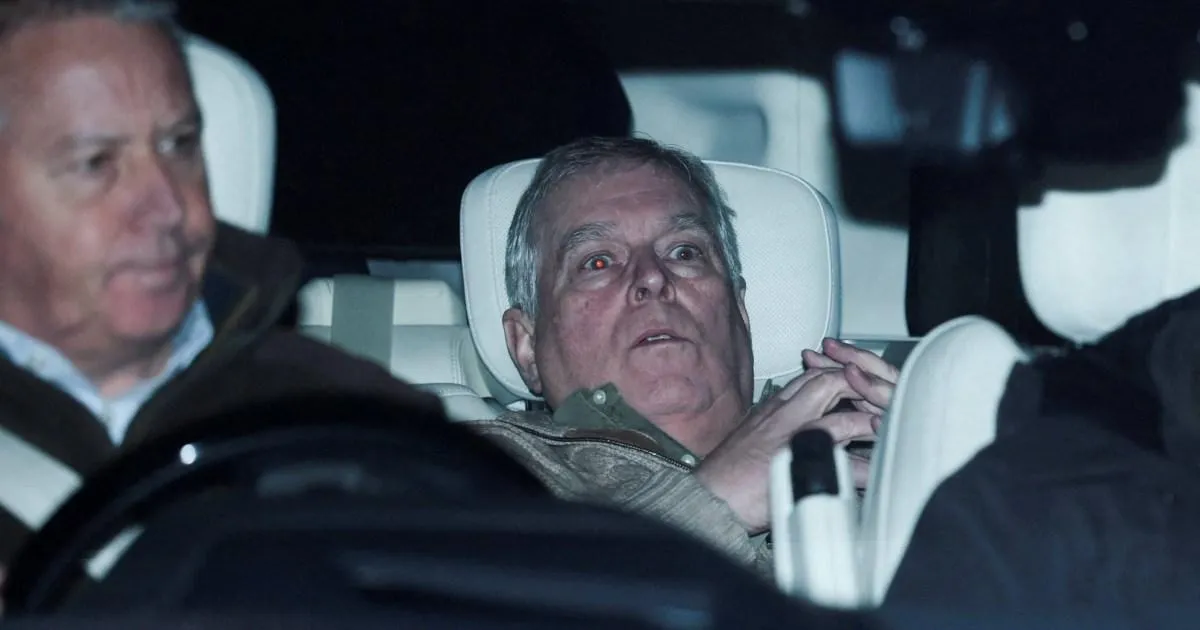
As the legal shadows surrounding Prince Andrew have lengthened, particularly following his arrest and the unsealing of new documents linked to the Epstein case, the Woking pizza story serves as a symbol of his public unraveling. Whether it was a genuine memory or a poorly constructed shield against harrowing accusations, the lack of evidence has left the public with little to anchor the prince’s story to reality. With his reputation in tatters and his circle of support dwindling, the Pizza Express inquiry stands as a strange, inconsequential footnote to a much darker story—a cautionary tale of what happens when a royal life collides with the scrutiny of the truth.