

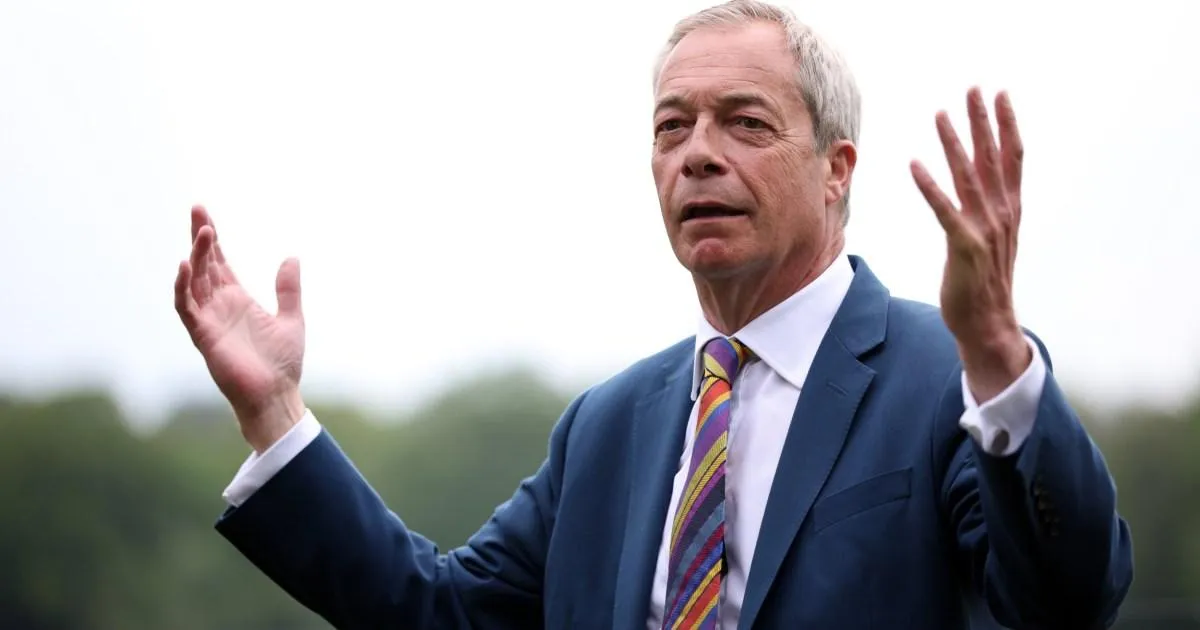
In the world of politics, scandals are a curious litmus test. They rarely sink a career because of the sheer magnitude of the original sin, but rather because of how they reshape the public’s perception of the perpetrator. For over a decade, Nigel Farage has occupied a unique space in British life, treated by his supporters as a Teflon-coated outsider, a performer who channels the frustrations of the “silent majority.” Whether he was embroiled in controversy over his past behavior, inflammatory rhetoric, or his personal earnings, these stories simply bounced off him. His shield was simple: he projected an image of a man who wasn’t in it for the spoils of Westminster, frequently reminding voters that he walked away from a lucrative career in the City to serve his cause. It was this perceived authenticity that kept him immune to the standard rules of political accountability.
However, that carefully constructed shield is showing deep fissures. Farage is currently facing a dual challenge that threatens his carefully curated image: a parliamentary investigation into a £5 million donation from a cryptocurrency billionaire that went undeclared upon his election to the Clacton seat, and fresh revelations regarding his ties to George Cottrell. Known colloquially as “posh George,” Cottrell is a convicted fraudster who spent eight months in an American prison following a plea deal related to a litany of charges including money laundering, blackmail, and extortion. Reports indicate that Cottrell provided significant logistical support to Farage, including staffing, security, and accommodation during the 2024 election cycle. For a man who built a brand on being the ultimate whistleblower, these entanglements with high-stakes finance and criminal backgrounds feel increasingly difficult to square with his “man of the people” narrative.
The real danger for Farage lies not just in the allegations themselves, but in his increasingly brittle response to them. When pressed on the origin of his funding, Farage shifted from claiming the money was for security to characterizing it as a reward for his work on Brexit, eventually snapping that it was “none of our business” and that he could spend the money on “Ferraris” if he so chose. In that moment of irritation, the mask slipped. That defensive, dismissive tone is the antithesis of the honest, transparent outsider he claims to be. By adopting the habits of a typical defensive politician, Farage has opened himself up to comparisons that his supporters previously rejected, signaling that he is perhaps more rattled than he has ever been in his long, colorful career.
The irony is particularly sharp when one looks at the context of his recent campaigning. Reform UK spent much of 2024 aggressively targeting Sir Keir Starmer, mockingly branding him ‘Free Gear Keir’ for accepting gifts, designer glasses, and the use of private accommodation. That public focus on Starmer’s personal benefits was a potent weapon, one that contributed to the Prime Minister’s rapid decline in popularity. Now, the tables have turned. When you stack Starmer’s gifts against the millions Farage is accused of receiving from crypto-wealth and convicted figures—without offering the public a transparent accounting—the hypocrisy becomes impossible to ignore. Farage is no longer just the agitator on the sidelines; he is under the same intense scrutiny he once applied to others, and he is struggling to cope with the heat.
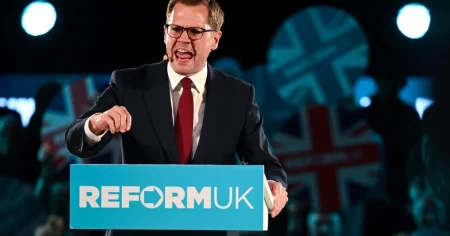
Internal pressures within his movement are also becoming harder to ignore. Farage’s power has always rested on the fact that Reform was essentially a vehicle for his own personality, leaving no room for internal dissent. Yet, cracks are appearing, as evidenced by figures like Robert Jenrick, who have already begun to publicly question the legitimacy of his funding arrangements. Furthermore, the party’s underperformance in recent by-elections suggests that the “mysterious donor” narrative is beginning to alienate the very voters on whom he relies. If parliamentary authorities find that he has committed a formal breach, he could face a recall petition—the very tool he has spent his career advocating against the “Westminster establishment.” It would be a poetic, if devastating, end for a man who rose to power by demanding that voters take back control.
Ultimately, the lesson here remains the same as it has always been in the corridors of power: it is never the scandal that kills you, but the clumsy, defensive response that follows. Farage has spent years emulating the playbook of Donald Trump, believing that if you never apologize and never explain, you can outlast any media firestorm. But the British political landscape is proving to be a different kind of beast, and the public’s patience with “don’t ask, don’t tell, don’t investigate” is wearing thin. By refusing to justify his financial dealings, Farage is dismantling his own legend. He is no longer the outsider looking in; he is now the man at the center of a controversy he cannot spin away, illustrating that for even the most untouchable figures, the tide can turn in an instant when the image no longer matches the reality.