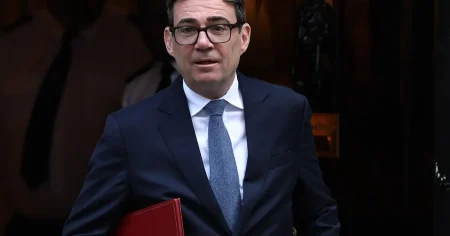



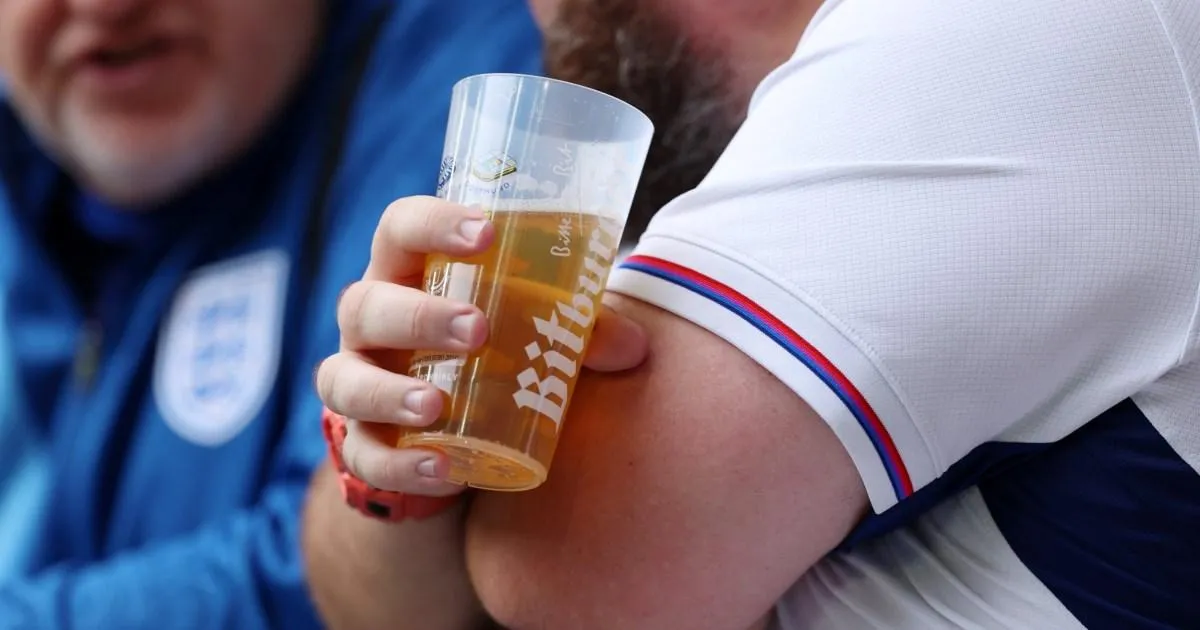
The landscape of British football culture has long been defined by a peculiar, archaic rule: the strict prohibition of alcohol consumption within view of the pitch. Introduced in 1985 to curb the widespread hooliganism that plagued the sport during that era, the law mandates that fans can purchase drinks within stadium concourses but must finish them before returning to their seats. Now, however, the tide of opinion is shifting. Andy Burnham, the current Mayor of Greater Manchester and a prominent political figure, has signaled his intent to challenge this decades-old legislation, arguing that the modern football environment has outgrown the desperate measures of forty years ago.
Burnham’s perspective was brought to the forefront during a recent visit to Everton’s Goodison Park, which was hosting a rugby league match between the Leigh Leopards and the Warrington Wolves. While watching the game from the stands, Burnham observed the stark contrast between the rules governing different sports. Standing alongside Liverpool Mayor Steve Rotheram, who was enjoying a pint in his seat, Burnham pointedly questioned why football fans are treated as a demographic uniquely incapable of responsible drinking. For him, the imagery of a relaxed, beer-in-hand rugby atmosphere highlighted an obvious, frustrating double standard that has persisted for far too long.
The argument for reform rests primarily on the fact that the “football hooliganism” narrative is a relic of the past that no longer reflects the reality of the sport’s diverse, family-oriented fan base. Supporters of other sports—including cricket, tennis, and rugby—have long been trusted to consume alcohol in their seats without resulting in the chaos that lawmakers once feared. Furthermore, the sport itself has begun to acknowledge this disparity; following a successful trial, the Women’s Super League recently authorized the consumption of alcohol in seating areas during matches. If women’s football can integrate this freedom without incident, critics of the current law argue there is little logical reason to maintain the ban for the men’s game.
Support for Burnham’s stance is growing within the political sphere, with MPs like Luke Charters backing the idea of a modern approach to a modern game. Charters has repeatedly contended that the legislative framework governing football should be updated to match the culture of today’s stadiums. After all, the current law is not actually a prohibition on alcohol sales, but rather a performative restriction on where that drink can be held. By forcing fans to chug their refreshments in crowded concourses before the second half begins, the law arguably creates a more frantic, hurried drinking culture that is less safe than allowing fans to nurse a beer slowly over the course of a 90-minute match.
As the political gears turn, there is a mounting sense of anticipation that this could be one of the first common-sense reforms on the horizon should Burnham rise to a higher national office. The sentiment from his camp is clear: football fans deserve the same level of respect and autonomy afforded to those attending other major sporting events. By treating supporters like adults rather than potential liabilities, the sport could cultivate a more relaxed matchday experience that aligns with the social norms of the 21st century. It is a push for consistency, fairness, and the recognition that the game has successfully moved beyond its darkest chapters.
Ultimately, this movement is about more than just the ability to sip a pint while watching a match; it is about ending the stigmatization of football supporters. For over forty years, the law has treated the football stadium as a space inherently prone to violence, regardless of the drastic improvements in crowd safety and stadium management. If the authorities are willing to reform these rules to acknowledge that the fans of today are vastly different from the fans of 1985, the move could lead to a significant culture shift. As the calls for change grow louder, it seems increasingly likely that the days of the stadium-wide “dry” rule are numbered, paving the way for a more hospitable and intuitive matchday environment.