


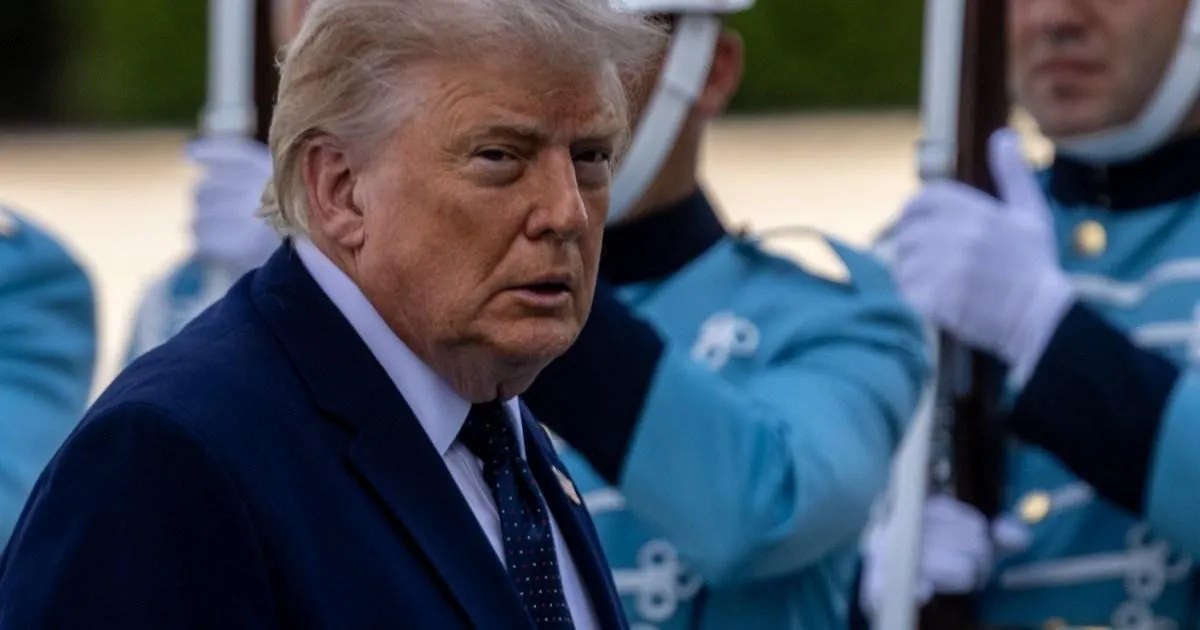
Donald Trump’s recurring ambition to acquire Greenland has sparked a fresh wave of diplomatic friction, once again positioning the Arctic territory at the center of a tense standoff between the United States and NATO. During a pivotal summit in Ankara, the President reiterated his conviction that Greenland is a vital strategic asset that belongs under American control, citing national security concerns as his primary justification. While the idea was initially dismissed when it first surfaced months ago, its resurgence has complicated transatlantic relations, forcing allies to navigate a leader who views geopolitical boundaries through the lens of transactionality rather than traditional sovereignty.
At the heart of Trump’s argument is the belief that Denmark, which holds authority over the semi-autonomous island, has neither the resources nor the motivation to properly secure it. Trump has characterized the territory as a vulnerable outpost, warning that without American oversight, it is being encroached upon by Russian and Chinese naval interests. By framing Greenland as a “paper tiger” waiting to be exploited by global rivals, the President has shifted the conversation from one of regional governance to one of urgent American self-preservation, signaling that his patience for the status quo has worn thin.
Unsurprisingly, this rhetoric has met with firm pushback from European leaders who view the suggestion of annexation as both absurd and dangerous. Officials, including Chancellor Rachel Reeves, have stood shoulder-to-shoulder with Denmark, maintaining that Greenland’s future is entirely in the hands of its own people and their Danish partners—not the U.S. President. This sentiment has been echoed by leaders like Sir Keir Starmer, who have emphasized that the territorial integrity of NATO members is non-negotiable. For many in Europe, Trump’s fixation on the island is not just a policy disagreement; it is a fundamental challenge to the democratic norms that define the alliance.
The tension over Greenland is merely the latest, albeit perhaps the most surreal, symptom of a broader breakdown in the relationship between Washington and its traditional partners. Trump has effectively utilized the Greenland issue as a cudgel to express his deeper frustrations with NATO, frequently threatening to withdraw American troops from European soil. By questioning the financial contributions of member states and casting aspersions on their commitment to regional security, he is signaling that the era of unquestioned American support is drawing to a close. To Trump, Europe is a continent in flux, one struggling with energy and immigration crises that he believes could ultimately lead to its undoing if it fails to align with his “America First” strategy.
This transactional outlook is further reflected in the recent announcement from Defense Secretary Pete Hegseth regarding a comprehensive review of U.S. force posture in Europe. By linking the presence of personnel to the specific spending commitments of individual nations, the administration is making it clear that U.S. military support is no longer a blank check. This shift in policy, coupled with disputes over international conflicts such as the tensions with Iran, has left European leaders wondering if the NATO alliance is at risk of becoming a relic of the past. The President’s open disdain for the efficacy of the collective defense pact suggests he is no longer interested in maintaining the status quo for the sake of unity.
Ultimately, the dispute over Greenland serves as a microcosm of twenty-first-century geopolitics, where resource competition and nationalist sentiment often collide with long-standing institutional alliances. As Washington pushes for control over Arctic assets and demands greater deference from its allies, the stability of the Western bloc remains precarious. Whether these threats are merely negotiating tactics designed to pressure NATO members into higher defense spending or the signs of a genuine, permanent retreat from global leadership, the result remains the same: a profound sense of uncertainty is now the defining feature of America’s relations with its oldest and most vital partners.