


Here is a summary and humanized expansion of the story, written in six paragraphs:
The world of British politics is often characterized by grey suits, carefully rehearsed soundbites, and an aura of rigid seriousness that can feel increasingly disconnected from the public it serves. However, every so often, a figure emerges who turns the absurdity of the system back on itself, using satire to hold a mirror up to the establishment. Count Binface, the intergalactic satirical candidate, has long been a fixture of these eccentric corners of the political landscape. His latest move—campaigning in the Clacton-on-Sea by-election to take on Reform UK leader Nigel Farage—is a continuation of his mission to inject a bit of chaotic honesty into the often-dull proceedings of parliamentary elections. It is a classic David versus Goliath narrative, though in this case, David happens to be wearing a literal trash can on his head.
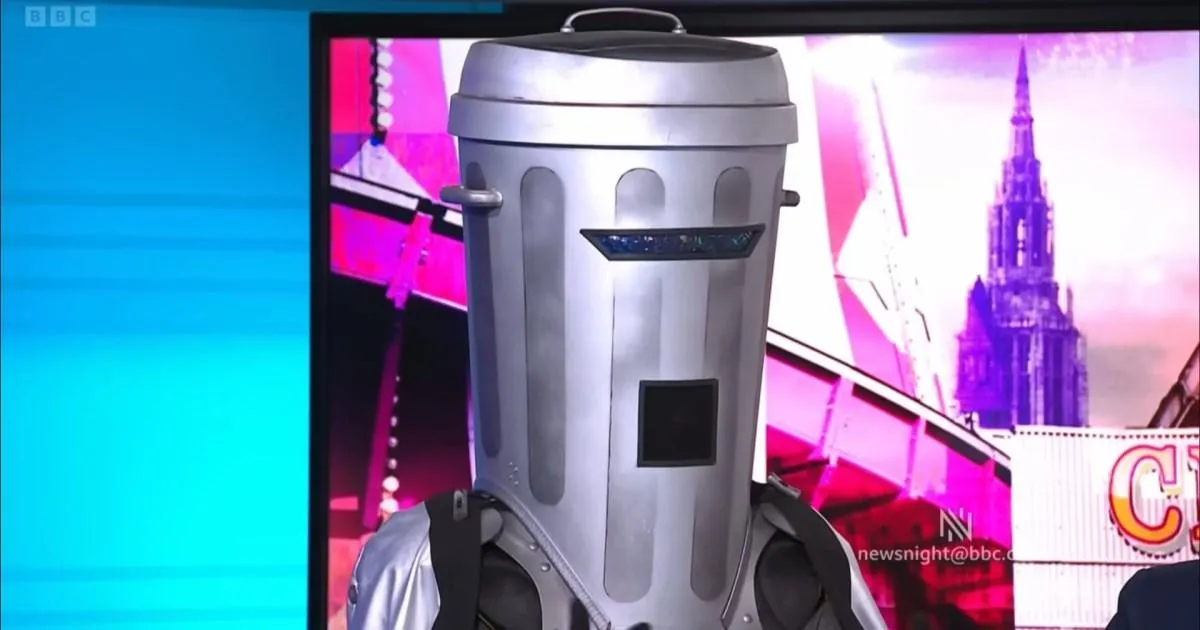
When Count Binface appeared on BBC’s Newsnight to discuss his campaign, the interview quickly deviated from policy talk to a confrontation over his persona. The host, Paddy O’Connell, attempted to nudge his guest toward a more conventional appearance, framing the bin as an obstacle to “serious” political discourse. He pressed Binface to remove the headgear, essentially asking him to drop the act and appear as “Jon,” the man behind the mask. It was an awkward moment that highlighted a fundamental clash in perspective: the broadcaster saw a gimmick that undermined the integrity of the studio, while the candidate saw the mask as an essential component of his political protest.
The exchange grew particularly tense when O’Connell suggested that the times demanded a level of gravity that a man in a bin couldn’t provide. By asking Binface to “bin off the bin,” the presenter was effectively demanding that the candidate conform to traditional expectations of what an election participant should look and act like. The implication was clear: to be taken seriously, one must play by the established rules of the medium. For a satirist, however, the mask is the point. It serves as a reminder that political theater is exactly that—a performance—and that the rigid, often repetitive nature of televised political interviews is itself a bit of a farce.
Unsurprisingly, Count Binface was having none of it. He stood his ground with the dry, unwavering wit that has made him a cult figure in British elections. He refused to be unmasked, subtly asserting that the absurdity of the political environment is what necessitates characters like him in the first place. He didn’t just deflect the pressure; he turned the criticism around, challenging the very idea that a “serious” candidate must look a certain way to be worthy of public attention. If the state of politics is already confusing and fraught with, for lack of a better word, “rubbish,” why shouldn’t a candidate dressed as a bin be allowed his seat at the table?
This confrontation speaks to a broader frustration felt by many voters today. While journalists and politicians often focus on performative decorum and the “optics” of a campaign, the electorate is often looking for something authentic, even if that authenticity comes wrapped in a costume. The irony of the Newsnight interview was palpable: here were two professionals debating whether a man in a bucket could talk about the future of the country, while simultaneously ignoring the possibility that the public might actually enjoy the disruption. By challenging the bin-wearer, the broadcaster unintentionally solidified the candidate’s appeal as an outsider who refuses to bow to the pressures of mainstream media norms.
Ultimately, whether one views Count Binface as a bothersome distraction or a necessary comedic relief, his presence in the Clacton-on-Sea race serves as a stark reminder of the democratic process’s open nature. Elections are designed to be a marketplace of ideas, and sometimes those ideas come from the fringes of the bizarre. As the race against Nigel Farage intensifies, the clash on Newsnight has set a precedent for the campaign ahead: it won’t just be a battle of policies, but a battle of appearances. The bin stays on, and in doing so, it forces us to ask ourselves what we truly value in our leaders: the suit they wear, or the audacity they show in challenging the status quo.