


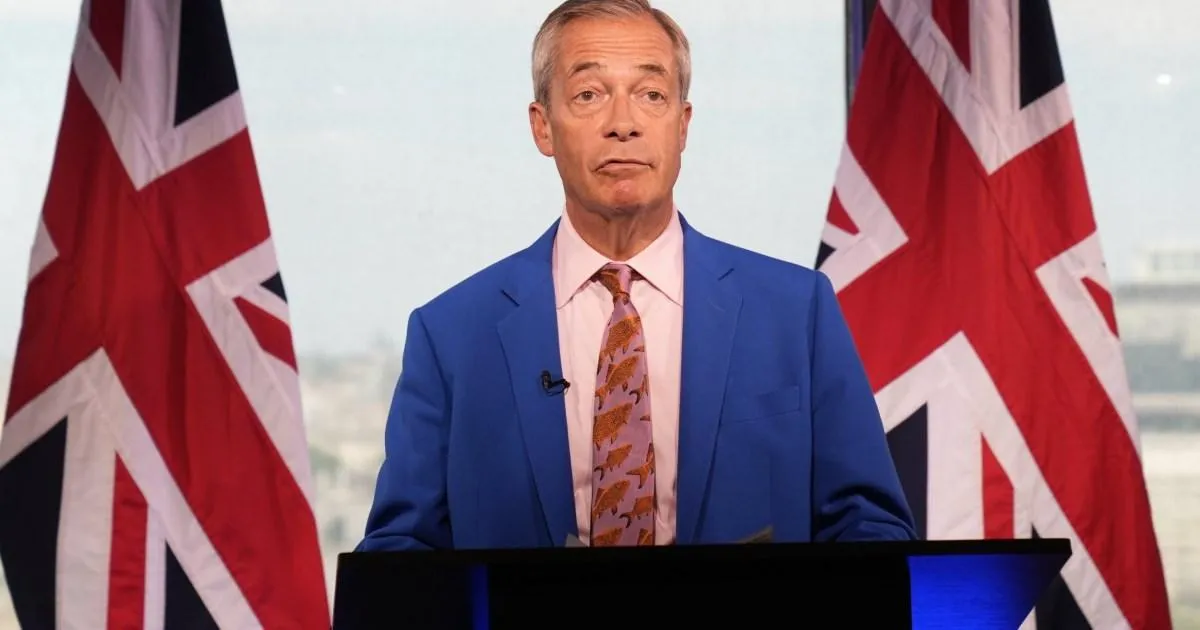
The political landscape in Britain has been thrown into disarray following Nigel Farage’s abrupt decision to step down as an MP to launch a by-election campaign in the coastal town of Clacton-on-Sea. While Farage has framed this move as a bold challenge to the political establishment, many observers—and perhaps even the man himself—may soon realize that the optics of this stunt are far less heroic than intended. By clearing the path of any serious opposition, Farage gains the benefit of an “easy” win, but he simultaneously strips away any sense of gravity the contest might have commanded. Instead of a clash of titans, we are left witnessing a spectacle that feels more like a carefully manufactured vanity project than a genuine democratic test.
Beyond the immediate theater of the campaign, Farage may find that his decision inadvertently opens the door to the very scrutiny he has historically sought to avoid. While he is certainly no stranger to the spotlight, the intensity of a focused, solitary by-election will drag his personal and political baggage directly into the center of the frame. Reporters are already moving past his stump speeches to probe his controversial financial dealings—specifically the mysterious £5 million “gift” from a cryptocurrency billionaire—and his ties to individuals with dubious reputations, such as the convicted fraudster “Posh” George Cottrell. By choosing a venue where he cannot hide behind party dynamics, Farage has essentially handed the media a magnifying glass to inspect his personal ledger.
Furthermore, the mainstream parties have signaled that they have no intention of lending Farage the legitimacy of a high-stakes duel. By opting to treat the by-election as a performative sideshow rather than a strategic battlefield, the government and opposition can keep their focus squarely on the business of running the country. There will be no fanfare, no televised debates, and little in the way of national press interest to provide the validation he craves. When political leaders are asked about this contest, they aren’t treating Farage as a revolutionary threat; they are, quite effectively, framing him as a nuisance. This refusal to engage on his terms denies him the “man of the people vs. the establishment” narrative, leaving him to shout into a vacuum.
In this vacuum, the vacuum cleaner has arrived—in the form of “Count Binface.” The inclusion of the performance artist, otherwise known as Jon Harvey, has single-handedly transformed a tense political maneuver into a surreal farce. By positioning himself as a legitimate challenger, the man in the bin costume has done more to deflate Farage’s ego than any policy critique ever could. It is a humiliating turn of events: a professional politician who prides himself on his populist credentials is now finding himself effectively benchmarked against a comedian. When cabinet ministers are openly joking about “arguing with a bin,” it becomes painfully clear that the gravity of the political process has been replaced by the absurdity of the internet age.
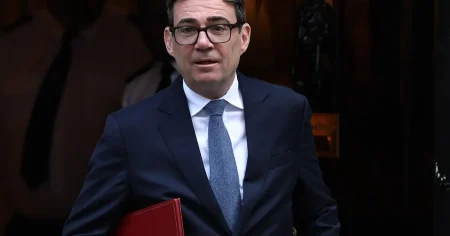
The real “winner” in this strange episode might well be the current political leadership, including figures like Andy Burnham. While Farage is busy chasing headlines in a seaside town, the actual machinery of government continues to move forward, providing a sharp contrast between those interested in real-world governance and those obsessed with media relevance. Farage’s absence from the House of Commons during a crucial summer leaves his constituents effectively without representation, a fact that will undoubtedly be hammered home by his detractors. It is a gamble that leans heavily on the idea that publicity equals power, yet it increasingly looks like publicity is simply eating away at his credibility.
Ultimately, we are heading for a summer of extreme silliness where the serious questions of statecraft will be drowned out by the noise of a campaign that feels more like a reality television elimination round. Farage promised a seismic shift when he stepped down to run, but he has instead delivered a quirky, local event that serves mostly to showcase the strange corners of British democracy. Whether he manages to win the vote is almost beside the point; the damage to his political dignity appears already done. He sought to create a storm, but he has instead found himself stuck in a very silly, very public, and ultimately very lonely place—all while sharing the ballot with a literal waste disposal unit.