



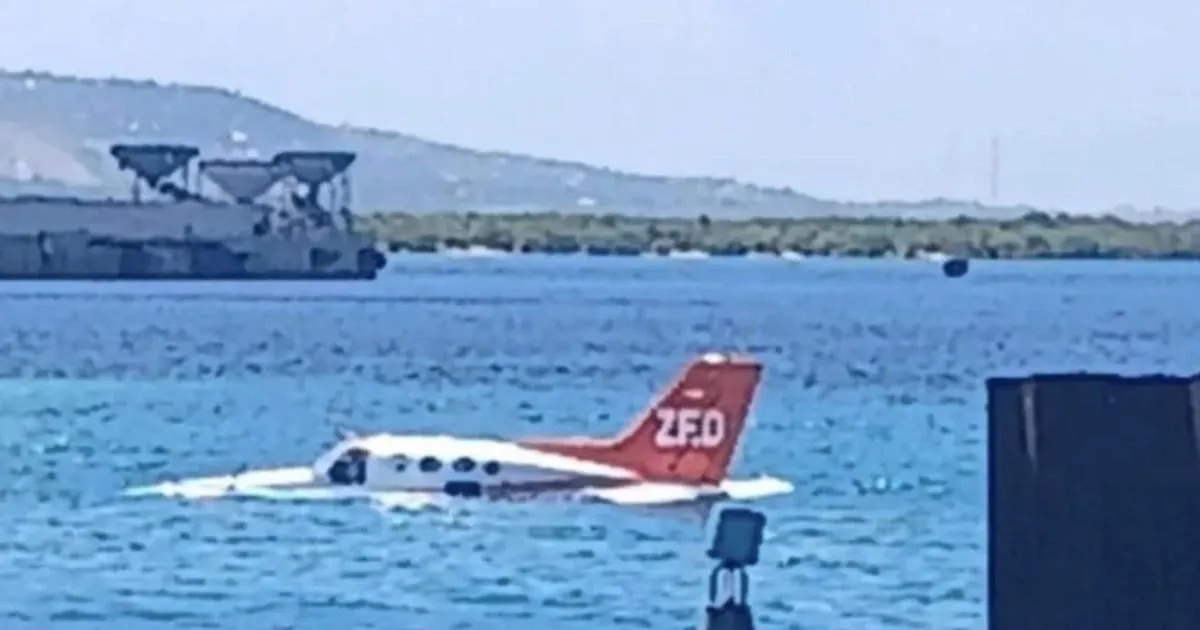
It was a Wednesday midday that turned from a routine flight into a harrowing survival story for the three people aboard a ZED Airlines Cessna 402B. The flight, an internal domestic hop traveling from Cap-Haitien to the bustling capital of Port-au-Prince, was supposed to be a standard commute. Instead, the twin-engine turboprop ran into unexpected trouble, forcing the pilot to execute an emergency water landing off the coast of Lafiteau, near the scenic but desolate shores of Ibo Beach. For those on board, the serene blue waters of the Caribbean suddenly became the site of a life-or-death struggle.
In those terrifying moments after the aircraft touched down in the sea, the instinct for survival took over. As the light aircraft began to settle into the coastal waters, the pilot and their two passengers managed to exit the cabin, leaving the sinking plane behind. Rather than succumbing to panic, they entered the water and began the grueling swim toward the shoreline. It is a testament to their composure that they were able to navigate the waves and reach land, where local responders and witnesses were already waiting to offer a helping hand and provide immediate medical attention.
The relief felt by the airline, ZED Airlines, was palpable in the hours following the ordeal. A spokesperson for the carrier emphasized the profound gratitude they felt that such a precarious situation had not ended in tragedy. “We are relieved that no one died,” the airline stated, acknowledging that the outcome could have been drastically different. While the official investigation into the incident is only just beginning, the airline was quick to credit the pilot’s experience. Their swift, expert handling of the aircraft during the forced landing is widely considered the reason the three individuals were able to walk—and swim—away from the crash in stable condition.
Beyond the immediate relief of the survivors, there is the sobering reality of the aircraft itself. The plane, a 1972-built Cessna, is currently a subject of intense scrutiny as aviation authorities and the airline’s own technical team begin their inquiry. At this stage, it remains unclear whether the forced landing was the result of a sudden mechanical failure or another unforeseen factor inherent to the flight. As the aircraft sits in the shallows off the coast of Ibo Beach, investigators are working to piece together the events that led a straightforward route to spiral into an emergency landing, hoping to provide clarity for the passengers and the public alike.
The incident serves as an unsettling reminder of the inherent risks involved in aviation, even on short, domestic flights. For the three people on board flight 6502, a journey meant to take them to the capital city turned into a trial of their courage and physical endurance. While headlines often focus on the mechanics of a crash or the technical details of a failure, the human element—the bravery of the pilot and the resilience of the passengers—remains the most important part of this story. It is a rare “good news” story in the world of aviation mishaps, where the focus remains on the survival of those involved rather than the loss of life.
As the formal investigation continues, ZED Airlines has reaffirmed that the safety of its passengers and crew is its “absolute priority.” They have promised transparency and updates as more information becomes available, acknowledging the public’s need for answers regarding the integrity of their fleet. For now, the three survivors are being allowed to recover, having faced one of the most frightening scenarios imaginable and lived to tell the tale. It is a powerful example of how, in the face of sudden crisis, human skill and quick thinking can turn a potential disaster into a miraculous escape.