
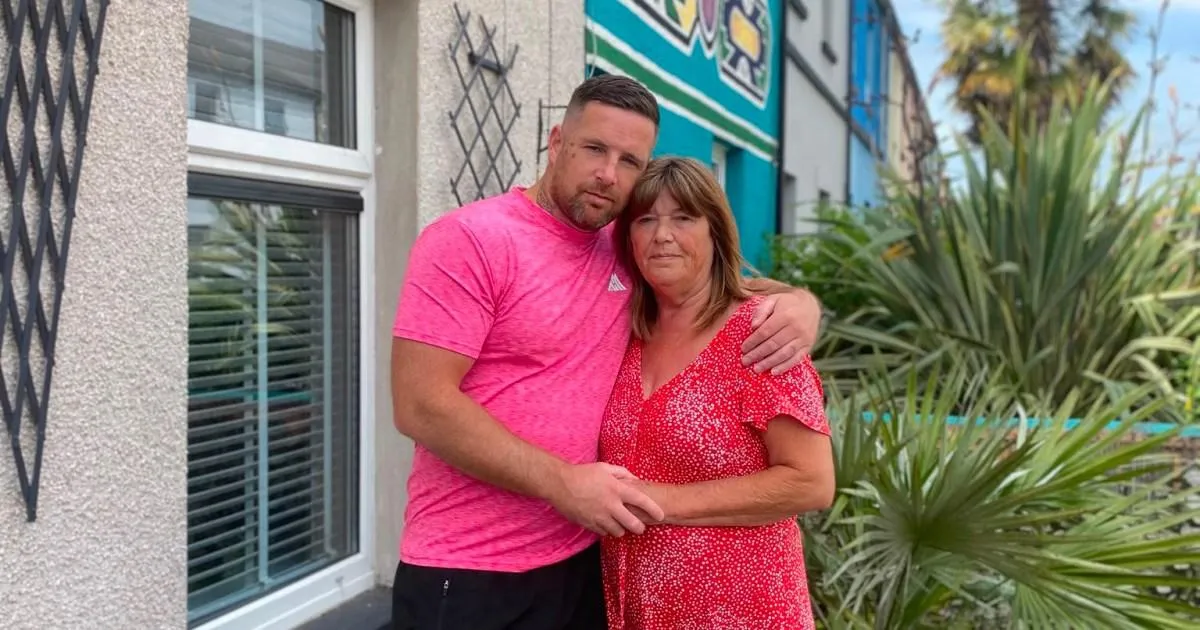
The Long Shadow of an Indefinite Sentence: One Family’s Fight for Justice
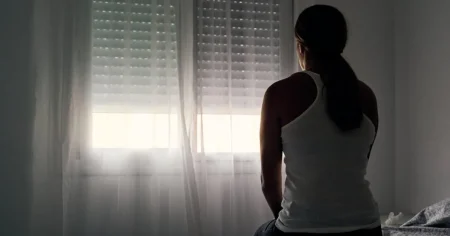
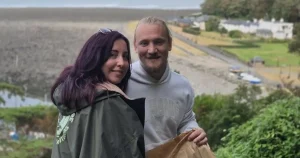
In the quiet corners of Cardiff, a mother’s anguish has become a powerful voice for hundreds of prisoners trapped in a legal limbo that defies comprehension. Shirley Debono watches helplessly as her son Shaun Lloyd remains behind bars, fourteen years into a sentence that was originally meant to last less than three. The crime that started it all seems almost trivial now—a mobile phone snatched in a moment of youthful recklessness when Shaun was just eighteen years old. In 2006, he was handed a two years and nine months sentence for robbery, but the cruel mechanics of the Imprisonment for Public Protection system, known as IPP, transformed what should have been a finite punishment into an indefinite confinement that has now stretched more than three times beyond its original term. The latest chapter in this ongoing ordeal saw Shaun recalled to HMP Cardiff just weeks ago, not because he committed another crime, but because an anonymous caller made an allegation that police never even acted upon.
The timing of this latest recall carries a bitter irony, as Shirley describes her son as finally turning his life around. Shaun had been free for only four and a half months when the anonymous phone call came in—a call the family believes was malicious in nature. Someone alleged that Shaun had strangled her, an accusation she herself denies ever happened. Despite never being arrested, questioned, or charged over this allegation, Shaun found himself banished back to prison indefinitely. The technical reason for his recall? He failed to immediately report the police visit to his probation officer. This Kafkaesque scenario exemplifies the cruel unpredictability that defines life under an IPP sentence, where the threat of returning to prison hangs over every action, every interaction, every moment of daily life. For Shirley, watching her son disappear back behind bars after just four and a half months of freedom feels less like justice and more like a slow, systematic destruction of hope.
The political landscape has shifted dramatically in recent weeks, offering the first glimmer of hope that Shirley and countless other families have experienced in nearly two decades. Andy Burnham, the Prime Minister, has made a bold pledge to end what he himself described as the “injustice” of IPP sentences, promising to release some inmates serving these indefinite terms during this parliament. For Shirley, who has campaigned tirelessly for years, this commitment represents a monumental breakthrough. In her own words, she feels “overwhelmed and really grateful” that a Prime Minister has finally acknowledged what she and other campaigners have been saying for years—that these sentences are fundamentally wrong. The cruel irony is not lost on her that the Labour government which introduced IPP sentences in the first place is now the one promising to dismantle them, and she insists that recognition of past mistakes is long overdue. The parole board had already deemed Shaun safe to release, yet he finds himself back in confinement, a situation Shirley compares to authoritarian regimes rather than a democratic nation.
The story of Shaun’s original crime reveals how a minor youthful offense spiraled into a lifetime of punishment. At eighteen years old, he pushed someone to the ground and took their phone, only to stop when chased and return the stolen property. The victim still called police, and Shaun was convicted of robbery—a serious charge that carried the weight of the controversial IPP sentence. His co-defendant served less than a year, but Shaun’s path took a dramatically different turn. The IPP system, designed to protect the public from dangerous offenders, swept up young offenders like Shaun and subjected them to an open-ended punishment with no maximum tariff. Though the sentence was officially scrapped in 2012, those already trapped within its grasp remained subject to its whims, creating a shadow population of prisoners whose release dates exist only as distant possibilities rather than certainties.
The human cost of this system becomes starkly visible through Shaun’s story. He was first released in 2014, having served eight years, but freedom proved ephemeral. Five separate recalls have followed since then, each one plunging him back into the institutional life that has come to define his existence. The pattern reveals a cruel circularity—Shaun developed a drug addiction during his initial imprisonment, a direct consequence of the system meant to rehabilitate him, and this addiction has been used as grounds to return him to custody. His most recent recall came after an anonymous tip to police prompted a visit from officers. Although nothing came of the allegation and no charges were ever pursued, Shaun’s failure to immediately inform his probation officer about this police visit was deemed sufficient grounds for his indefinite return to prison. It’s a Catch-22 that makes meaningful reintegration into society nearly impossible for those trapped in the IPP system.
For Shirley, the emotional weight of watching her son cycle through this system is almost unbearable, but it has also transformed her into a formidable campaigner. She has founded the IPP Committee in Action and has taken her fight all the way to the United Nations, where she has documented the human cost of these indefinite sentences. The UN’s Human Rights Council issued a scathing sixteen-page report last month condemning the UK’s treatment of IPP prisoners as “inhumane treatment,” specifically citing the “mental anguish of being subjected to continuous uncertainty of a release date.” The UN examined five men, including Shaun, who together have served eighty-seven years behind bars, and concluded that all five are entitled to compensation and other reparations. For Shirley, this international condemnation validates what she has known for years—that these sentences represent a fundamental injustice that successive governments have failed to address.
The political context has suddenly become more complicated, as Burnham’s commitment to end IPP sentences has drawn both praise and criticism. The shadow justice secretary Nick Timothy has warned that freeing IPP prisoners could mean dangerous criminals being released, and indeed the government acknowledges that some continue to pose risks to communities. However, the statistics tell a more nuanced story. Of the more than two thousand IPP prisoners still in the system, over half have been recalled despite committing no new offence—they are returned to prison for technical breaches or behavioral issues that would not ordinarily result in imprisonment. The Ministry of Justice confirms there are 856 IPP prisoners who have never been released because the parole board deemed it unsafe, but the majority of those currently trapped in the system are individuals like Shaun, who were found safe enough to release but keep getting pulled back in for reasons that often seem arbitrary. As Shirley points out, these are people “who were found safe to release, by a parole board, but have been taken off the streets and into prison.” The bureaucratic machinery of the IPP system creates a revolving door where freedom is always conditional and always precarious.
For Shirley, the fight is not merely about her own son but about all those caught in this system, many of whom are suffering from the psychological devastation that comes with never knowing when, or if, they will be released. The mental toll is staggering—she notes that many IPP prisoners have developed serious mental health problems, all caused by the continuous uncertainty of never knowing when they might walk free. At least thirty prisoners have taken their own lives after losing hope of release, a tragic statistic that underscores the human cost of this policy. Shirley insists that the majority of these prisoners are “not dangerous people,” pointing out that most committed less serious crimes and have not reoffended while in custody. She argues passionately that the burden of proof should shift—instead of prisoners having to prove they are safe to release, the state should have to prove they are too dangerous to free. This inversion of the current system would represent a fundamental shift in how the justice system treats these individuals.
The immediate political context adds urgency to these demands. Alex Norris, the Justice Secretary, is scheduled to announce plans this week to narrow the early prisoner release scheme, potentially freeing up space by releasing more prisoners early. The government has also promised to establish a “cross-party oversight group” to examine how to free IPP prisoners safely, with Burnham acknowledging that some individuals will continue to pose risks to communities. For Shirley, this recognition is not enough—she wants to see concrete action and a clear timeline. The psychological toll on prisoners cannot be overstated, she argues. Many IPP prisoners have developed severe mental health problems as a direct result of their indefinite confinement, and Shirley warns that if the government drags its feet, prisoners will begin to lose hope once again. She remembers the promises that came before, the false dawns and broken assurances that have marked the fourteen years since the Conservative government inherited this problem and did nothing to fix it.
The way forward, Shirley believes, requires a fundamental shift in how the system approaches release decisions. Currently, the burden of proof lies with the prisoner to demonstrate they are no longer dangerous, a standard that becomes nearly impossible to meet when the parole board’s decisions are so often influenced by the very nature of the indefinite sentence itself. Shirley argues the law should be reversed—the parole board should have to prove that a prisoner is still too dangerous to release, rather than requiring prisoners to prove they are safe. This reversal would acknowledge that individuals who have served their time, participated in rehabilitation programs, and been deemed safe by professionals should not remain incarcerated based on institutional inertia or fear of political consequences. The human cost of the current system is devastating, with as many as one hundred prisoners taking their own lives after losing all hope of ever being released.
Justice Secretary Alex Norris is expected to announce changes to the early prisoner release scheme this week, and campaigners are watching closely for signs of substantive reform. The government has promised to establish a cross-party oversight group to examine how IPP prisoners might be released, while acknowledging that some individuals will need to remain in custody because they genuinely pose risks to public safety. For Shirley and the families of IPP prisoners, the key demand is a clear timeline—promises of reform have come before, only to evaporate under political pressure or administrative inertia. She warns that if the government drags its heels, prisoners who have already lost hope will sink further into despair, and the mental health toll will only worsen. The campaigners want the burden of proof reversed, so that the parole board would have to demonstrate why a prisoner remains dangerous rather than requiring prisoners to prove they are safe for release. This shift, Shirley believes, would allow the many IPP prisoners who have spent years in rehabilitation programs to finally walk free. For now, she continues her tireless work, determined to “get to the bottom” of an injustice that has consumed her family’s life and so many others, and to ensure that the promise of reform becomes a reality rather than another empty political gesture.