


If you blinked for even a moment over the summer, you could be forgiven for feeling like British politics has been put on fast-forward. Just six weeks ago, Westminster was in its usual pre-recess holding pattern: MPs were packing up, the corridors were quiet, and the big question was how everyone would survive the long stretch of by-elections, holiday news cycles, and speculative column inches. Then Parliament went away, and everything changed. The last time MPs sat in the House of Commons, Sir Keir Starmer was still Prime Minister, Rachel Reeves was still Chancellor, and David Lammy was still Foreign Secretary. Nigel Farage, meanwhile, wasn’t an MP at all, because he was busy gearing up for the Clacton by-election that turned out to be one of the most entertaining subplots of the entire summer. Fast forward to today, and it feels like the political equivalent of waking up from a nap in a completely different country. The cast has changed, the mood has changed, and the man taking centre stage is a familiar face, but in a very new role. Andy Burnham, the former Greater Manchester Mayor who became Prime Minister over recess, is stepping into Parliament for the first time as national leader. It’s one of those moments where history feels like it is happening in real time, and even people who don’t normally obsess over politics are going to want to pay attention. The summer was supposed to be quiet. It was anything but. And the autumn session is shaping up to be just as intense.
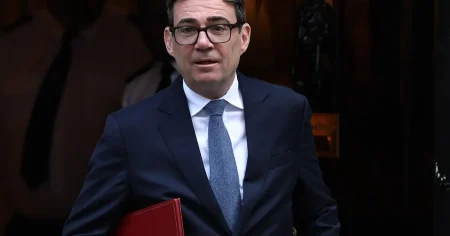
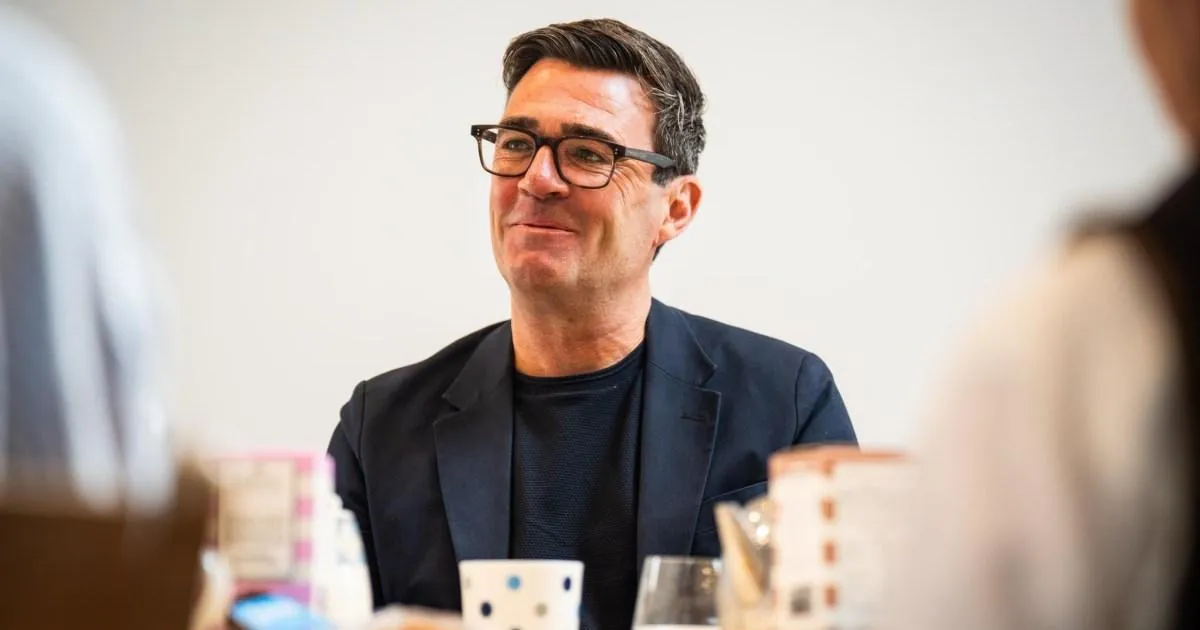
Today’s proceedings will begin later than the normal working day, at 2.30pm, because Parliament has never been in a hurry to get back to business. But once the sitting starts, it could run for a long time, and the first major moment belongs to Andy Burnham. He’ll be standing at the dispatch box for the first time as Prime Minister, and it’s more than sixteen years since he last stood there in a senior frontbench role. That is a big deal, not just for him personally but for the entire chamber. Burnham is expected to set out his policy priorities, and there is real substance behind the headlines. He wants to bring more key sectors, like water, under public control, and he has promised to focus on bringing down the cost of living. If he has any major new announcements up his sleeve, today would be the day to make them, because there is a long-standing convention that significant policy should be unveiled in Parliament first, not via social media videos or friendly interviews. Over the summer, there was plenty of criticism about announcements being made outside Parliament, so Burnham will want to draw a clear line under that. This speech is his chance to define the tone of his premiership, and everyone in the room will be trying to read between the lines. Is he still the same Andy Burnham who spent years championing devolution and the voices of the north? Or does being Prime Minister already changed him? Today will offer the first real clue. The parliamentary arithmetic is complicated, the party dynamics are new, and the opposition is scenting blood. But for now, all eyes are on the man at the dispatch box, because his first words as PM will set the mood music for the weeks ahead.
After Burnham’s speech, the attention will shift to the other big story of the day, which has already been dominating the news cycle: prison reform and the early release of offenders. The new Justice Secretary, Alex Norris, will set out the government’s fresh approach, and it is a genuinely difficult tightrope to walk. On one side, prisons are dangerously overcrowded, and the system has been creaking for years. On the other, the public understandably wants to know that serious violent offenders, and especially killers, are not being let out early simply to free up bed space. This is a subject that stirs real emotion, and the government has already tried to reassure people with some high-profile decisions. Over the weekend, Andy Burnham confirmed that the killers of PC Andrew Harper will remain locked up, and will not benefit from the new early release arrangements. Then, overnight, we learned that extra rooms in prisons could be converted into cells to ease some of the pressure. That combination, tightening who can be released while also scrambling to create more space, tells you just how challenged the justice system really is. Victims’ families have been vocal throughout the recess, urging the government to go further and block all killers from early release. The new Justice Secretary is likely to strike a careful tone, promising that public safety comes first but also acknowledging that the system cannot simply lock everyone up and throw away the key. This is exactly the kind of policy area where the difference between political rhetoric and real life becomes painfully clear. The debates in the chamber will not be abstract. They will be about real families, real victims, and real choices about safety and rehabilitation. It is heavy stuff, and it could easily be the moment that defines Burnham’s early premiership.
Then, almost as soon as the dust has settled on today’s set-piece speeches, comes the strange theatre of Prime Minister’s Questions. On Wednesday, Andy Burnham will face his first session as PM, and there is already a lot of speculation about how he will handle it. Burnham has said in the past that he wants politics to be defined by less division and less factionalism, which is an admirable ambition. It is also a slightly risky one, because PMQs is the most tribal and theatrical ritual in British politics. If he refuses to play the game, he could look statesmanlike. Or he could look like he’s not in control. The trick, as every leader discovers, is that you cannot unilaterally change the rules of Westminster. The opposition will still be trying to land blows, and the Conservatives, the SNP, and anyone else with a grievance will be looking for a viral moment. But there is definitely a way for Burnham to make this his own. He can answer questions in plain language, avoid the obvious sneers, and try to model the calmer culture he says he wants to create. It will not happen overnight. Old habits in the Commons die hard, and there will always be an instinct to go for the jugular. But after years of shouting matches, the public might actually respond well to a leader who treats PMQs less like a battle and more like a serious exchange of ideas. Whether the rest of the chamber lets him get away with that remains to be seen. Wednesday’s session will be fascinating for that reason alone: it’s not just about policy, it’s about personality, temperament, and whether Burnham can actually live up to the values he has been preaching. If he can, it could signal a genuine shift in how politics is done. If he can’t, it will be the same old circus with a slightly different ringmaster.
Beyond the first two days, there is a packed agenda that will make this session feel like a sprint rather than a marathon. On September 11, Parliament will see the return of the Assisted Dying Bill, which was already a major talking point before recess and has now been taken up by Labour MP Lauren Edwards. That is one of those issues where the debate is not just party versus party but conscience versus conscience, and it is guaranteed to generate some of the most powerful speeches of the year. There is also all the usual parliamentary machinery that rarely makes headlines but still eats up hours: question sessions with government ministers, committee hearings, and the inevitable moments that come out of nowhere and suddenly dominate the news cycle. The problem is that all of this has to fit into less than three weeks before the Commons disappears again, this time for conference recess. It will feel like a plane landing for a quick refuel stop and then taking off again, except the fuel is not aviation gasoline, it’s policy debates and ministerial grilling. The compressed timetable means everyone will be trying to cram a huge amount of drama into a very short window. Burnham will be trying to establish momentum, his ministers will be trying to explain themselves, and the opposition will be trying to create as much noise as possible. It is a strange rhythm, but it is also one of those periods when the political world starts moving faster than anyone can comfortably follow. For anyone who is not glued to Westminster, it may feel confusing when the news is suddenly full of procedural points and urgent questions. But underneath all the jargon, the stakes are simple: the government wants to show it can actually govern, and everyone else is trying to prove it cannot.
What should we make of all this? In one sense, this is just Westminster doing its usual thing, returning from recess, making speeches, drawing battle lines. But there is a bigger story underneath. The country has changed leaders in the middle of a summer that was supposed to be quiet. A Labour Prime Minister is standing at the dispatch box after one of the most rapid political transformations in recent memory. The policies being announced are not incremental tweaks; they are attempts to reshape the relationship between the state and the economy, to address the housing crisis, to fix prisons, and to confront the hard questions around assisted dying. None of these issues have easy answers, and the compressed timetable before conference recess means there will be little time for careful, considered reflection. Instead, everything will be loud, fast, and contested. That can be disorienting, especially for people who prefer to switch off from politics when the sun is out. But it can also be invigorating, because at least something is happening. The real test for Burnham is not whether he can make a good speech or survive his first PMQs. It is whether he can sustain a new style of politics once the initial excitement fades and the inevitable mistakes begin. There will be crises, resignations, bad headlines, and scandals. There always are. The question is whether this Government can admit when it is wrong, adapt when it has to, and hold onto the public’s trust through the chaos. Today’s session is only the beginning. The next few weeks will tell us a lot about whether the Burnham premiership is a genuine departure from the past or just another chapter in the same old Westminster story. Either way, it is going to be impossible to look away, so you might as well buckle up and enjoy the ride.